Ce nter for Molecular Medicine, University Medical Center Utrecht, Utrecht University, Utrecht, The Netherlands.
Nutrition, Metabolism and Genomics Group, Division of Human Nutrition and Health, Wageningen University, Wageningen, The Netherlands.
Adipocyte. 2024 Dec;13(1):2421750. doi: 10.1080/21623945.2024.2421750. Epub 2024 Nov 1.
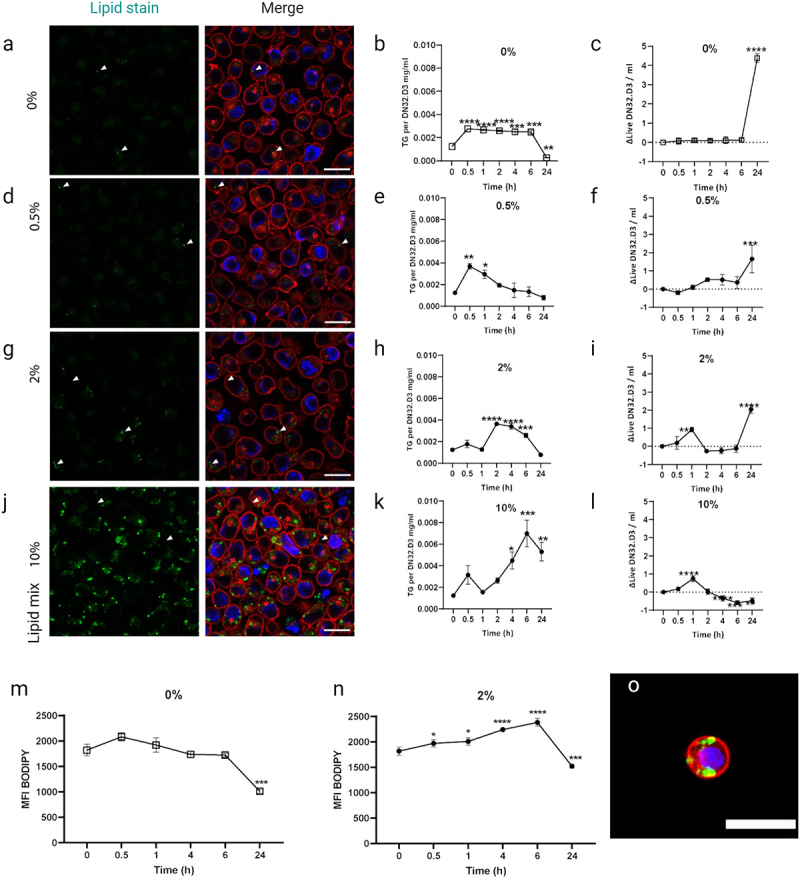
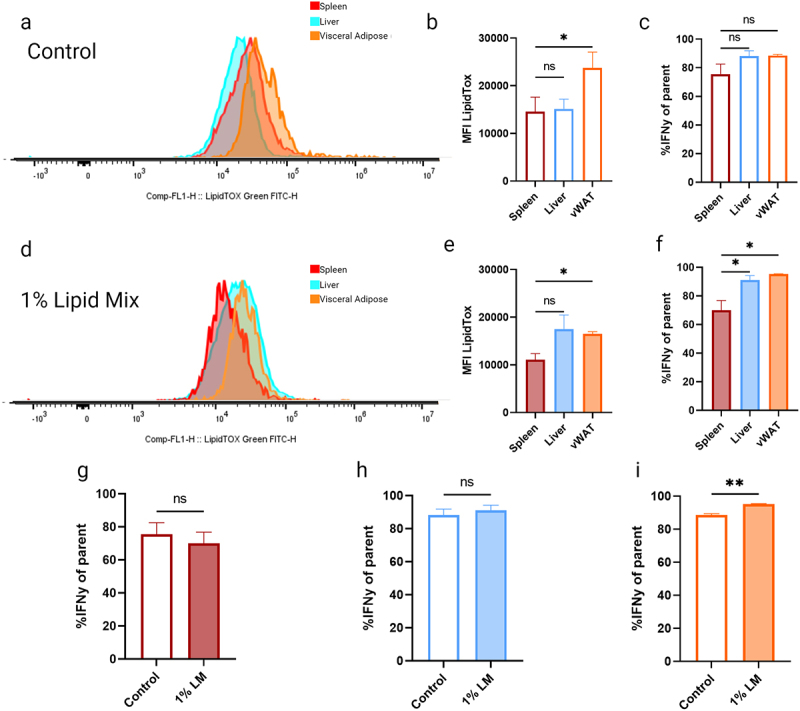
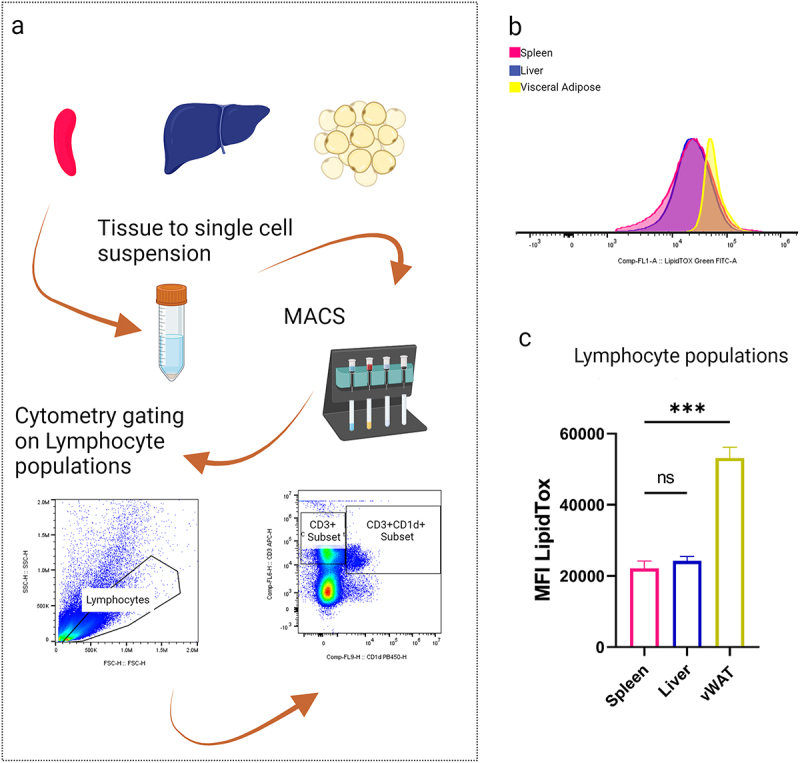
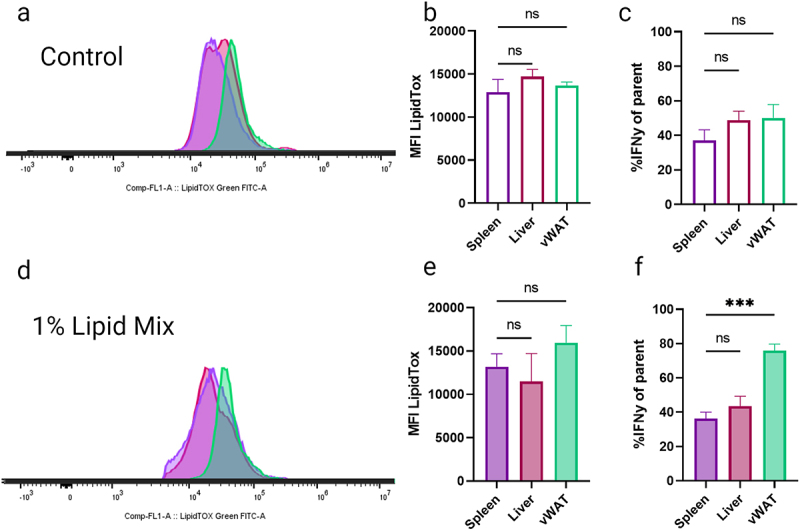
Reciprocal communication between adipocytes and immune cells is essential to maintain optimal adipose tissue (AT) functionality. Amongst others, adipocytes directly interact with invariant NKT cells (iNKT cells), which in turn secrete various cytokines. A lipid-rich microenvironment, as observed in obesity, skews this adipocyte-driven cytokine output towards a more inflammatory output. Whether a lipid-rich microenvironment also affects iNKT cells directly, however, is unknown. Here, we show that primary mouse iNKT cells isolated from AT can accumulate lipids in lipid droplets (LDs), more so than liver- and spleen-resident iNKT cells. Furthermore, a lipid-rich microenvironment increased the production of the proinflammatory cytokine IFNγ. Next, to an indirect, adipocyte-mediated cue, iNKT cells can directly respond to environmental lipid changes, supporting a potential role as nutrient sensors.
脂肪细胞和免疫细胞之间的相互交流对于维持最佳脂肪组织 (AT) 功能至关重要。脂肪细胞直接与不变自然杀伤 T 细胞 (iNKT 细胞) 相互作用,而后者反过来又会分泌各种细胞因子。在肥胖症中观察到的富含脂质的微环境会使脂肪细胞驱动的细胞因子输出偏向于更具炎症性的输出。然而,富含脂质的微环境是否也会直接影响 iNKT 细胞尚不清楚。在这里,我们表明,从 AT 分离的原代小鼠 iNKT 细胞可以在脂滴 (LD) 中积累脂质,比肝脏和脾脏驻留的 iNKT 细胞更多。此外,富含脂质的微环境会增加促炎细胞因子 IFNγ 的产生。接下来,对于间接的、脂肪细胞介导的线索,iNKT 细胞可以直接对环境脂质变化做出反应,支持其作为营养传感器的潜在作用。