Berckx Fede, Nguyen Thanh Van, Hilker Rolf, Wibberg Daniel, Battenberg Kai, Kalinowski Jörn, Berry Alison, Pawlowski Katharina
Department of Ecology, Environment and Plant Science, Stockholm University, 106 91 Stockholm, Sweden.
Department of Crop Production Ecology, Swedish University of Agricultural Sciences, 750 07 Uppsala, Sweden.
J Exp Bot. 2025 Feb 25;76(4):1164-1178. doi: 10.1093/jxb/erae446.
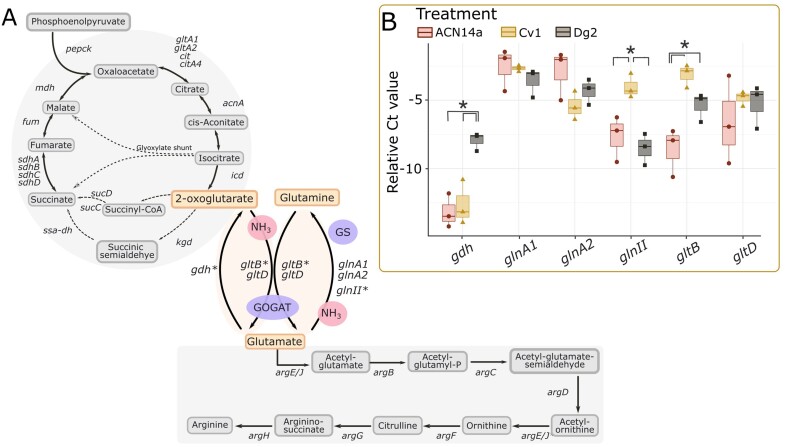
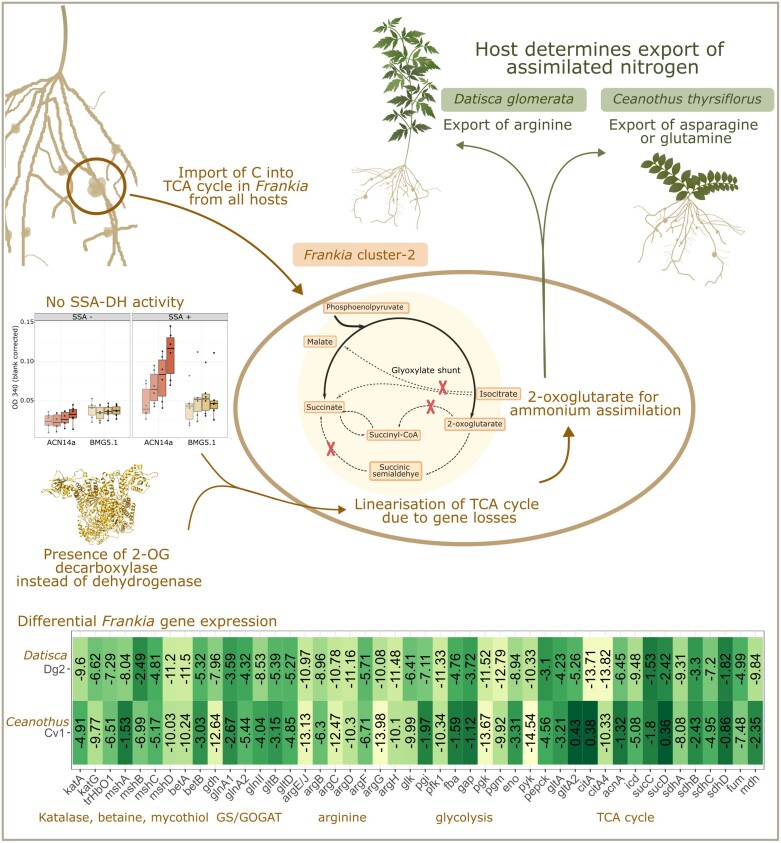
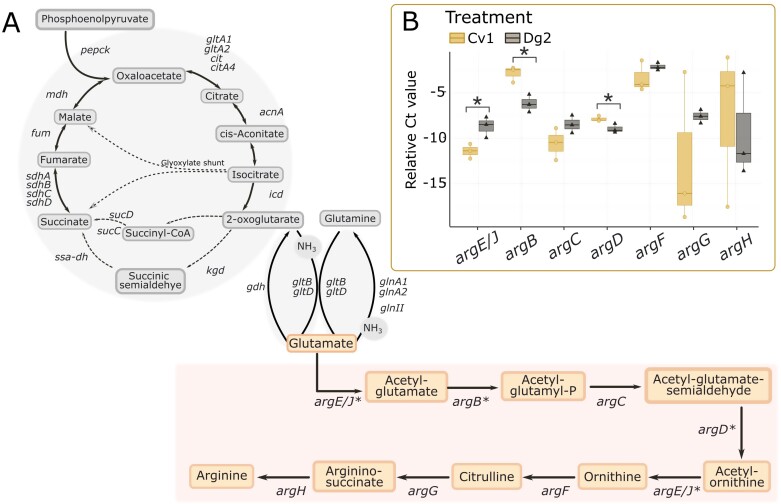
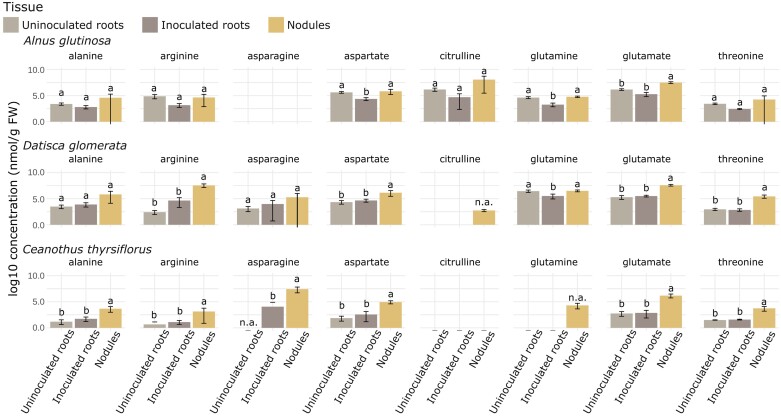
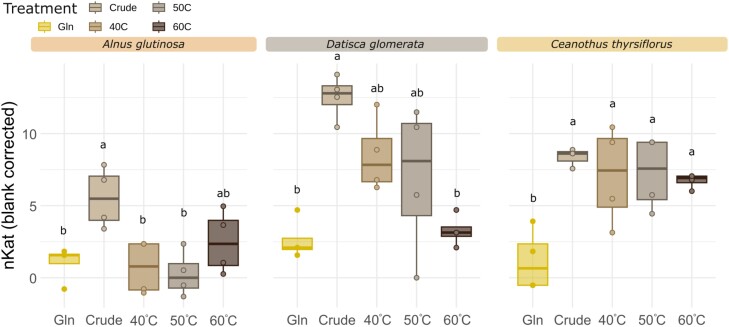
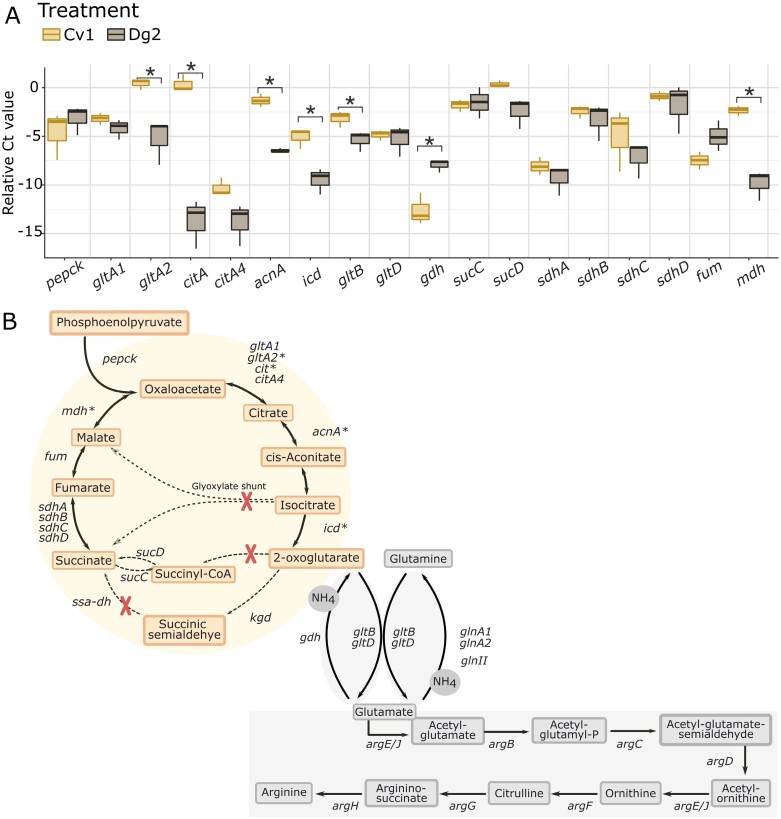
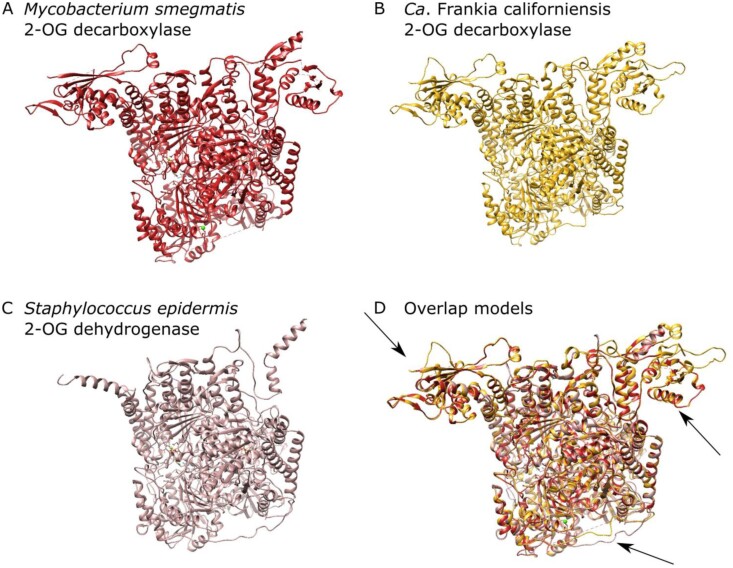
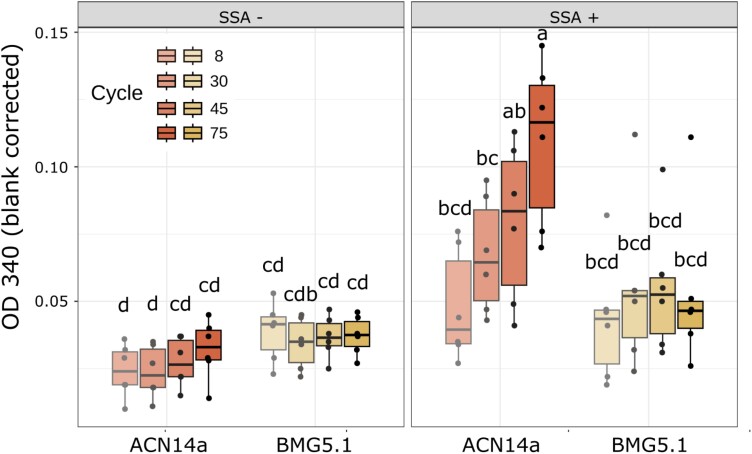
Frankia cluster-2 strains are diazotrophs that engage in root nodule symbiosis with actinorhizal plants of the Cucurbitales and the Rosales. Previous studies have shown that an assimilated nitrogen source, presumably arginine, is exported to the host in nodules of Datisca glomerata (Cucurbitales), while a different metabolite is exported in the nodules of Ceanothus thyrsiflorus (Rosales). To investigate if an assimilated nitrogen form is commonly exported to the host by cluster-2 strains, and which metabolite would be exported in Ceanothus, we analysed gene expression levels, metabolite profiles, and enzyme activities in nodules. We conclude that the export of assimilated nitrogen in symbiosis seems to be a common feature for Frankia cluster-2 strains, but the source of nitrogen is host dependent. The export of assimilated ammonium to the host suggests that 2-oxoglutarate is drawn from the tricarboxylic acid (TCA) cycle at a high rate. This specialized metabolism obviates the need for the reductive branch of the TCA cycle. We found that several genes encoding enzymes of central carbon and nitrogen metabolism were lacking in Frankia cluster-2 genomes: the glyoxylate shunt and succinate semialdehyde dehydrogenase. This led to a linearization of the TCA cycle, and we hypothesized that this could explain the low saprotrophic potential of Frankia cluster-2.
弗兰克氏菌属第2簇菌株是能够与葫芦目和蔷薇目放线菌根植物形成根瘤共生关系的固氮菌。先前的研究表明,在glomerata(葫芦目)的根瘤中,一种同化氮源(可能是精氨酸)被输出到宿主植物中,而在Ceanothus thyrsiflorus(蔷薇目)的根瘤中输出的是另一种代谢物。为了研究第2簇菌株是否通常会将同化氮形式输出到宿主植物中,以及在Ceanothus中会输出哪种代谢物,我们分析了根瘤中的基因表达水平、代谢物谱和酶活性。我们得出结论,共生中同化氮的输出似乎是弗兰克氏菌属第2簇菌株的一个共同特征,但氮源取决于宿主。向宿主输出同化铵表明,三羧酸(TCA)循环中的2-氧代戊二酸被大量消耗。这种特殊的代谢方式使得TCA循环的还原分支不再必要。我们发现,弗兰克氏菌属第2簇基因组中缺少几个编码中心碳氮代谢酶的基因:乙醛酸循环支路和琥珀酸半醛脱氢酶。这导致TCA循环线性化,我们推测这可以解释弗兰克氏菌属第2簇较低的腐生潜力。