Yang Neil V, Chao Justin Y, Garton Kelly A, Tran Tommy, King Sarah M, Orr Joseph, Oei Jacob H, Crawford Alexandra, Kang Misun, Zalpuri Reena, Jorgens Danielle M, Konchadi Pranav, Chorba John S, Theusch Elizabeth, Krauss Ronald M
Department of Nutritional Sciences & Toxicology, University of California, Berkeley, CA, USA; Department of Pediatrics, University of California, San Francisco, CA, USA.
Department of Pediatrics, University of California, San Francisco, CA, USA.
Mol Metab. 2024 Dec;90:102056. doi: 10.1016/j.molmet.2024.102056. Epub 2024 Nov 1.
The gene encoding TOMM40 (Transporter of Outer Mitochondrial Membrane 40) is adjacent to that encoding APOE, which has a central role in lipid and lipoprotein metabolism. While human genetic variants near APOE and TOMM40 have been shown to be strongly associated with plasma lipid levels, a specific role for TOMM40 in lipid metabolism has not been established, and the present study was aimed at assessing this possibility.
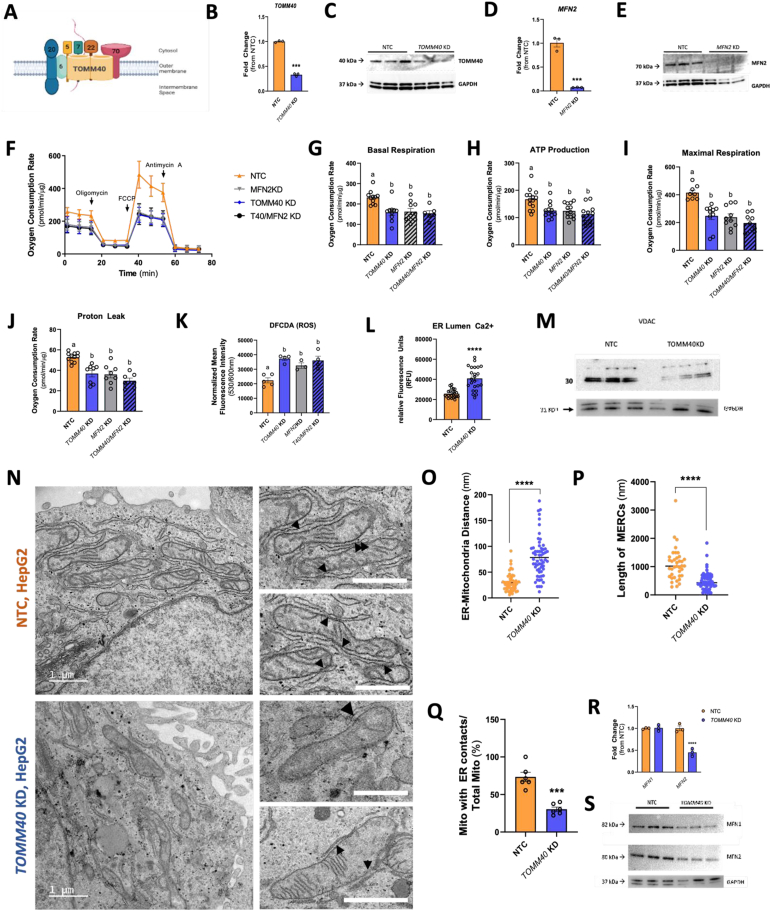
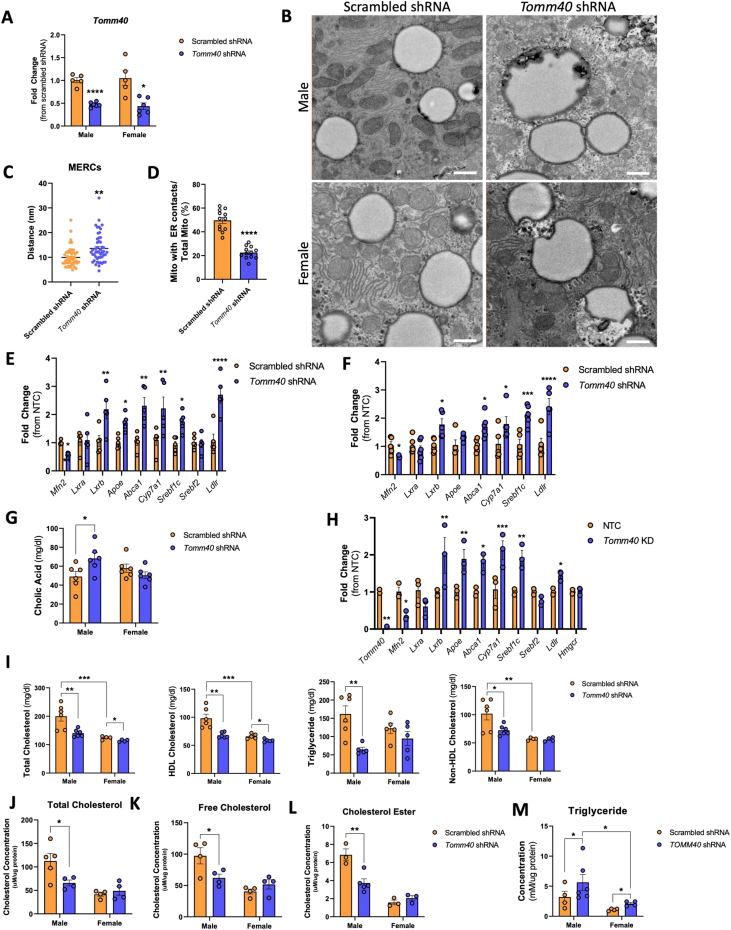
TOMM40 was knocked down by siRNA in human hepatoma HepG2 cells, and effects on mitochondrial function, lipid phenotypes, and crosstalk between mitochondria, ER, and lipid droplets were examined. Additionally, hepatic and plasma lipid levels were measured in mice following shRNA-induced knockdown of Tomm40 shRNA.
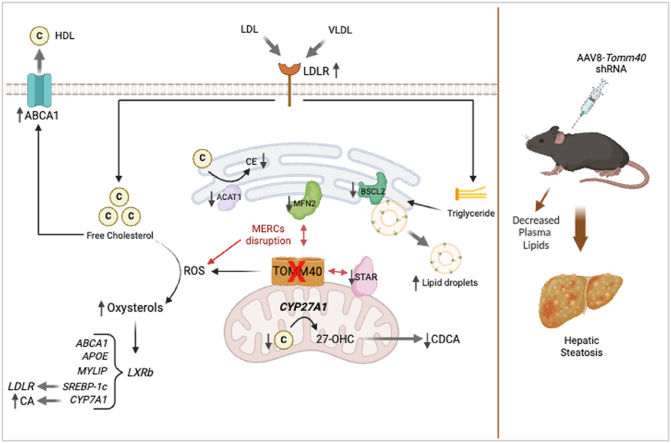
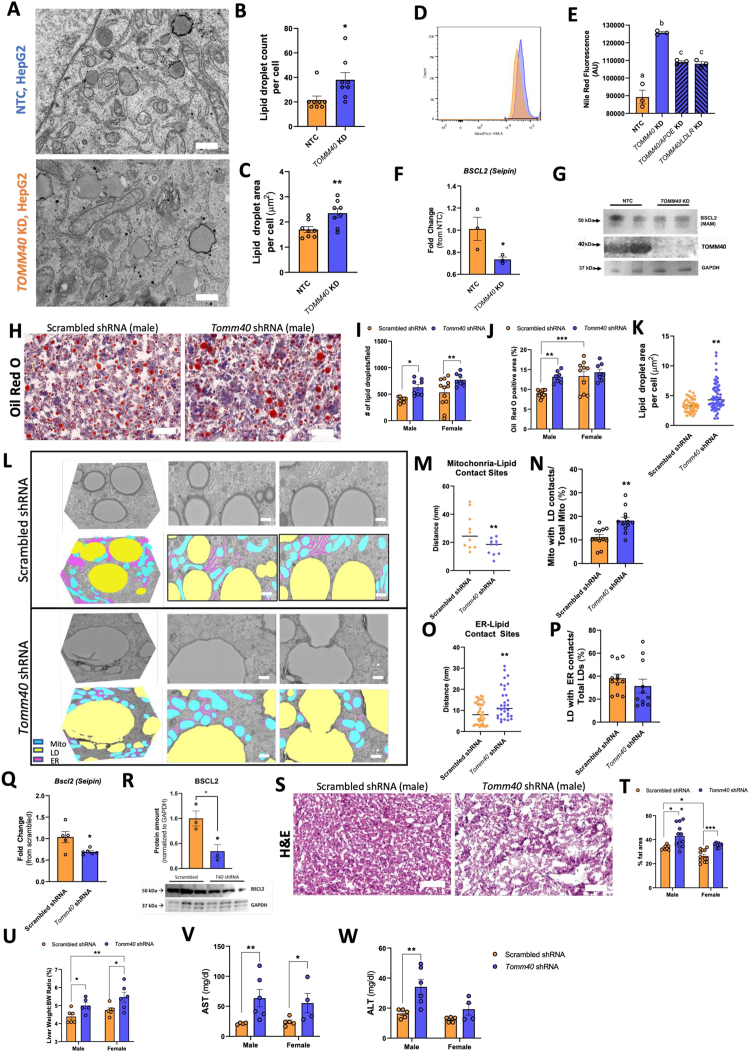
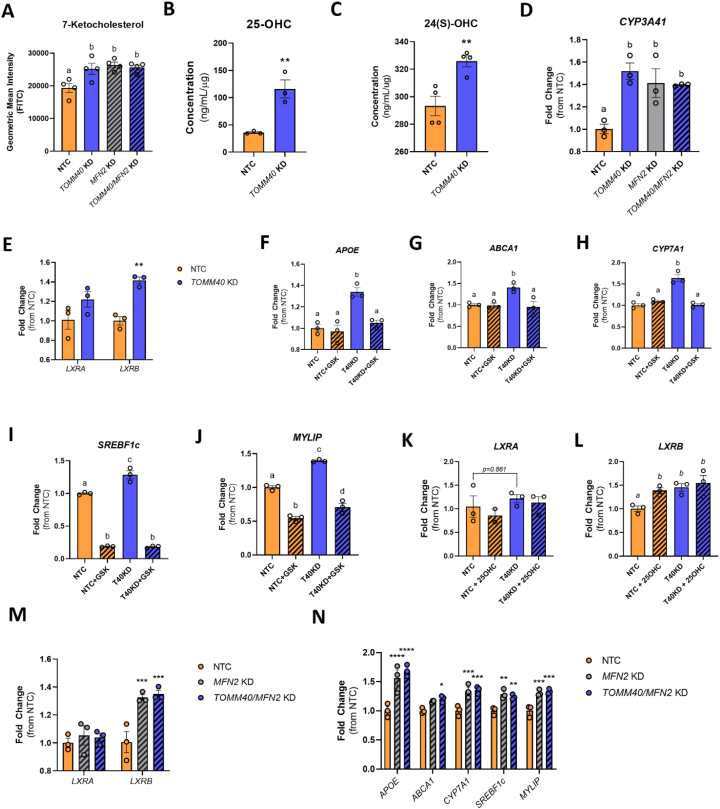
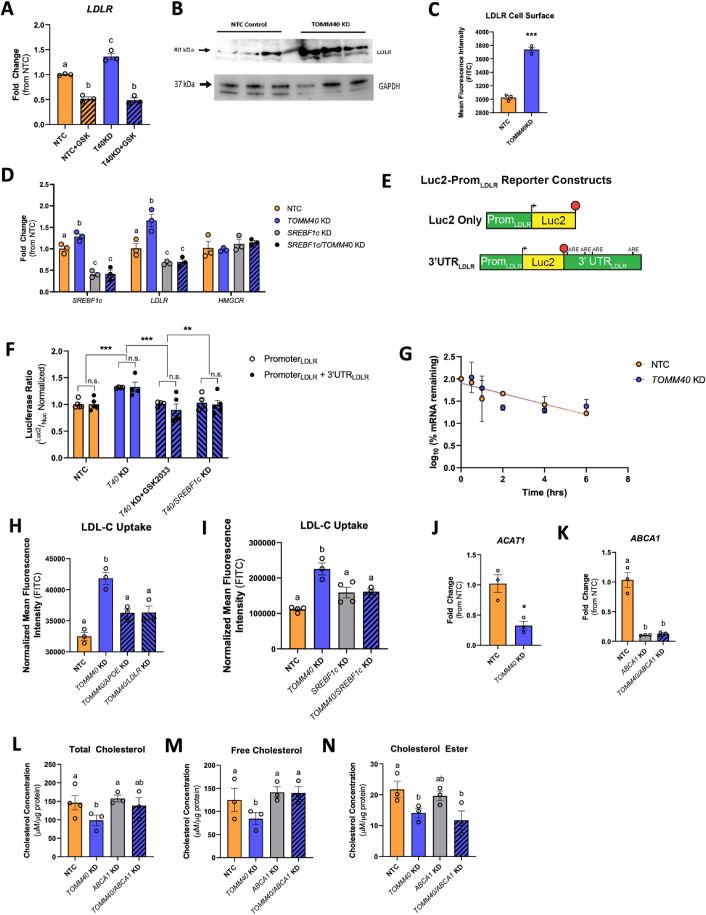
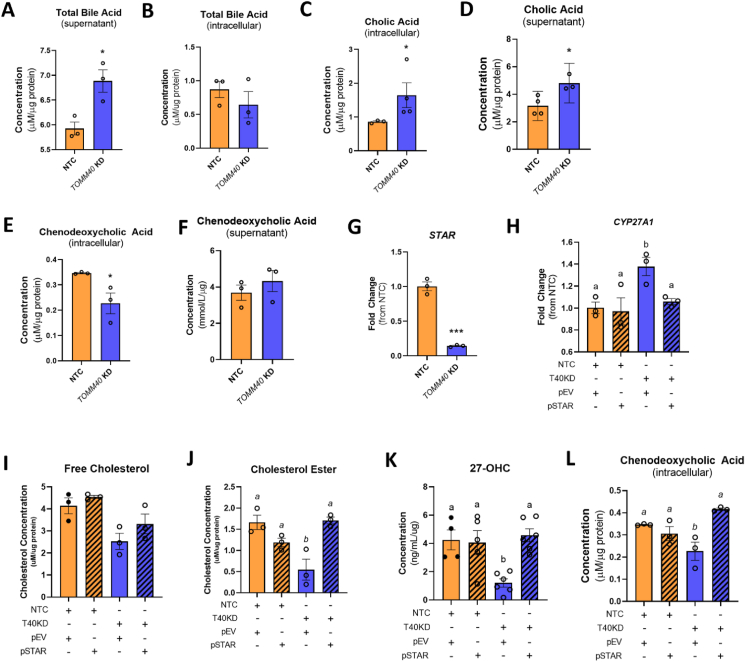
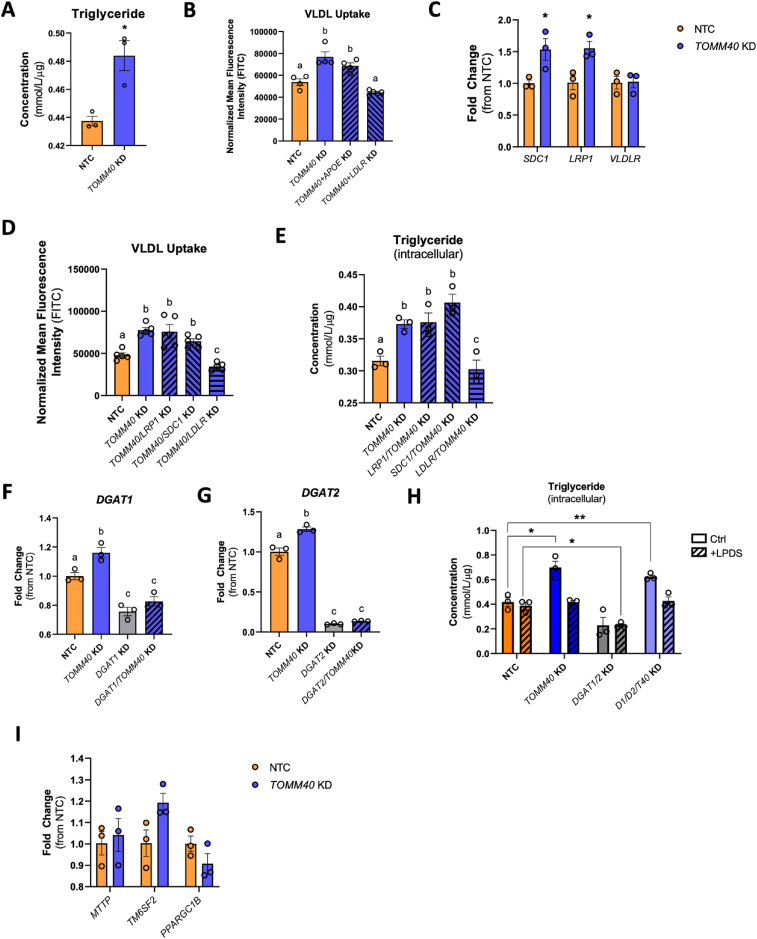
In HepG2 cells, TOMM40 knockdown upregulated expression of APOE and LDLR in part via activation of LXRB (NR1H2) by oxysterols, with consequent increased uptake of VLDL and LDL. This is in part due to disruption of mitochondria-endoplasmic reticulum contact sites, with resulting accrual of reactive oxygen species and non-enzymatically derived oxysterols. With TOMM40 knockdown, cellular triglyceride and lipid droplet content were increased, effects attributable in part to receptor-mediated VLDL uptake, since lipid staining was significantly reduced by concomitant suppression of either LDLR or APOE. In contrast, cellular cholesterol content was reduced due to LXRB-mediated upregulation of the ABCA1 transporter as well as increased production and secretion of oxysterol-derived cholic acid. Consistent with the findings in hepatoma cells, in vivo knockdown of TOMM40 in mice resulted in significant reductions of plasma triglyceride and cholesterol concentrations, reduced hepatic cholesterol and increased triglyceride content, and accumulation of lipid droplets leading to development of steatosis.
These findings demonstrate a role for TOMM40 in regulating hepatic lipid and plasma lipoprotein levels and identify mechanisms linking mitochondrial function with lipid metabolism.
编码线粒体外膜转运蛋白40(TOMM40)的基因与编码载脂蛋白E(APOE)的基因相邻,APOE在脂质和脂蛋白代谢中起核心作用。虽然已表明APOE和TOMM40附近的人类遗传变异与血浆脂质水平密切相关,但TOMM40在脂质代谢中的具体作用尚未明确,本研究旨在评估这种可能性。
在人肝癌HepG2细胞中用小干扰RNA(siRNA)敲低TOMM40,并检测其对线粒体功能、脂质表型以及线粒体、内质网和脂滴之间相互作用的影响。此外,在通过短发夹RNA(shRNA)诱导敲低Tomm40的小鼠中测量肝脏和血浆脂质水平。
在HepG2细胞中,TOMM40敲低部分通过氧化固醇激活肝X受体β(LXRB,NR1H2)上调APOE和低密度脂蛋白受体(LDLR)的表达,从而增加极低密度脂蛋白(VLDL)和低密度脂蛋白(LDL)的摄取。这部分是由于线粒体 - 内质网接触位点的破坏,导致活性氧和非酶促衍生的氧化固醇积累。随着TOMM40敲低,细胞内甘油三酯和脂滴含量增加,部分作用归因于受体介导的VLDL摄取,因为同时抑制LDLR或APOE可显著减少脂质染色。相反,由于LXRB介导的ATP结合盒转运蛋白A1(ABCA1)转运体上调以及氧化固醇衍生的胆酸生成和分泌增加,细胞胆固醇含量降低。与肝癌细胞中的发现一致,小鼠体内敲低TOMM40导致血浆甘油三酯和胆固醇浓度显著降低,肝脏胆固醇降低,甘油三酯含量增加,脂滴积累导致脂肪变性。
这些发现证明了TOMM40在调节肝脏脂质和血浆脂蛋白水平中的作用,并确定了将线粒体功能与脂质代谢联系起来的机制。