Haque Ehtisham Ul, Abbasi Waseem, Almogren Ahmad, Choi Jaeyoung, Altameem Ayman, Rehman Ateeq Ur, Hamam Habib
Department of Computer Science, COMSATS University Islamabad, Abbottabad Campus, 22200, Islamabad, Pakistan.
Department of Computer Science, The University of Lahore, Sargodha Campus, Lahore, 40100, Pakistan.
Sci Rep. 2024 Nov 4;14(1):26561. doi: 10.1038/s41598-024-77706-x.
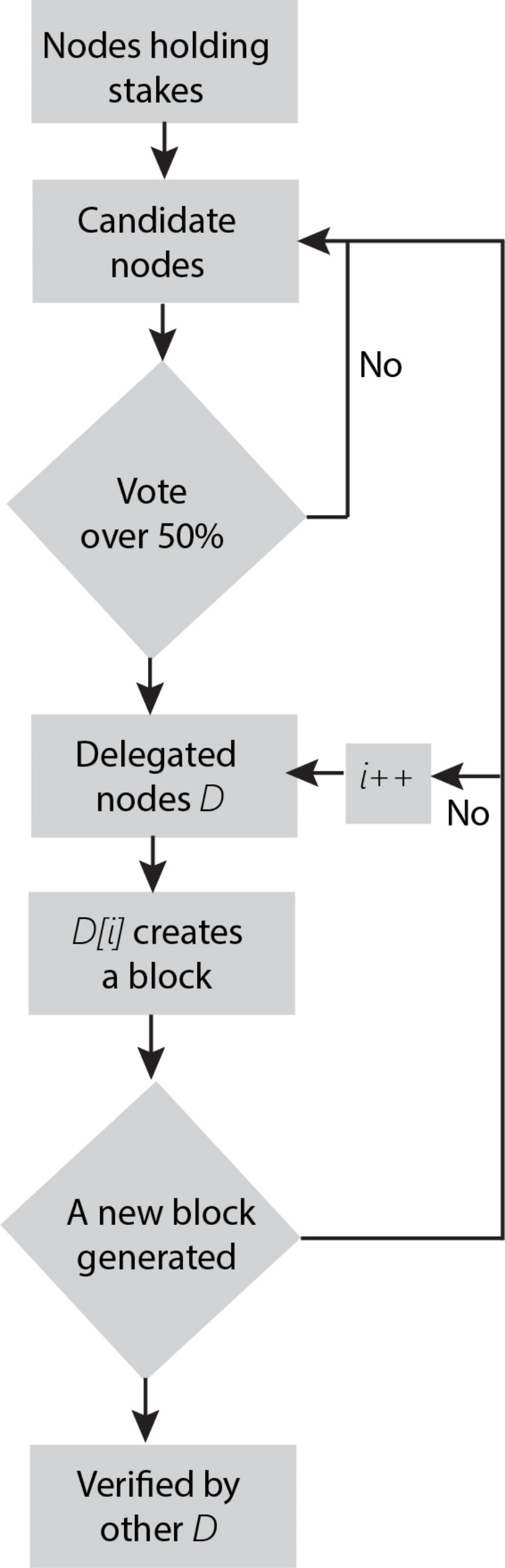
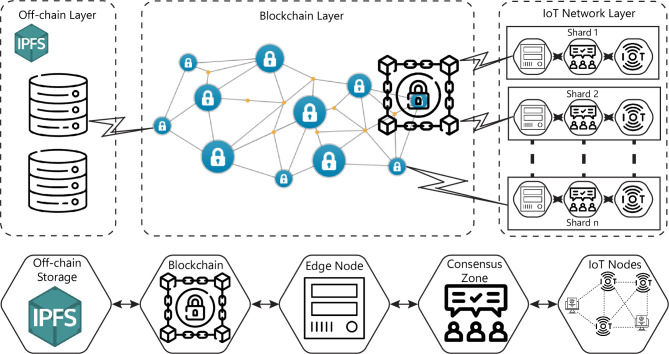
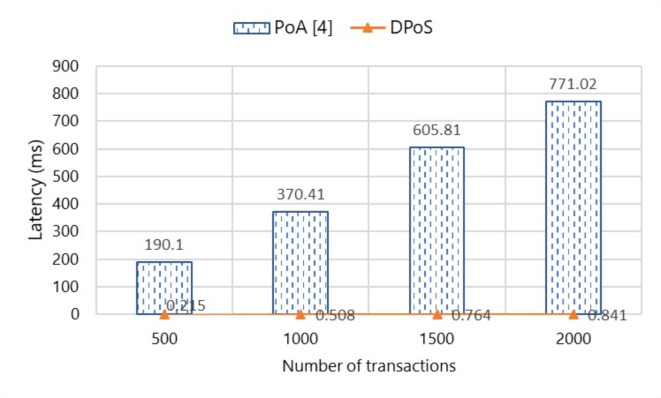
The proliferation of Internet of Things (IoT) devices generates vast amounts of data, traditionally stored, processed, and analyzed using centralized systems, making them susceptible to attacks. Blockchain offers a solution by storing and securing IoT data in a distributed manner. However, the low performance and poor scalability of blockchain technology pose significant challenges for its application in IoT networks. The primary obstacle is the distributed consensus protocol, while ensuring data transparency, integrity, and immutability in a decentralized and untrusted circumstances which often compromises scalability. To address this issue, this paper introduces the use of the Delegated Proof of Stake (DPoS) consensus algorithm and sharding techniques to enhance scalability in blockchain-based IoT networks. Experimental results indicate that system throughput increases synchronously with the test load. Our findings reveal a tradeoff between throughput, latency, and up-downstream time on the Inter Planetary File System (IPFS). Given the critical importance of latency and throughput in IoT networks, the results demonstrate that DPoS offers high throughput, parallel processing, and robust security while efficiently scaling the network. Furthermore, at a test load of 500 Transactions Per Second (TPS), the system achieves a maximum throughput of approximately 11.094 ms. However, when the test load exceeds 2000 TPS, the total processing time for transactions extends to 11.205 ms. This method is particularly suitable for constrained IoT networks. Compared to previous edge computing-based approaches, our scheme demonstrates superior throughput performance.
物联网(IoT)设备的激增产生了大量数据,传统上这些数据使用集中式系统进行存储、处理和分析,这使得它们容易受到攻击。区块链通过以分布式方式存储和保护物联网数据提供了一种解决方案。然而,区块链技术的低性能和较差的可扩展性对其在物联网网络中的应用构成了重大挑战。主要障碍是分布式共识协议,在分散且不可信的环境中确保数据透明性、完整性和不可变性时,这往往会损害可扩展性。为了解决这个问题,本文介绍了使用委托权益证明(DPoS)共识算法和分片技术来提高基于区块链的物联网网络的可扩展性。实验结果表明,系统吞吐量与测试负载同步增加。我们的研究结果揭示了在星际文件系统(IPFS)上吞吐量、延迟和上下游时间之间的权衡。鉴于延迟和吞吐量在物联网网络中的至关重要性,结果表明DPoS在有效扩展网络的同时提供了高吞吐量、并行处理和强大的安全性。此外,在每秒500笔交易(TPS)的测试负载下,系统实现了约11.094毫秒的最大吞吐量。然而,当测试负载超过2000 TPS时,交易的总处理时间延长至11.205毫秒。这种方法特别适用于受限的物联网网络。与以前基于边缘计算的方法相比,我们的方案展示了卓越的吞吐量性能。