Menares Esteban, Saíz Hugo, Schenk Noëlle, de la Riva Enrique G, Krauss Jochen, Birkhofer Klaus
Department of Ecology Brandenburg University of Technology Cottbus-Senftenberg Cottbus Germany.
Institute of Plant Sciences University of Bern Bern Switzerland.
Ecol Evol. 2024 Oct 30;14(11):e70498. doi: 10.1002/ece3.70498. eCollection 2024 Nov.
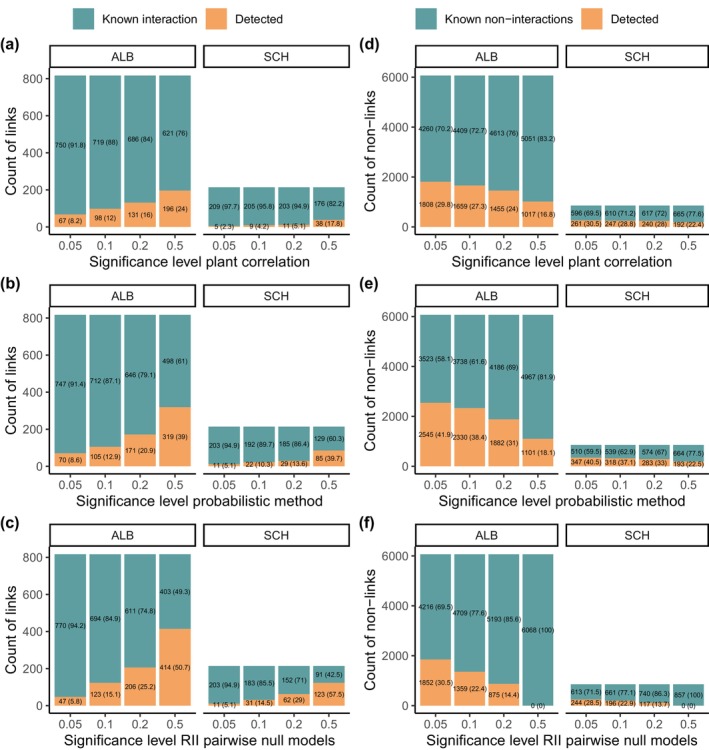
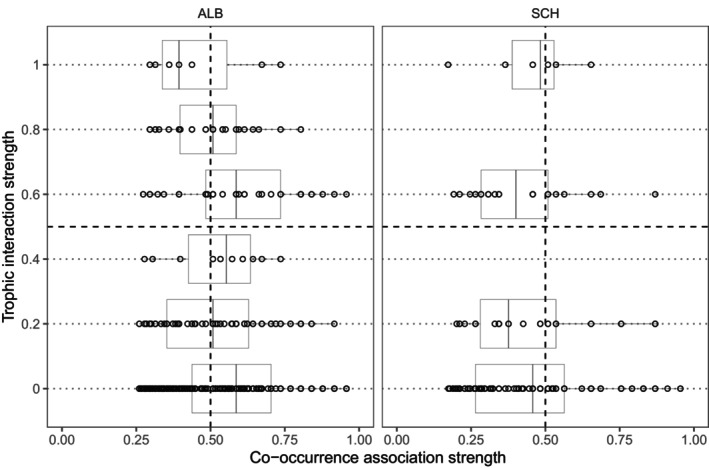
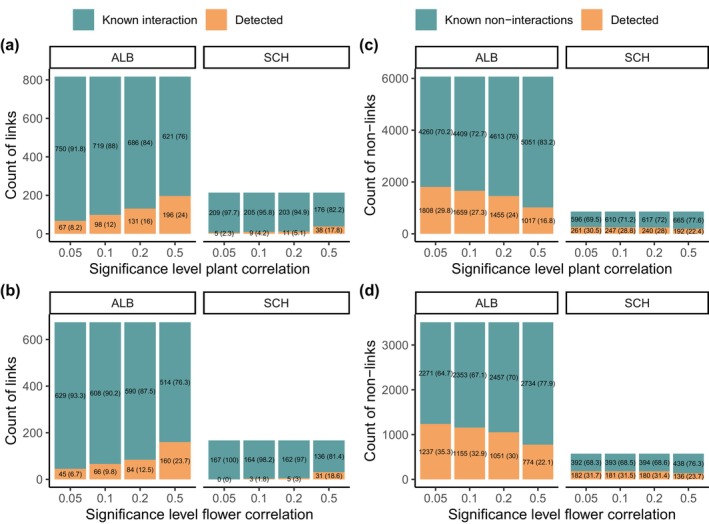
Biotic interactions are crucial for determining the structure and dynamics of communities; however, direct measurement of these interactions can be challenging in terms of time and resources, especially when numerous species are involved. Inferring species interactions from species co-occurrence patterns is increasingly being used; however, recent studies have highlighted some limitations. To our knowledge, no attempt has been made to test the accuracy of the existing methods for detecting mutualistic interactions in terrestrial ecosystems. In this study, we compiled two literature-based, long-term datasets of interactions between butterflies and herbaceous plant species in two regions of Germany and compared them with observational abundance and presence/absence data collected within a year in the same regions. We tested how well the species associations generated by three different co-occurrence analysis methods matched those of empirically measured mutualistic associations using sensitivity and specificity analyses and compared the strength of associations. We also checked whether flower abundance data (instead of plant abundance data) increased the accuracy of the co-occurrence models and validated our results using empirical flower visitation data. The results revealed that, although all methods exhibited low sensitivity, our implementation of the Relative Interaction Intensity index with pairwise null models performed the best, followed by the probabilistic method and Spearman's rank correlation method. However, empirical data showed a significant number of interactions that were not detected using co-occurrence methods. Incorporating flower abundance data did not improve sensitivity but enhanced specificity in one region. Further analysis demonstrated incongruence between the predicted co-occurrence associations and actual interaction strengths, with many pairs exhibiting high interaction strength but low co-occurrence or vice versa. These findings underscore the complexity of ecological dynamics and highlight the limitations of current co-occurrence methods for accurately capturing species interactions.
生物相互作用对于决定群落的结构和动态至关重要;然而,直接测量这些相互作用在时间和资源方面可能具有挑战性,尤其是当涉及众多物种时。从物种共现模式推断物种相互作用的方法越来越多地被使用;然而,最近的研究强调了一些局限性。据我们所知,尚未有人尝试测试现有方法在陆地生态系统中检测互利相互作用的准确性。在本研究中,我们汇编了基于文献的、关于德国两个地区蝴蝶与草本植物物种之间相互作用的两个长期数据集,并将它们与在同一地区一年内收集的观测丰度和存在/不存在数据进行比较。我们使用敏感性和特异性分析测试了三种不同共现分析方法生成的物种关联与经验测量的互利关联的匹配程度,并比较了关联强度。我们还检查了花的丰度数据(而不是植物的丰度数据)是否提高了共现模型的准确性,并使用经验性的花访数据验证了我们的结果。结果表明,尽管所有方法的敏感性都较低,但我们使用成对空模型的相对相互作用强度指数的实施效果最佳,其次是概率方法和斯皮尔曼等级相关方法。然而,经验数据显示存在大量未使用共现方法检测到的相互作用。纳入花的丰度数据并没有提高敏感性,但在一个地区提高了特异性。进一步的分析表明,预测的共现关联与实际相互作用强度之间存在不一致,许多对显示出高相互作用强度但低共现,反之亦然。这些发现强调了生态动态的复杂性,并突出了当前共现方法在准确捕捉物种相互作用方面的局限性。