Gurram Sandeep, Rathi Nityam
Urologic Oncology Branch, Center for Cancer Research, National Cancer Institute, National Institutes of Health, Bethesda, MD, USA.
Bladder Cancer. 2024 Oct 23;10(3):167-182. doi: 10.3233/BLC-240032. eCollection 2024.
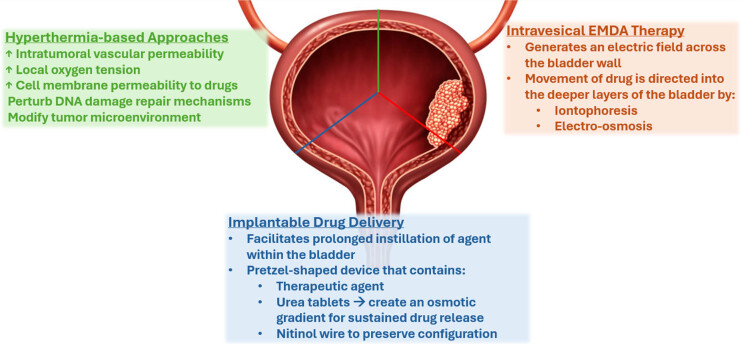
Intravesical therapy is a critical component in the management of non-muscle-invasive bladder cancer (NMIBC), as it reduces rates of disease recurrence and progression. However, the presence of physiologic barriers in the urothelium reduces the penetration and distribution of intravesical chemotherapy, thereby limiting the therapeutic potential. Much progress to overcome this challenge has been made in the realm of intravesical device-assisted therapy. Novel device-assisted treatments include hyperthermia, the radiofrequency-induced thermochemotherapy effect, electromotive drug administration, and implantable drug delivery systems. Notably, chemotherapy enhanced by these device-assisted systems has shown improved oncologic efficacy relative to standard intravesical chemotherapy and comparable outcomes relative to Bacillus Calmette-Guérin (BCG) therapy in patients with intermediate- or high-risk NMIBC. Recent studies also support the utility of device-assisted therapy as a salvage treatment option in patients with BCG-unresponsive disease. Ongoing randomized controlled trials and prospective investigations will further help clarify indications and long-term safety outcomes of these treatment modalities in NMIBC. Herein, we present a comprehensive review of device-assisted therapies and discuss their clinical utilities for the management of NMIBC in the modern era.
膀胱内灌注治疗是非肌层浸润性膀胱癌(NMIBC)管理中的关键组成部分,因为它可降低疾病复发和进展的发生率。然而,尿路上皮中生理屏障的存在会降低膀胱内化疗药物的渗透和分布,从而限制了治疗潜力。在膀胱内装置辅助治疗领域,为克服这一挑战已取得了很大进展。新型装置辅助治疗包括热疗、射频诱导热化疗效应、电动药物给药和可植入药物递送系统。值得注意的是,相对于标准膀胱内化疗,这些装置辅助系统增强的化疗在中高危NMIBC患者中显示出更好的肿瘤学疗效,并且相对于卡介苗(BCG)治疗具有相当的疗效。最近的研究也支持装置辅助治疗作为卡介苗无反应性疾病患者挽救治疗选择的效用。正在进行的随机对照试验和前瞻性研究将进一步有助于阐明这些治疗方式在NMIBC中的适应症和长期安全性结果。在此,我们对装置辅助治疗进行全面综述,并讨论其在现代NMIBC管理中的临床效用。