Hossain Iftakher, Hutchinson Peter, Kawsar Khandkar, Kolias Angelos, Santos Adriana Libório Dos, Esene Ignatius N, Thango Nqobile, Baticulon Ronnie, Laki Beata, Ammar Ahmed
Department of Clinical Neurosciences, Neurosurgery Unit, University of Cambridge, Addenbrooke's Hospital, Cambridge, UK.
Neurocenter, Department of Neurosurgery, Turku University Hospital, Turku, Finland.
Brain Spine. 2024 Oct 12;4:103921. doi: 10.1016/j.bas.2024.103921. eCollection 2024.
Neurosurgery is one of the rapidly evolving specialities of medical science, where the neurosurgeons have to provide evidence-based interventions in life threatening conditions maintaining the ethical standards.
This narrative review sheds light on the current hindrances of the ethical aspects of neurosurgical practice in low and middle-income countries (LMICs) and provide some feasible solutions for future.
A literature search was conducted using PubMed, Scopus and ISI web of knowledge focused on articles in English with the words "medical ethics" together with the words "neurosurgery", "ethical practice", "low and middle-income countries", "surgical innovation", "randomized clinical trials" and "outcome" alone or in combination.
Due to the lack of neurosurgeons and essential infrastructures in LMICs, the practical application of medical ethics is more complicated in the field of neurosurgery. Main obstacles to conduct preclinical and clinical research in the LMICs are the lack of proper ethics committees, quality data, trained manpower and sufficient research funding. Implementation of randomized clinical trials (RCTs) is also difficult for the neurosurgeons working in LMICs.
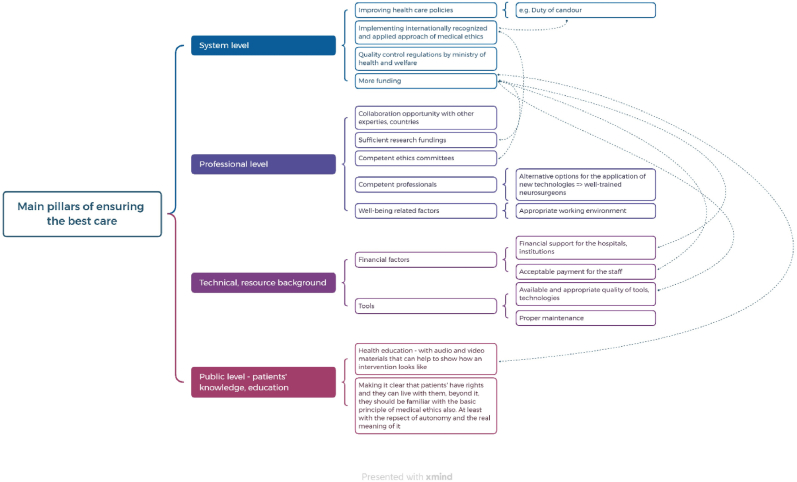
To improve the situation, socio-economic development, including educating the citizens of these countries about their rights, functional regulatory bodies like medical and dental councils, teaching the neurosurgeons about the internationally recognized medical ethics, quality control regulations by the ministry of health and welfare, and more funding for the health care sectors are urgently needed. Global collaboration is needed to help the LMICs to provide their patients international but "customized" standard care.
神经外科是医学领域中发展迅速的专业之一,神经外科医生必须在维持道德标准的同时,为危及生命的情况提供循证干预措施。
本叙述性综述揭示了低收入和中等收入国家(LMICs)神经外科实践伦理方面当前存在的障碍,并为未来提供了一些可行的解决方案。
使用PubMed、Scopus和ISI知识网络进行文献检索,重点关注英文文章,关键词为“医学伦理”以及“神经外科”“伦理实践”“低收入和中等收入国家”“外科创新”“随机临床试验”和“结果”,这些关键词可单独或组合使用。
由于低收入和中等收入国家缺乏神经外科医生和基本基础设施,医学伦理在神经外科领域的实际应用更为复杂。在低收入和中等收入国家开展临床前和临床研究的主要障碍包括缺乏合适的伦理委员会、高质量数据、训练有素的人力以及充足的研究资金。对于在低收入和中等收入国家工作的神经外科医生来说,实施随机临床试验(RCTs)也很困难。
为改善这种情况,迫切需要社会经济发展,包括教育这些国家的公民了解他们的权利、建立像医学和牙科委员会这样的有效监管机构、教导神经外科医生国际公认的医学伦理、由卫生和福利部制定质量控制法规,以及为医疗保健部门提供更多资金。需要全球合作来帮助低收入和中等收入国家为其患者提供国际化但“量身定制”的标准护理。