Medical Scientist Training Program, School of Medicine, Virginia Commonwealth University, Richmond.
Department of Radiation Oncology, Massachusetts General Hospital, Boston.
JAMA Netw Open. 2024 Nov 4;7(11):e2442451. doi: 10.1001/jamanetworkopen.2024.42451.
Cancer is the leading cause of death among Asian American individuals and the second leading cause of death among Native Hawaiian and Pacific Islander people.
To evaluate longitudinal cancer mortality trends from 1999 to 2020 among Asian American and Pacific Islander populations in the US by demographic characteristics.
DESIGN, SETTING, AND PARTICIPANTS: This cross-sectional study used the Centers for Disease Control and Prevention Wide-Ranging Online Data for Epidemiologic Research database to obtain age-adjusted cancer death rates among Asian American and Pacific Islander individuals of all ages between January 1, 1999, and December 31, 2020. Data were analyzed from January 12 to March 19, 2024.
Age, sex, cancer type, and US census regions.
Trends and average annual percent changes (AAPCs) in age-adjusted cancer-specific mortality (CSM) rates for non-Hispanic Asian American and Pacific Islander populations were estimated by cancer type, age, sex, and region using Joinpoint regression.
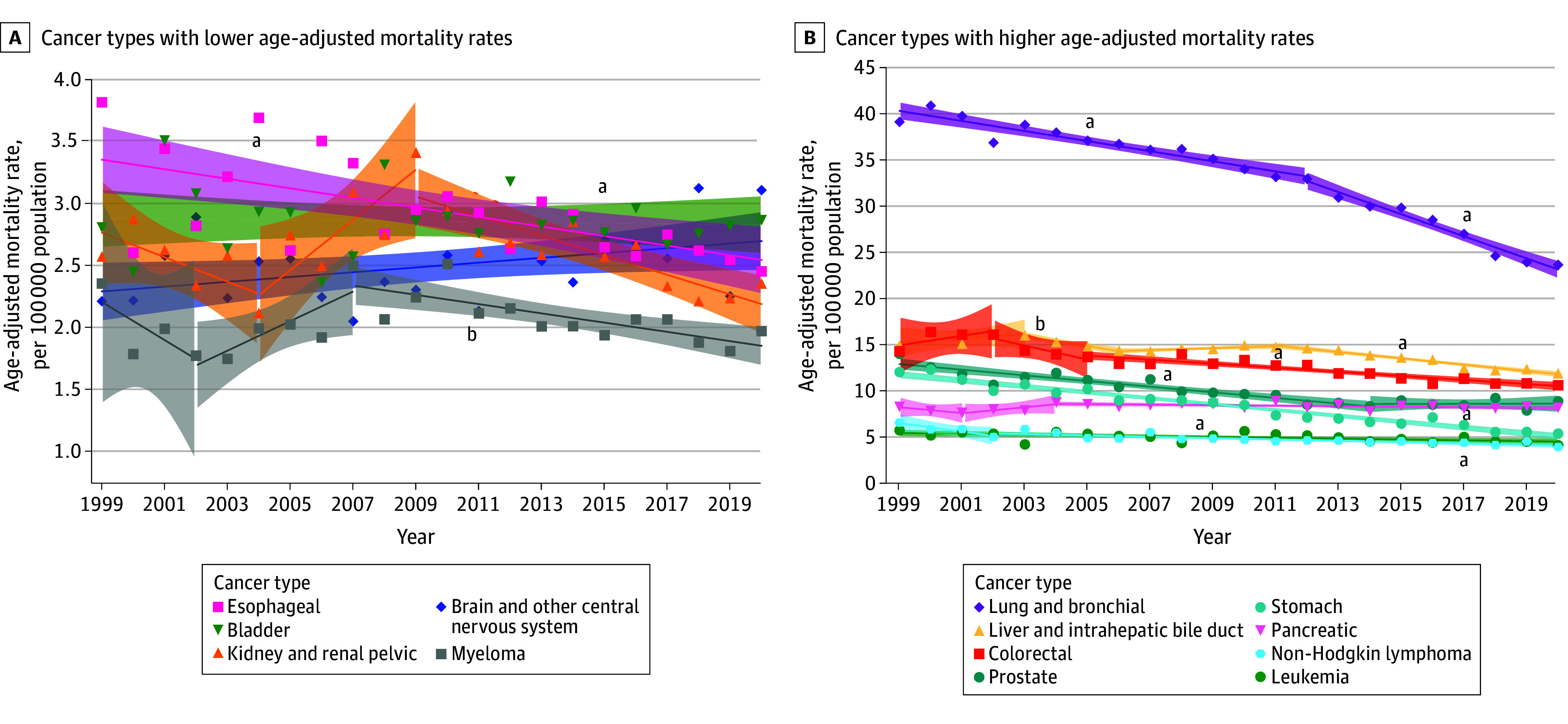
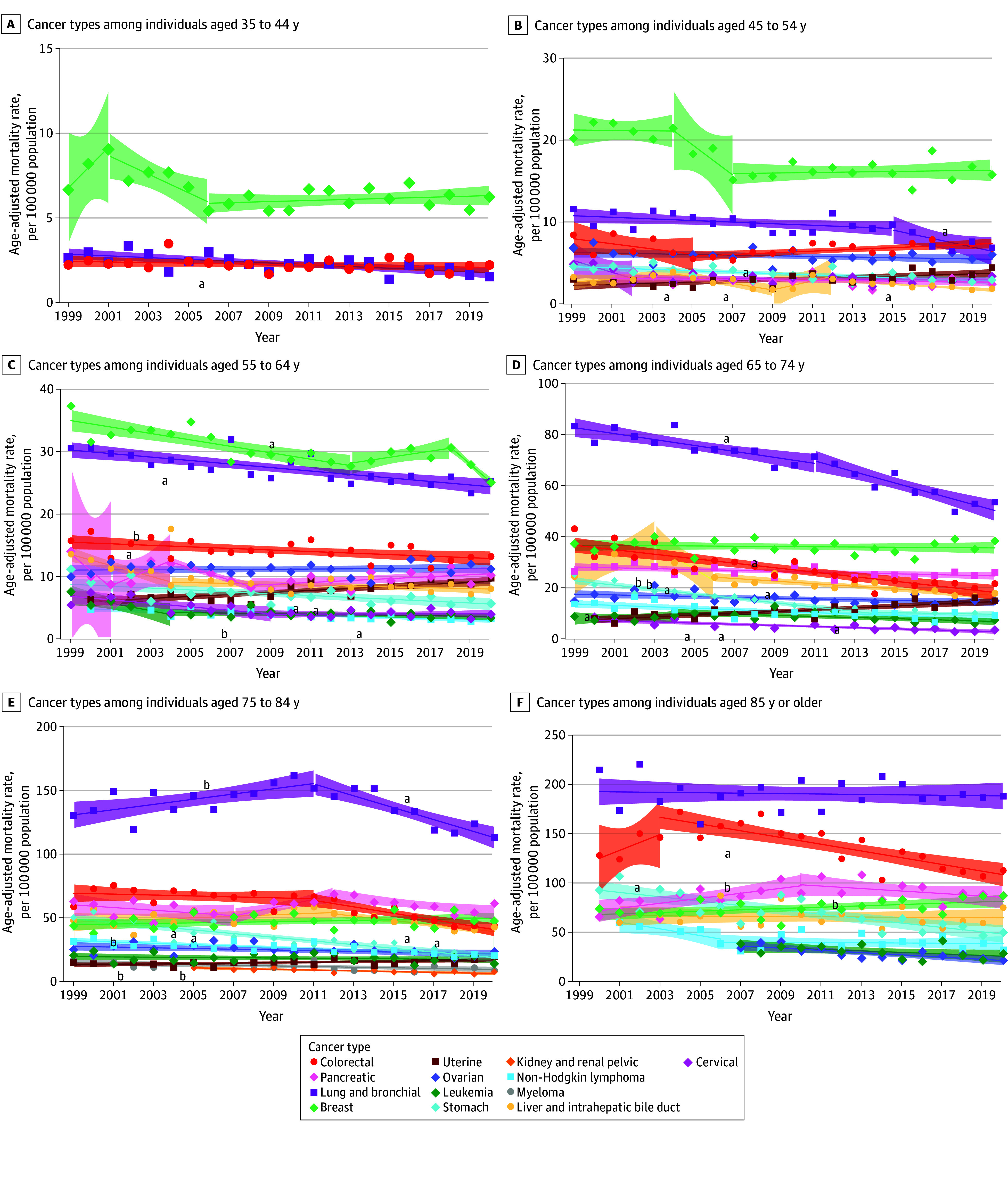
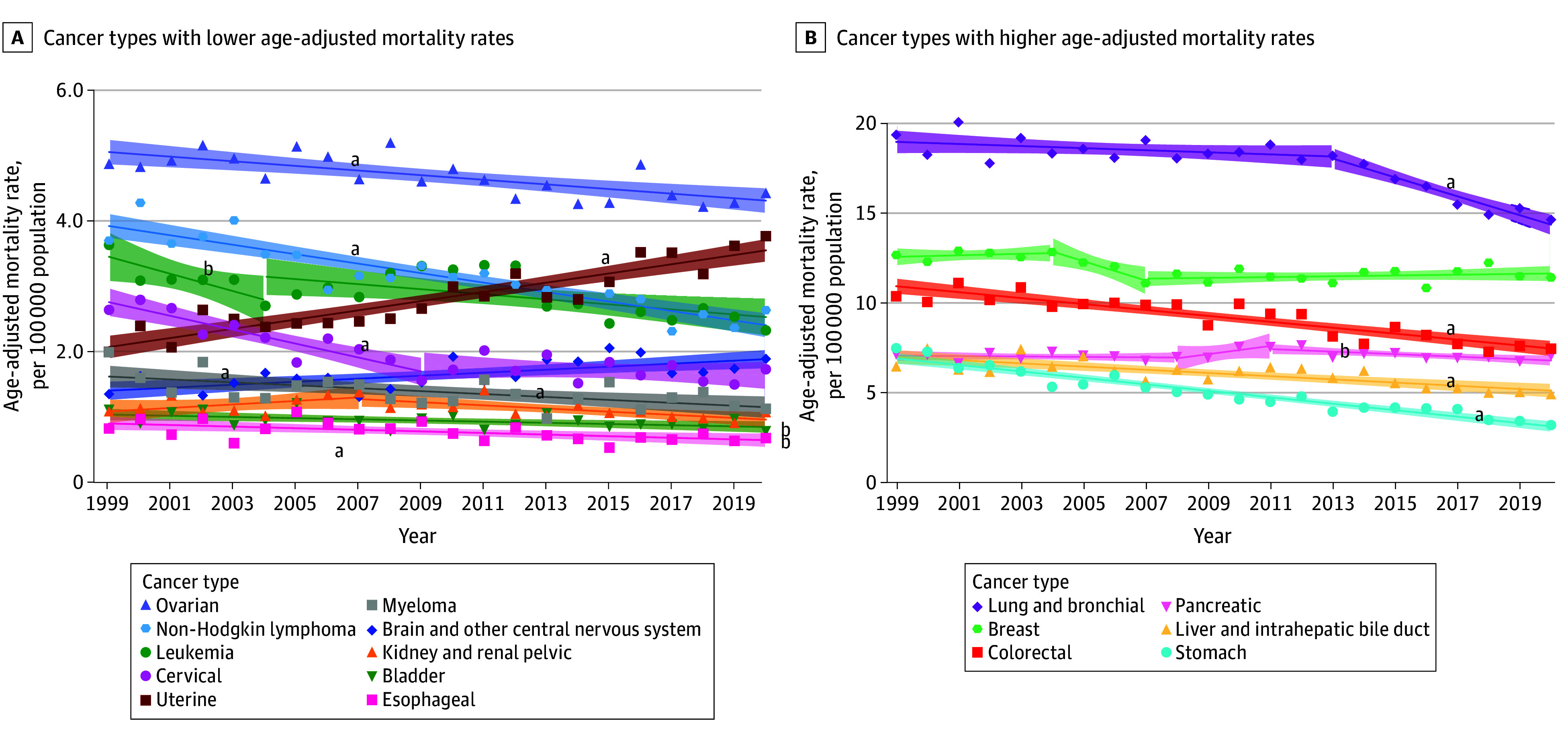
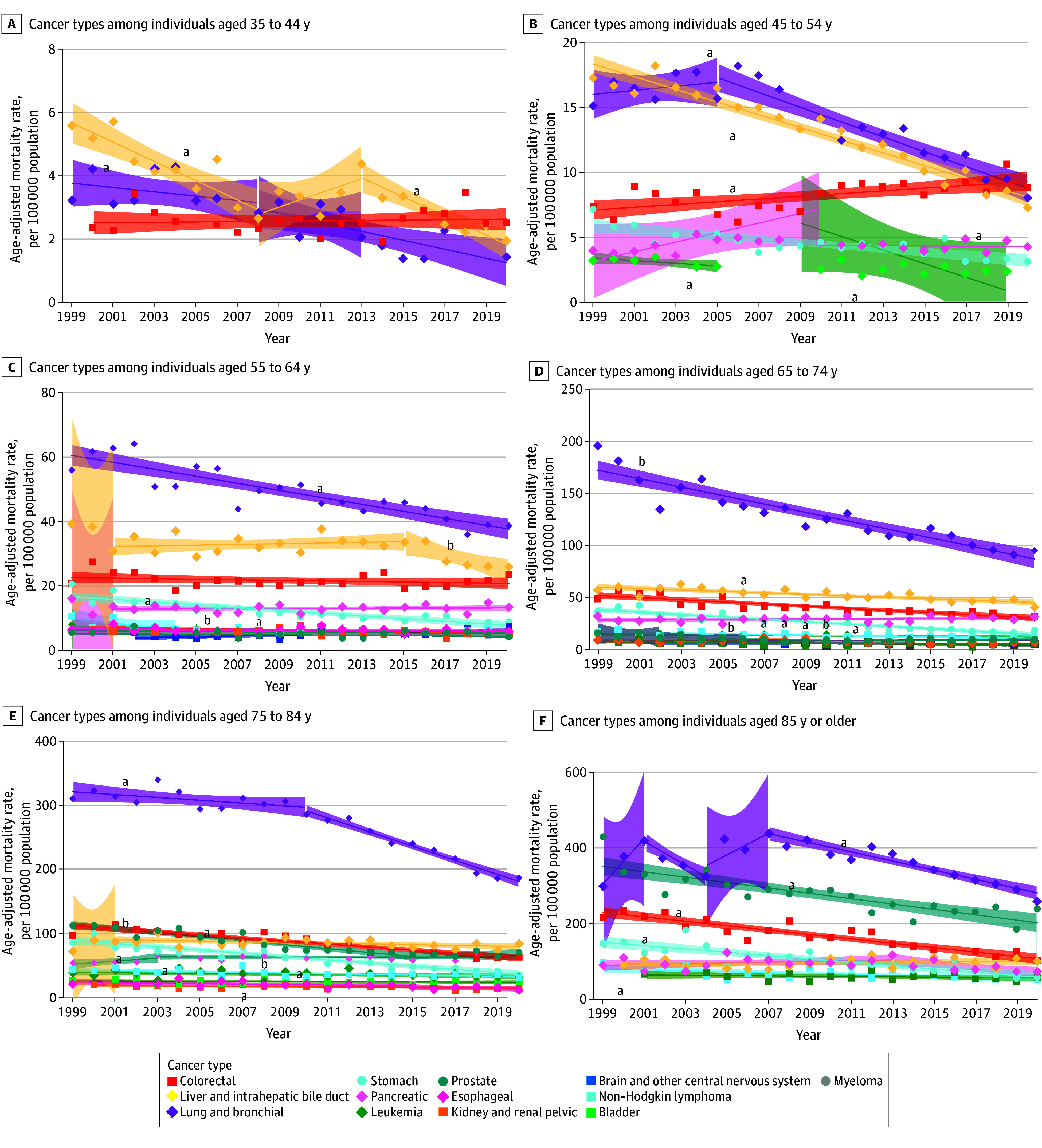
Between 1999 and 2020, 305 386 Asian American and Pacific Islander individuals (median [IQR] age, 69.5 [58.5-79.2] years; 51.1% male) died of cancer in the US. Overall, the CSM rate decreased by 1.5% annually. Men experienced a greater CSM rate decrease (AAPC, -1.8%; 95% CI, -2.2% to -1.3%) compared with women (AAPC, -1.1%; 95% CI: -1.2% to -1.0%). For women, death rates decreased for most cancer types but increased for uterine (AAPC, 2.5%; 95% CI, 2.0%-3.0%) and brain and central nervous system (AAPC, 1.4%; 95% CI: 0.7%-2.1%) cancers. Colorectal cancer mortality rates increased among men aged 45 to 54 years (AAPC, 1.3%; 95% CI, 0.5%-2.1%). Liver and intrahepatic bile duct cancer mortality increased for both men and women in all US census regions, uterine cancer mortality increased in all regions for women, and pancreatic cancer mortality increased in the Midwest for both men and women.
Although these findings show an overall decrease in CSM among Asian American and Pacific Islander populations, specific cancer types exhibited increased mortality rates, with further disparities by sex and age. Targeted, culturally adapted clinical and public health interventions are needed to narrow disparities in cancer mortality.
癌症是导致亚裔美国人死亡的主要原因,也是导致夏威夷原住民和太平洋岛民死亡的第二大原因。
通过人口统计学特征评估美国亚裔和太平洋岛民人群中 1999 年至 2020 年期间的癌症死亡率的纵向趋势。
设计、地点和参与者:本横断面研究使用疾病控制和预防中心广泛在线流行病学研究数据库,获取 1999 年 1 月 1 日至 2020 年 12 月 31 日期间所有年龄段亚裔和太平洋岛民个体的年龄调整癌症死亡率。数据分析于 2024 年 1 月 12 日至 3 月 19 日进行。
年龄、性别、癌症类型和美国人口普查区域。
使用 Joinpoint 回归,根据癌症类型、年龄、性别和区域,估计非西班牙裔亚裔和太平洋岛民人群中特定癌症的年龄调整癌症特异性死亡率(CSM)率的趋势和平均年百分比变化(AAPC)。
1999 年至 2020 年间,在美国有 305386 名亚裔和太平洋岛民个体(中位数[IQR]年龄,69.5[58.5-79.2]岁;51.1%为男性)死于癌症。总体而言,CSM 率每年下降 1.5%。与女性相比,男性的 CSM 率下降幅度更大(AAPC,-1.8%;95%CI,-2.2%至-1.3%)(AAPC,-1.1%;95%CI:-1.2%至-1.0%)。对于女性,大多数癌症类型的死亡率下降,但子宫癌(AAPC,2.5%;95%CI,2.0%-3.0%)和脑和中枢神经系统(AAPC,1.4%;95%CI:0.7%-2.1%)癌症的死亡率上升。45 至 54 岁男性的结直肠癌死亡率上升(AAPC,1.3%;95%CI,0.5%-2.1%)。所有美国人口普查区域的男性和女性肝癌和肝内胆管癌死亡率均上升,所有区域的女性子宫癌死亡率上升,中西部地区的男性和女性胰腺癌死亡率上升。
尽管这些发现表明亚裔和太平洋岛民人群的 CSM 总体呈下降趋势,但特定癌症类型的死亡率上升,且存在性别和年龄的进一步差异。需要有针对性的、文化上适应的临床和公共卫生干预措施,以缩小癌症死亡率方面的差距。