
循环炎症蛋白在免疫细胞对食管癌风险影响中的中介作用:一项孟德尔随机化研究。
Mediating role of circulating inflammatory proteins in the effect of immune cells on esophageal cancer risk: A Mendelian randomization study.
机构信息
Henan University of Chinese Medicine, Zhengzhou, Henan, China.
Laboratory of TCM Syndrome and Prescription Signaling, Academy of Zhongjing, Zhengzhou, Henan, China.
出版信息
Medicine (Baltimore). 2024 Nov 1;103(44):e40374. doi: 10.1097/MD.0000000000040374.
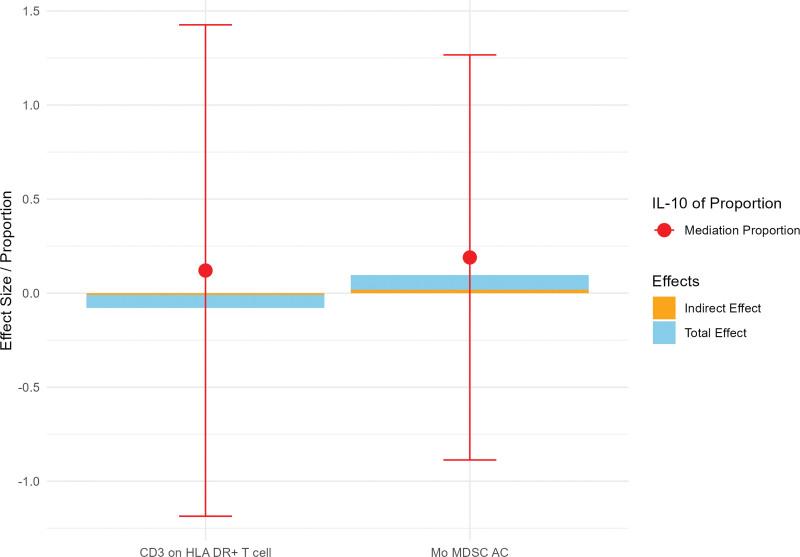
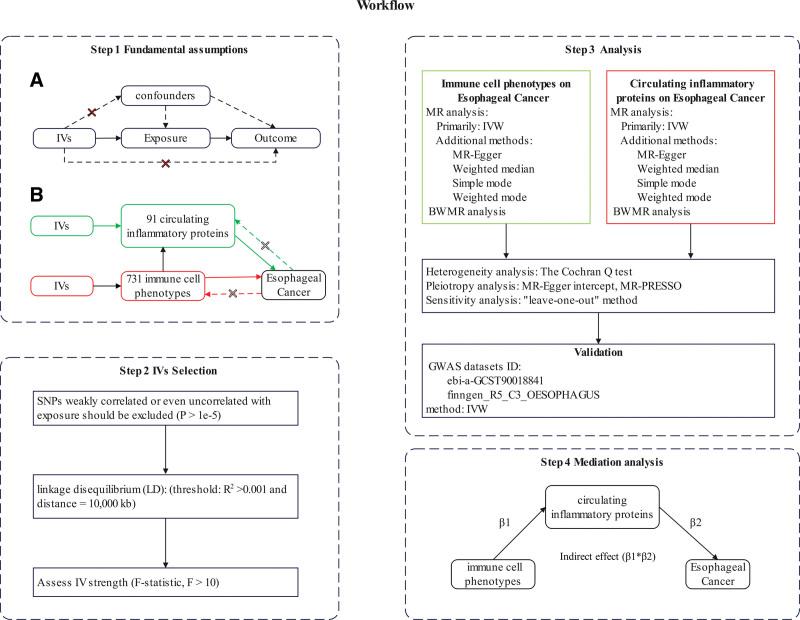
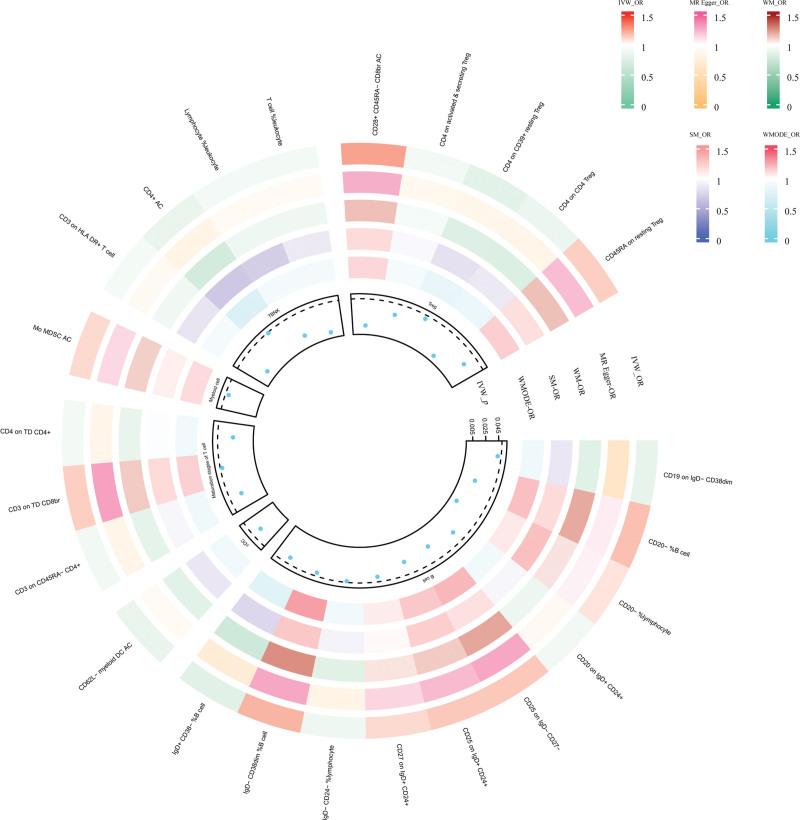
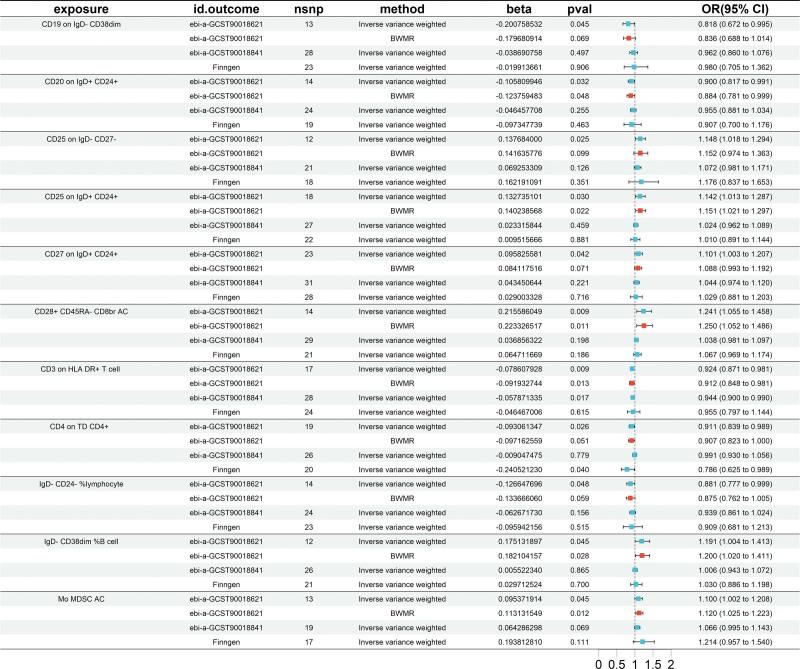
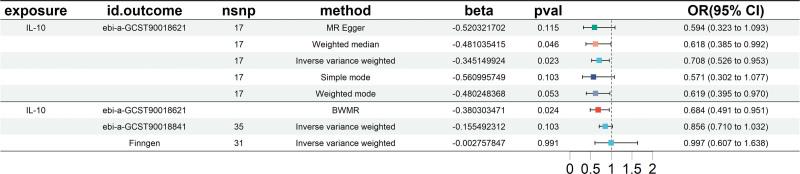
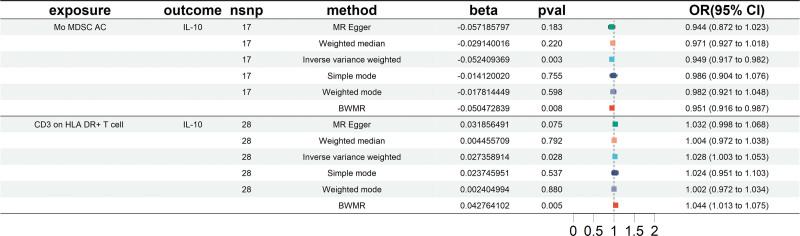
The immune system and inflammatory processes play crucial roles in the development of esophageal cancer (EC). This study aimed to investigate the causal relationships between 731 immune cell phenotypes, 91 circulating inflammatory proteins, and EC, with a particular focus on the mediating role of circulating inflammatory proteins. Utilizing public genetic data, we applied a 2-sample Mendelian Randomization (MR) method to examine the causal relationships between 731 immune cell phenotypes, 91 circulating inflammatory proteins, and EC. Comprehensive sensitivity analyses were conducted to assess the robustness, heterogeneity, and horizontal pleiotropy of the MR results. Additionally, a 2-step MR method was employed to quantify the impact and proportion of immune cell phenotypes mediated by circulating inflammatory proteins on EC. Eleven immune cell phenotypes and 1 inflammatory cytokine were found to have causal relationships with EC, with results stable across all sensitivity analyses. Mediation analyses revealed that only 2 cell phenotypes had causal relationships with EC through interleukin-10: CD3 on human leukocyte antigen-DR (HLA-DR)+ T cells (mediation effect = -0.009; mediation proportion = 12.01%) and monocytic myeloid-derived suppressor cell absolute count (mediation effect = 0.018; mediation proportion = 18.97%). This study enhances the understanding of the causal relationships between immune cells, circulating inflammatory proteins, and EC. The findings highlight the potential mediating role of interleukin-10, providing new insights into the mechanisms by which immune cells may influence esophageal tumorigenesis.
免疫系统和炎症过程在食管癌(EC)的发展中起着至关重要的作用。本研究旨在探讨 731 种免疫细胞表型、91 种循环炎症蛋白与 EC 之间的因果关系,特别关注循环炎症蛋白的介导作用。利用公共遗传数据,我们应用两样本 Mendelian Randomization(MR)方法来检验 731 种免疫细胞表型、91 种循环炎症蛋白与 EC 之间的因果关系。我们进行了全面的敏感性分析,以评估 MR 结果的稳健性、异质性和水平多效性。此外,我们还采用两步 MR 方法来量化循环炎症蛋白介导的免疫细胞表型对 EC 的影响和比例。发现 11 种免疫细胞表型和 1 种炎症细胞因子与 EC 具有因果关系,所有敏感性分析的结果均稳定。中介分析表明,只有 2 种细胞表型通过白细胞介素-10(interleukin-10,IL-10)与 EC 具有因果关系:人类白细胞抗原-DR(human leukocyte antigen-DR,HLA-DR)+T 细胞上的 CD3(中介效应=-0.009;中介比例=12.01%)和单核细胞髓系来源的抑制细胞绝对计数(mediation effect = 0.018;mediation proportion = 18.97%)。本研究增进了对免疫细胞、循环炎症蛋白与 EC 之间因果关系的理解。研究结果强调了白细胞介素-10 的潜在介导作用,为免疫细胞影响食管肿瘤发生的机制提供了新的见解。
 Zotero 插件