Wang Yao-Geng, Gan Chang-Pei, Beukers-Korver Joke, Rosing Hilde, Li Wen-Long, Wagenaar Els, Lebre Maria C, Song Ji-Ying, Pritchard Colin, Bin Ali Rahmen, Huijbers Ivo, Beijnen Jos H, Schinkel Alfred H
Division of Pharmacology, The Netherlands Cancer Institute, 1066 CX, Amsterdam, The Netherlands.
Department of Pharmacy & Pharmacology, The Netherlands Cancer Institute, 1066 CX, Amsterdam, The Netherlands.
Acta Pharmacol Sin. 2025 Mar;46(3):777-793. doi: 10.1038/s41401-024-01407-4. Epub 2024 Nov 4.
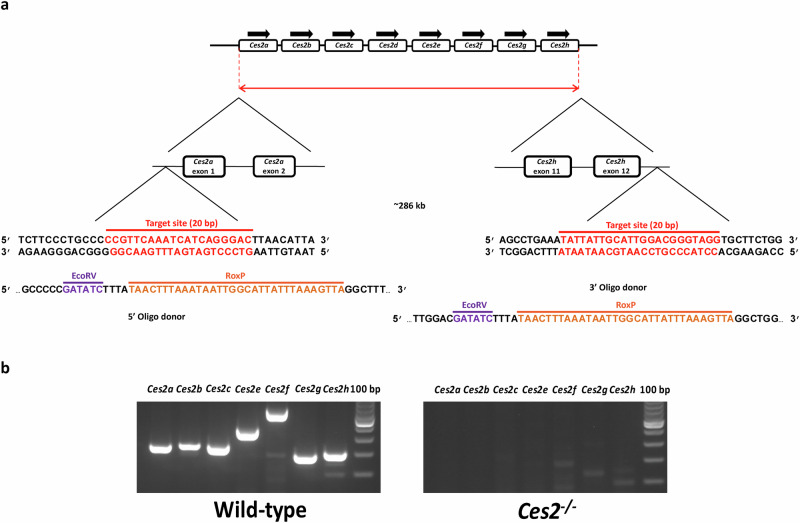
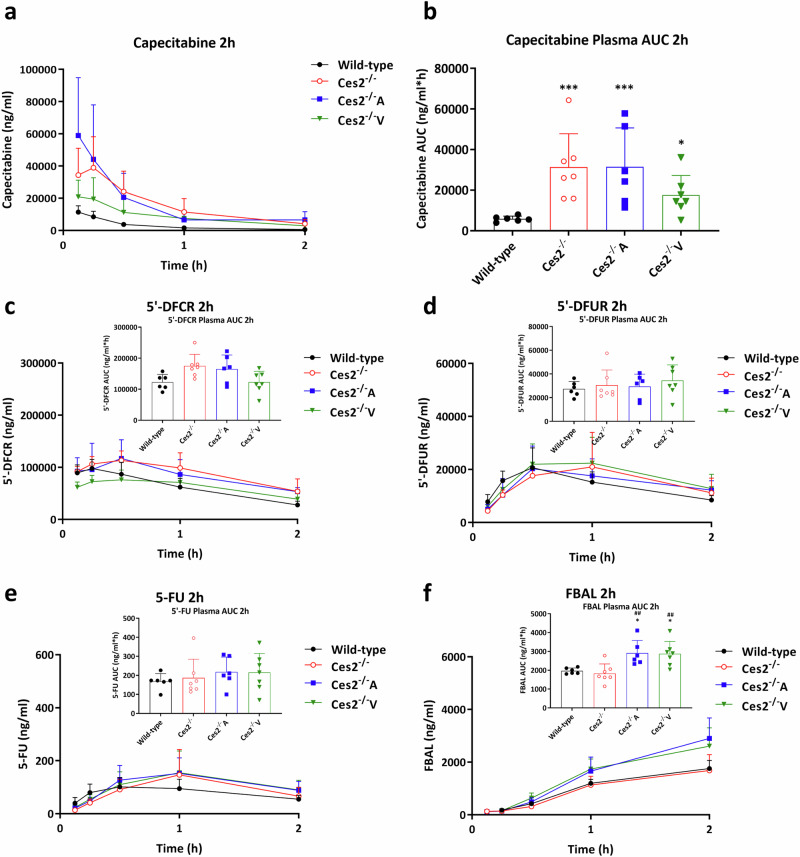
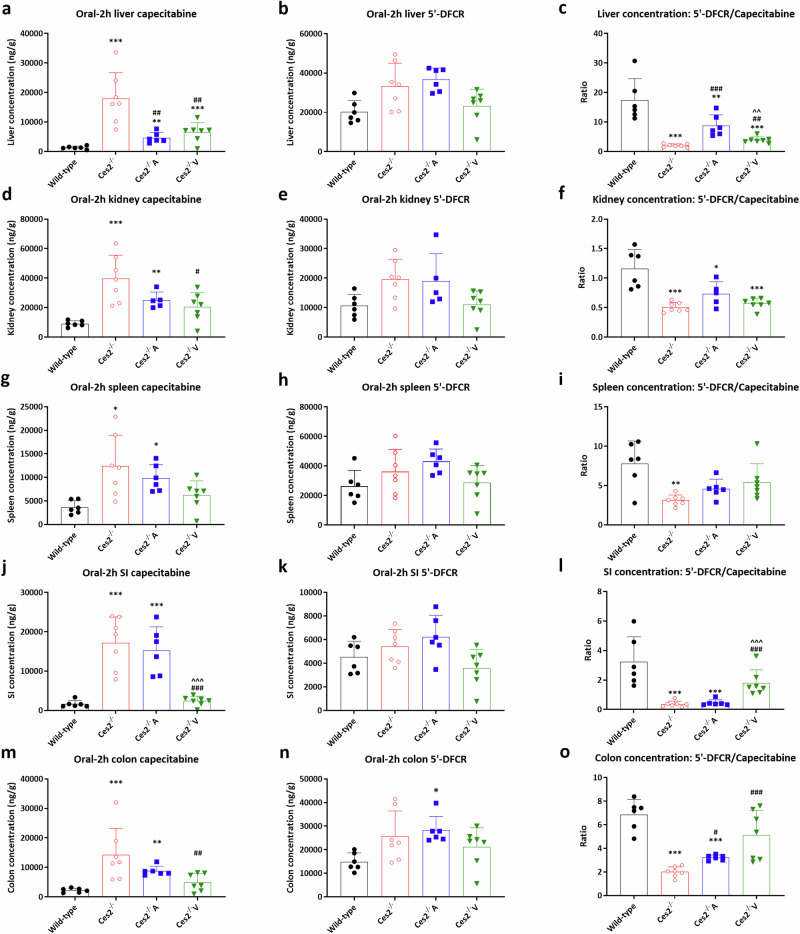
Carboxylesterase 2 (CES2) is expressed mainly in liver and intestine, but most abundantly in intestine. It hydrolyzes carboxylester, thioester, and amide bonds in many exogenous and endogenous compounds, including lipids. CES2 therefore not only plays an important role in the metabolism of many (pro-)drugs, toxins and pesticides, directly influencing pharmacology and toxicology in humans, but it is also involved in energy homeostasis, affecting lipid and glucose metabolism. In this study we investigated the pharmacological and physiological functions of CES2. We constructed Ces2 cluster knockout mice lacking all eight Ces2 genes (Ces2 strain) as well as humanized hepatic or intestinal CES2 transgenic strains in this Ces2 background. We showed that oral availability and tissue disposition of capecitabine were drastically increased in Ces2 mice, and tissue-specifically decreased by intestinal and hepatic human CES2 (hCES2) activity. The metabolism of the chemotherapeutic agent vinorelbine was strongly reduced in Ces2 mice, but only marginally rescued by hCES2 expression. On the other hand, Ces2 mice exhibited fatty liver, adipositis, hypercholesterolemia and diminished glucose tolerance and insulin sensitivity, but without body mass changes. Paradoxically, hepatic hCES2 expression rescued these metabolic phenotypes but increased liver size, adipose tissue mass and overall body weight, suggesting a "healthy" obesity phenotype. In contrast, intestinal hCES2 expression efficiently rescued all phenotypes, and even improved some parameters, including body weight, relative to the wild-type baseline values. Our results suggest that the induction of intestinal hCES2 may combat most, if not all, of the adverse effects of metabolic syndrome. These CES2 mouse models will provide powerful preclinical tools to enhance drug development, increase physiological insights, and explore potential solutions for metabolic syndrome-associated disorders.
羧酸酯酶2(CES2)主要在肝脏和肠道中表达,但在肠道中表达最为丰富。它能水解许多外源性和内源性化合物中的羧酸酯、硫酯和酰胺键,包括脂质。因此,CES2不仅在许多(前体)药物、毒素和农药的代谢中发挥重要作用,直接影响人类的药理学和毒理学,还参与能量稳态,影响脂质和葡萄糖代谢。在本研究中,我们调查了CES2的药理和生理功能。我们构建了缺乏所有八个Ces2基因的Ces2簇敲除小鼠(Ces2品系)以及在此Ces2背景下的人源化肝脏或肠道CES2转基因品系。我们发现,卡培他滨在Ces2小鼠中的口服生物利用度和组织分布显著增加,而肠道和肝脏中的人CES2(hCES2)活性则使其组织特异性降低。化疗药物长春瑞滨的代谢在Ces2小鼠中大幅降低,但hCES2表达仅使其略有恢复。另一方面,Ces2小鼠表现出脂肪肝、脂肪炎、高胆固醇血症以及葡萄糖耐量和胰岛素敏感性降低,但体重没有变化。矛盾的是,肝脏hCES2表达挽救了这些代谢表型,但增加了肝脏大小、脂肪组织质量和总体体重,提示一种“健康的”肥胖表型。相比之下,肠道hCES2表达有效地挽救了所有表型,甚至相对于野生型基线值改善了一些参数,包括体重。我们的结果表明,诱导肠道hCES2可能对抗代谢综合征的大部分(如果不是全部)不良反应。这些CES2小鼠模型将提供强大的临床前工具,以促进药物开发、增加生理学认识,并探索代谢综合征相关疾病的潜在解决方案。