Xiong Zhengfang, Liu Xiaolei, Wang Qingdi
Qinghai Provincial People's Hospital, Xining, 810007, China.
Graduate School of Qinghai University, Xining, 810007, China.
Arch Gynecol Obstet. 2025 Apr;311(4):1051-1061. doi: 10.1007/s00404-024-07695-9. Epub 2024 Nov 6.
To explore the effects of high-altitude hypoxia on the microenvironment of oocyte development and fertilization potential, we compared the metabolomic patterns of follicular fluid from women living in different altitude areas and traced their oocyte maturation and subsequent development.
A total of 315 clinical cases were collected and divided into three groups according to their residence altitudes: 138 cases in low-altitude (< 2300 m) group, 100 cases in middle-altitude (2300-2800 m) group and 77 cases in high-altitude (> 2800 m) group. The clinical outcomes were statistically estimated, including hormonal level, oocyte maturation, in vitro fertilization, and embryo development. Meanwhile, a metabolomic analysis was performed on the follicular fluid of women from different groups using ultra-high-performance liquid chromatography and high-resolution mass spectrometry and differential metabolites were analyzed through the KEGG pathway.
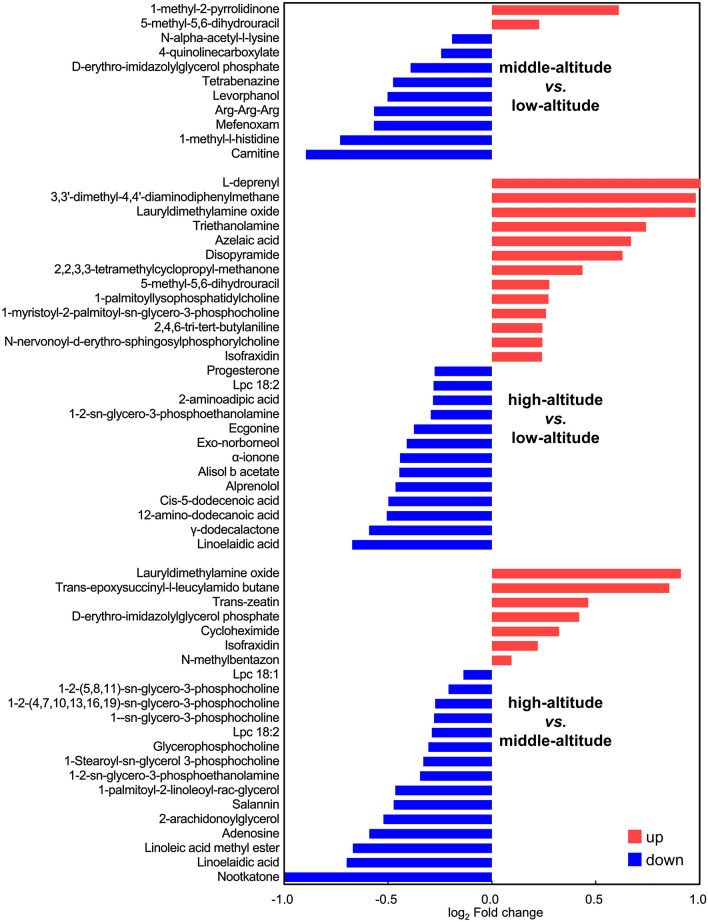
The clinical data indicated that the physical condition and reproductive hormone secretion were similar among different groups. Although personalized gonadotropin-releasing hormone strategies were applied, the numbers of antral follicles and obtained oocytes were not impacted by the residence altitude change. In in vitro culture, the maturing rate, fertility rate and cleavage rate of high-altitude group were compared with the other groups. However, the rates of high-quality embryo, formative blastocyst, and available blastocyst were gradually decreased with the rise of residence altitude. Metabolome analysis identified 1193 metabolites in female follicular fluid. Differential analysis indicated that metabolic components in follicular fluid were remarkably changed with the elevation of residence altitude. These differential metabolites were closely related with amino acid metabolism, protein digestion and absorption, oocyte meiosis and steroid biosynthesis.
The residence altitude alters the microenvironment of follicular fluid, which could damage the oocyte developmental potential. This study provides diagnostic basis and therapeutic targets for research on female oocyte and embryo development.
为探究高原低氧对卵母细胞发育微环境及受精潜能的影响,我们比较了生活在不同海拔地区女性卵泡液的代谢组学模式,并追踪了她们卵母细胞的成熟及后续发育情况。
共收集315例临床病例,根据居住海拔分为三组:低海拔(<2300米)组138例、中海拔(2300 - 2800米)组100例、高海拔(>2800米)组77例。对临床结局进行统计学评估,包括激素水平、卵母细胞成熟、体外受精和胚胎发育情况。同时,采用超高效液相色谱和高分辨率质谱对不同组女性的卵泡液进行代谢组学分析,并通过KEGG通路分析差异代谢物。
临床数据表明,不同组之间的身体状况和生殖激素分泌情况相似。尽管采用了个性化的促性腺激素释放激素策略,但窦卵泡数量和获取的卵母细胞数量并未受居住海拔变化的影响。在体外培养中,比较了高海拔组与其他组的成熟率、受精率和卵裂率。然而,优质胚胎、形成囊胚和可用囊胚的比率随着居住海拔的升高而逐渐降低。代谢组学分析在女性卵泡液中鉴定出1193种代谢物。差异分析表明,卵泡液中的代谢成分随着居住海拔的升高而发生显著变化。这些差异代谢物与氨基酸代谢、蛋白质消化与吸收、卵母细胞减数分裂和类固醇生物合成密切相关。
居住海拔改变了卵泡液的微环境,这可能损害卵母细胞的发育潜能。本研究为女性卵母细胞和胚胎发育研究提供了诊断依据和治疗靶点。