School of Aquatic and Fisheries Sciences, University of Washington, Seattle, Washington United States of America.
Department of Biological Sciences, University of Rhode Island, Kingston, Rhode Island United States of America.
PLoS Biol. 2024 Nov 12;22(11):e3002875. doi: 10.1371/journal.pbio.3002875. eCollection 2024 Nov.
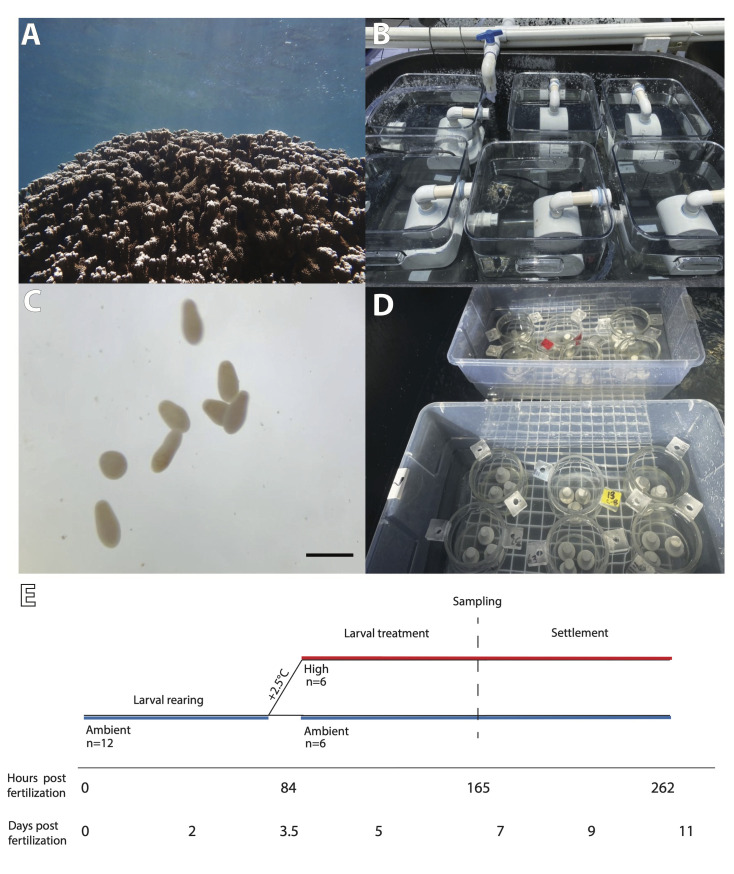
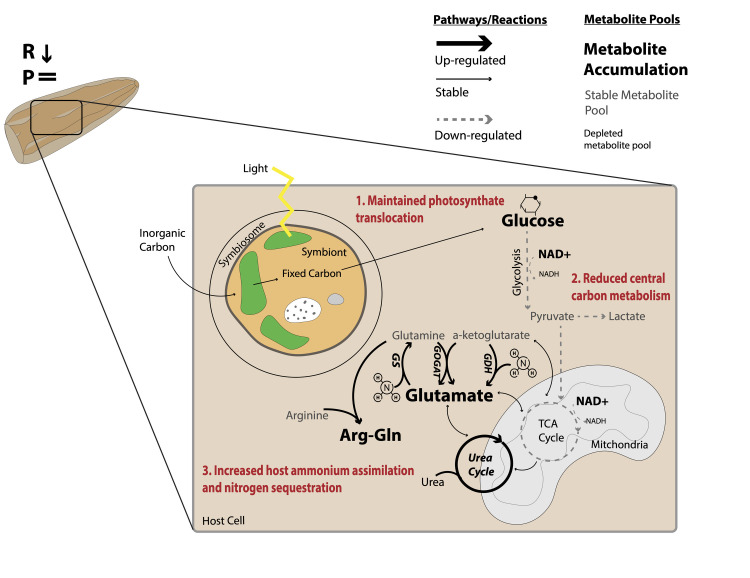
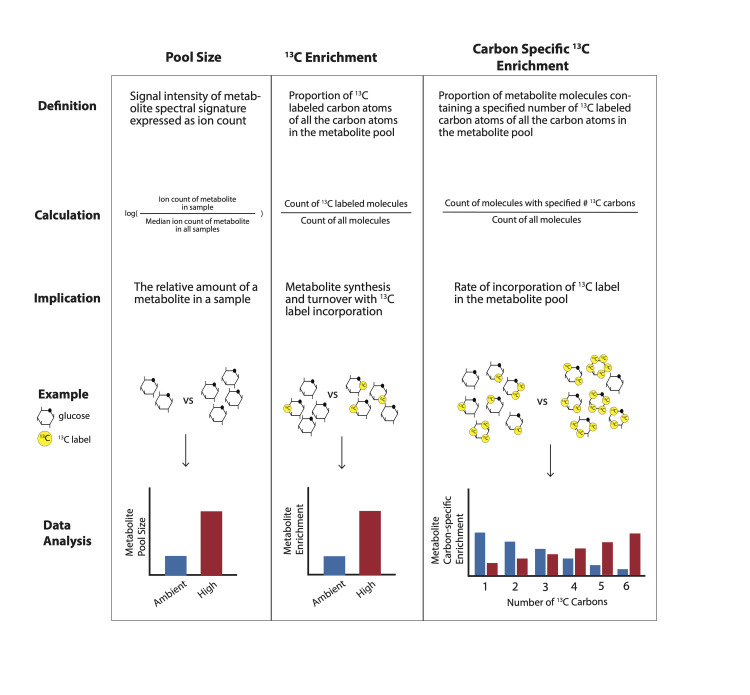
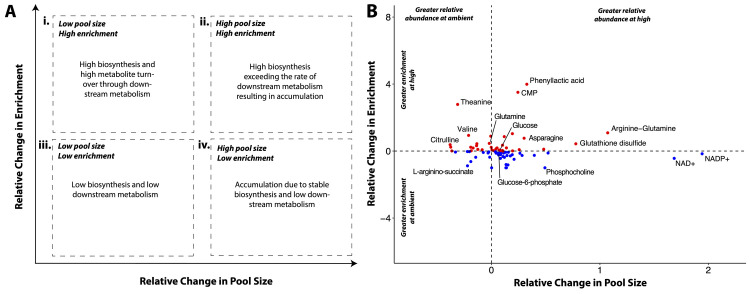
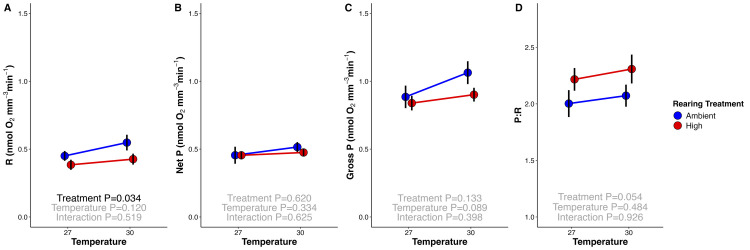
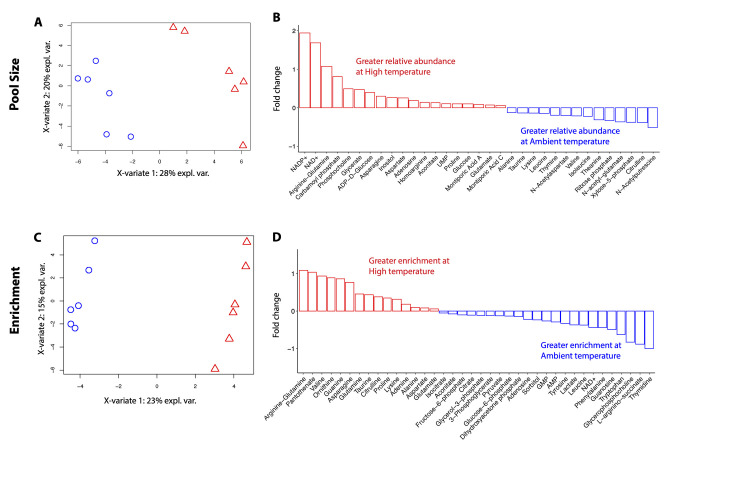
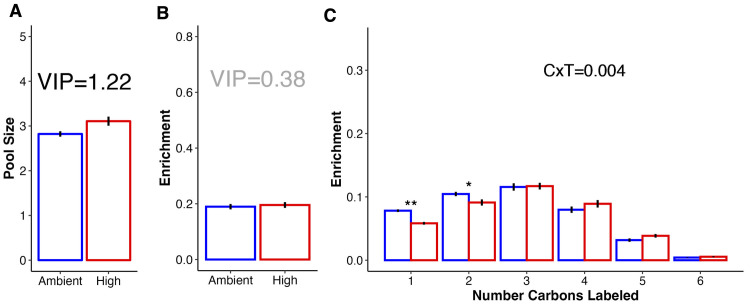
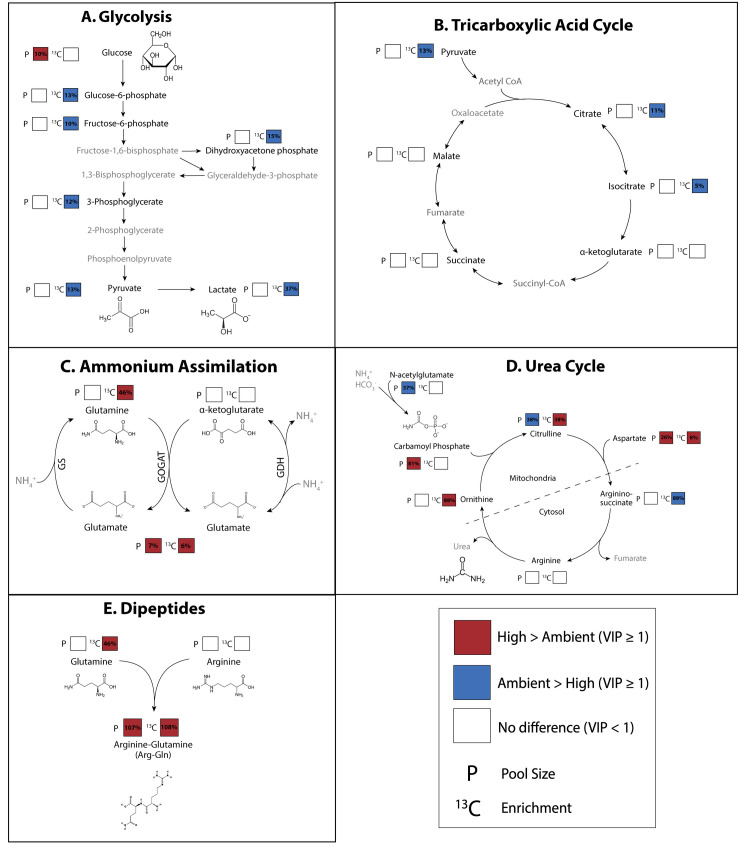
Rising sea surface temperatures are increasingly causing breakdown in the nutritional relationship between corals and algal endosymbionts (Symbiodiniaceae), threatening the basis of coral reef ecosystems and highlighting the critical role of coral reproduction in reef maintenance. The effects of thermal stress on metabolic exchange (i.e., transfer of fixed carbon photosynthates from symbiont to host) during sensitive early life stages, however, remains understudied. We exposed symbiotic Montipora capitata coral larvae in Hawai'i to high temperature (+2.5°C for 3 days), assessed rates of photosynthesis and respiration, and used stable isotope tracing (4 mM 13C sodium bicarbonate; 4.5 h) to quantify metabolite exchange. While larvae did not show any signs of bleaching and did not experience declines in survival and settlement, metabolic depression was significant under high temperature, indicated by a 19% reduction in respiration rates, but with no change in photosynthesis. Larvae exposed to high temperature showed evidence for maintained translocation of a major photosynthate, glucose, from the symbiont, but there was reduced metabolism of glucose through central carbon metabolism (i.e., glycolysis). The larval host invested in nitrogen cycling by increasing ammonium assimilation, urea metabolism, and sequestration of nitrogen into dipeptides, a mechanism that may support the maintenance of glucose translocation under thermal stress. Host nitrogen assimilation via dipeptide synthesis appears to be used for nitrogen limitation to the Symbiodiniaceae, and we hypothesize that nitrogen limitation contributes to retention of fixed carbon by favoring photosynthate translocation to the host. Collectively, our findings indicate that although these larvae are susceptible to metabolic stress under high temperature, diverting energy to nitrogen assimilation to maintain symbiont population density, photosynthesis, and carbon translocation may allow larvae to avoid bleaching and highlights potential life stage specific metabolic responses to stress.
海水表面温度的上升正逐渐导致珊瑚与其共生藻类(虫黄藻)之间营养关系的破裂,威胁到珊瑚礁生态系统的基础,并凸显出珊瑚繁殖在珊瑚礁维护中的关键作用。然而,热应激对敏感早期生命阶段代谢交换(即,共生体向宿主转移固定碳光合产物)的影响仍研究不足。我们在夏威夷将共生的 M. capitata 珊瑚幼虫暴露于高温(+2.5°C 持续 3 天),评估了光合作用和呼吸作用的速率,并使用稳定同位素示踪(4 mM 13C 碳酸氢钠;4.5 h)来量化代谢物交换。虽然幼虫没有出现白化现象,也没有经历存活率和定殖率的下降,但在高温下代谢抑制显著,呼吸速率下降了 19%,而光合作用没有变化。暴露于高温的幼虫表现出从共生体中维持主要光合产物葡萄糖转运的证据,但通过中心碳代谢(即糖酵解)葡萄糖代谢减少。幼虫宿主通过增加氨同化、尿素代谢和将氮固定到二肽中,投资于氮循环,这一机制可能支持在热应激下葡萄糖转运的维持。宿主通过二肽合成进行氮同化似乎用于对虫黄藻的氮限制,我们假设氮限制通过有利于光合产物向宿主的转运来保留固定碳。总的来说,我们的研究结果表明,尽管这些幼虫在高温下容易受到代谢应激的影响,但通过将能量转移到氮同化以维持共生体种群密度、光合作用和碳转运,幼虫可能避免白化,并突出了对特定生命阶段的应激的潜在代谢反应。