Suraparaju Subbarama Kousik, Elangovan Elavarasan, Muthuvairavan Guna, Samykano Mahendran, Elumalai P V, Natarajan Sendhil Kumar, Rajamony Reji Kumar, Balasubramanian Dhinesh, Fouad Yasser, Soudagar Manzoore Elahi M, Miao Zhang, Sivalingam Krishna Moorthy
Centre for Research in Advanced Fluid and Process, Universiti Malaysia Pahang Al-Sultan Abdullah, Lebuhraya Tun Razak, Gambang, Pahang, 26300, Kuantan, Malaysia.
Solar Energy Laboratory, Department of Mechanical Engineering, Sri Vasavi Engineering College (A), Tadepalligudem, 534101, Andhra Pradesh, India.
Sci Rep. 2024 Nov 12;14(1):27755. doi: 10.1038/s41598-024-78147-2.
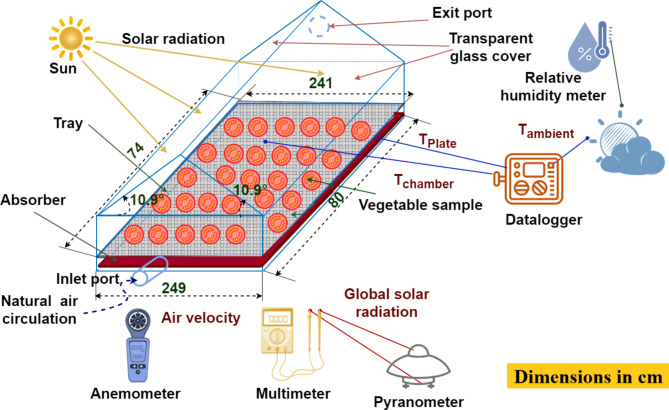
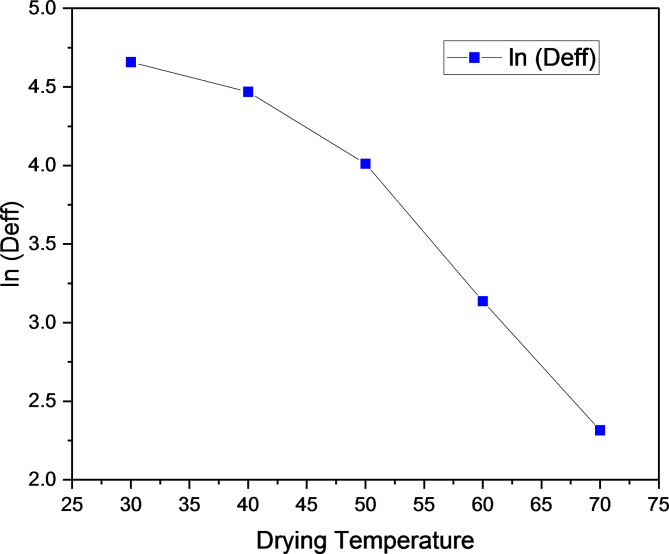
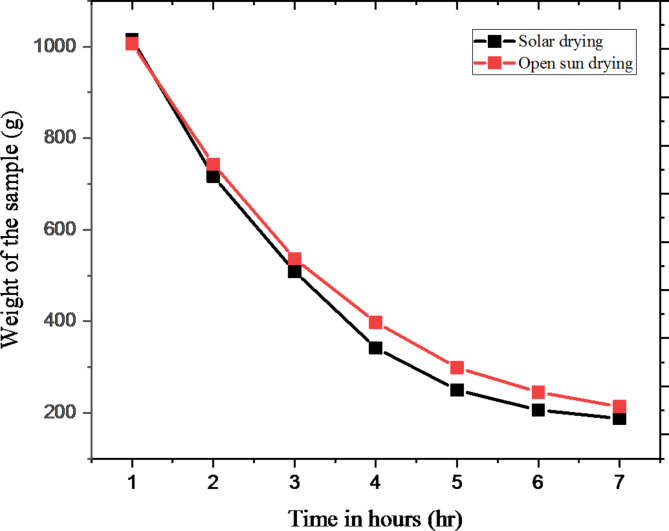
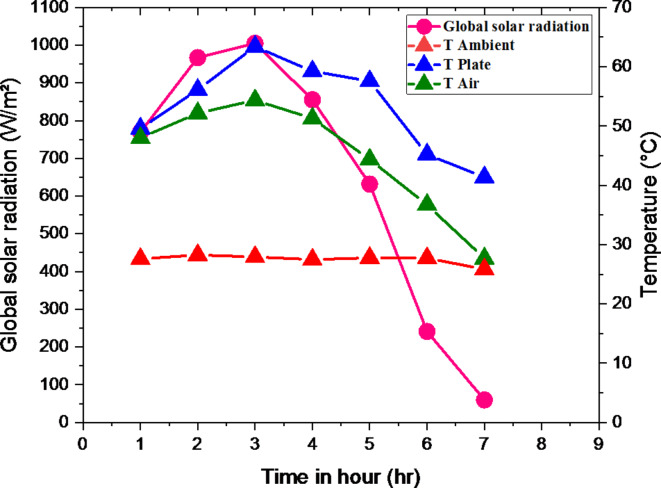
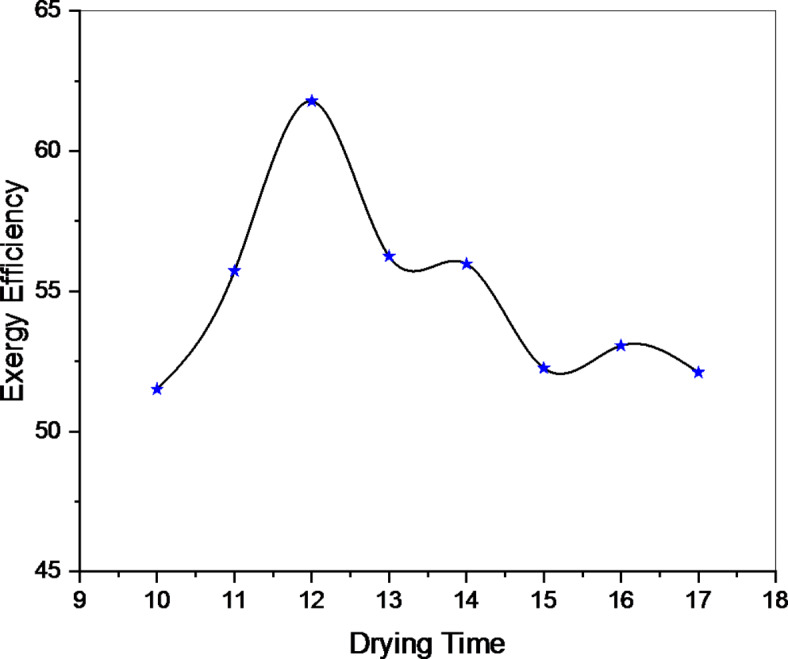
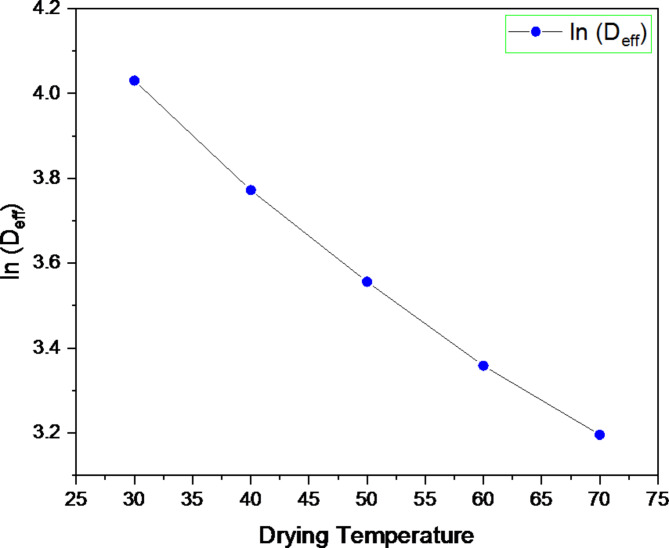
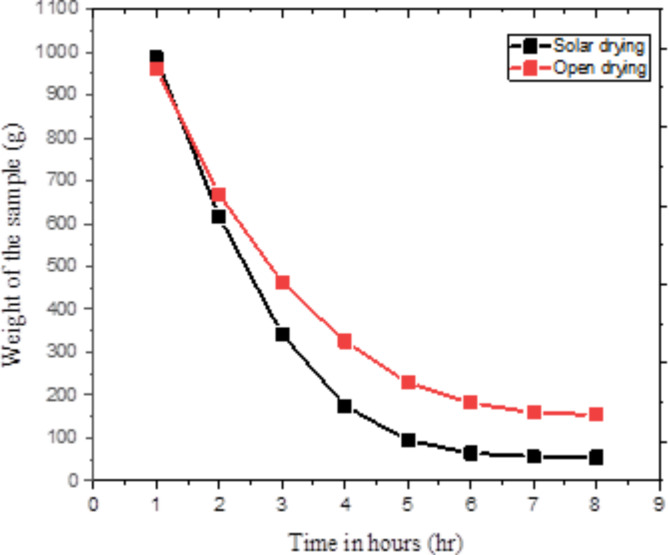
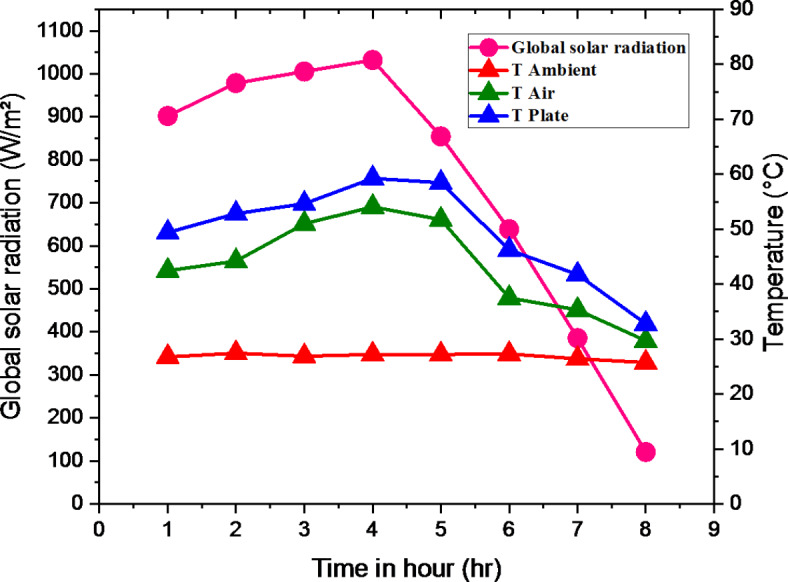
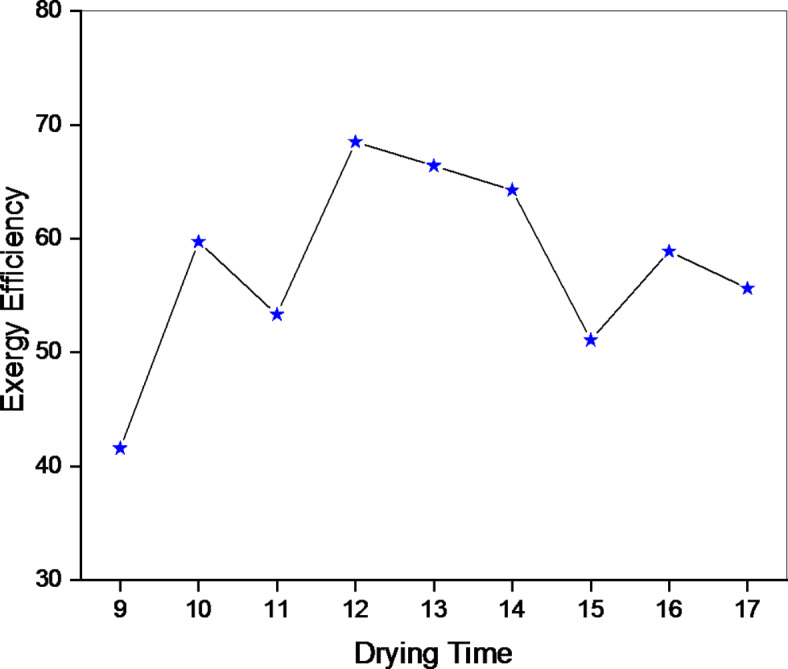
The traditional approach of open-sun drying is facing contemporary challenges arising from the widespread adoption of energy-intensive methods and the quality of drying. In response, solar dryers have emerged as a sustainable alternative, utilizing solar thermal energy to effectively dehydrate vegetables. This study investigates the performance of a single-basin, double-slope solar dryer utilizing natural convection for drying bottle gourds and tomatoes, presenting a sustainable alternative to traditional open-sun drying. The solar dryer exhibited superior moisture removal efficiency, achieving a 94.42% reduction in tomatoes and 83.87% in bottle gourds, compared to open-sun drying. Drying rates were significantly enhanced, with maximum air and plate temperatures reaching 54.42 °C and 63.38 °C, respectively, accelerating the dehydration process. Moisture diffusivity analysis revealed a marked improvement in drying behavior under solar drying, with values ranging from 3.12 × 10 to 4.31 × 10 m/s for bottle gourds, and 4.65 × 10 to 2.31 × 10 m/s for tomatoes. Energy efficiency assessments highlighted the solar dryer's advantage, with exergy efficiency peaking at 61.78% for bottle gourds and 68.5% for tomatoes. Furthermore, the activation energy required for drying was significantly lower in the solar dryer (29.14-46.41 kJ/mol for bottle gourds and 27.16-55.42 kJ/mol for tomatoes) compared to open-sun drying, enhancing energy conservation. Visual inspections confirmed the superior quality of the solar-dried vegetables, free from dust and impurities. An economic analysis underscored the system's viability, with payback periods of 2 years for bottle gourds and 1.6 years for tomatoes. Overall, this study demonstrates the efficacy of solar dryers in optimizing vegetable preservation while promoting energy efficiency, aligning with global sustainability goals by reducing post-harvest losses and supporting eco-friendly practices.
传统的露天晾晒方法正面临着因广泛采用能源密集型方法和晾晒质量而产生的当代挑战。作为回应,太阳能干燥机已成为一种可持续的替代方案,利用太阳能热能有效地使蔬菜脱水。本研究调查了一种利用自然对流干燥葫芦和西红柿的单槽双坡太阳能干燥机的性能,为传统的露天晾晒提供了一种可持续的替代方案。与露天晾晒相比,该太阳能干燥机表现出卓越的除湿效率,西红柿的水分减少了94.42%,葫芦的水分减少了83.87%。干燥速率显著提高,空气和板的最高温度分别达到54.42°C和63.38°C,加速了脱水过程。水分扩散率分析表明,太阳能干燥下的干燥行为有显著改善,葫芦的水分扩散率值在3.12×10至4.31×10米²/秒之间,西红柿的水分扩散率值在4.65×10至2.31×10米²/秒之间。能源效率评估突出了太阳能干燥机的优势,葫芦的火用效率峰值为61.78%,西红柿的火用效率峰值为68.5%。此外,与露天晾晒相比,太阳能干燥机干燥所需的活化能显著更低(葫芦为29.14 - 46.41千焦/摩尔,西红柿为27.16 - 55.42千焦/摩尔),增强了能源节约。目视检查证实了太阳能干燥蔬菜的质量 superior,没有灰尘和杂质。经济分析强调了该系统的可行性,葫芦的投资回收期为2年,西红柿的投资回收期为1.6年。总体而言,本研究证明了太阳能干燥机在优化蔬菜保鲜同时提高能源效率方面的有效性,通过减少收获后损失和支持环保做法符合全球可持续发展目标。