Moore Joanna L, Kennedy James, Hassan Abdul-Azim
Biological Services, University of Glasgow, Glasgow, United Kingdom.
Research Statistics, GlaxoSmithKline, Stevenage, United Kingdom.
Front Neurosci. 2024 Oct 29;18:1489308. doi: 10.3389/fnins.2024.1489308. eCollection 2024.
Our understanding of laboratory animal behavior and the implications of husbandry activities on their wellbeing remains incomplete. This is especially relevant with an aging colony as their activity patterns may change as they mature. Home Cage Monitoring (HCM) provides valuable insights into mouse activity within the animal's own environment and can shed light on acclimatization periods and responses to husbandry activities such as cage changing. The aim of this study was to monitor and explore changes in the activity and rest disturbance (RDI) patterns of an aging colony of male and female C57/BL6 mice.
The mice were housed in the Digitally Ventilated Cage system, for up to 18 months of age. Data was then downloaded to investigate how the activity patterns and RDI of the mice changed over time. Habituation, aging and cage change assessments were conducted using linear mixed models, while cage separation and stereotypic behavior investigations were conducted by visual inspection of the data.
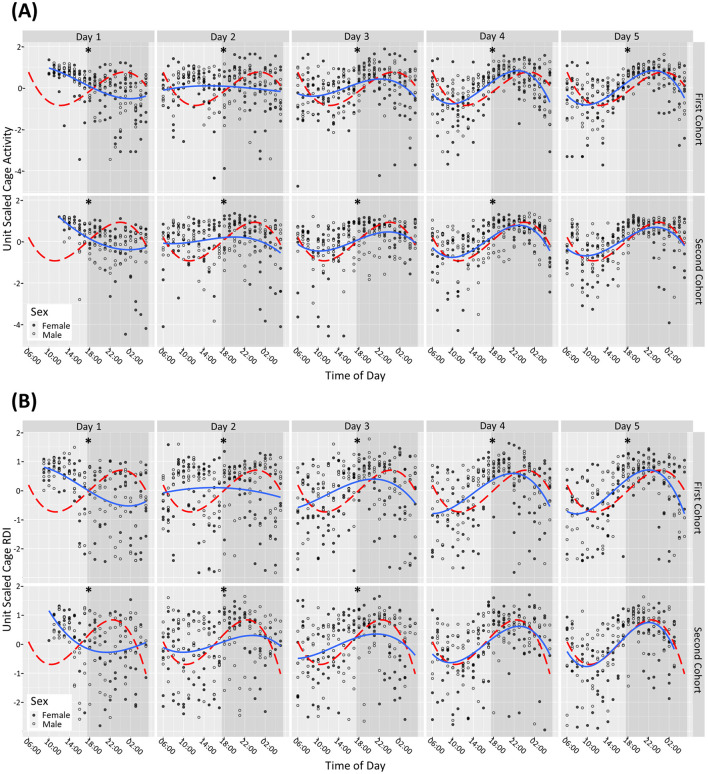
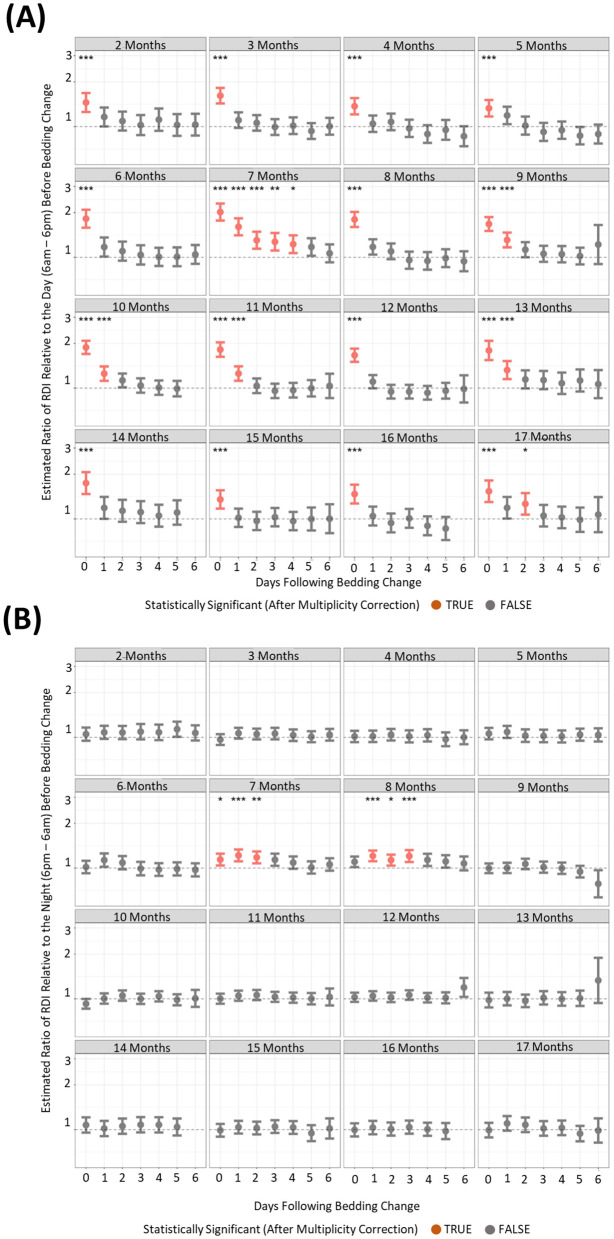
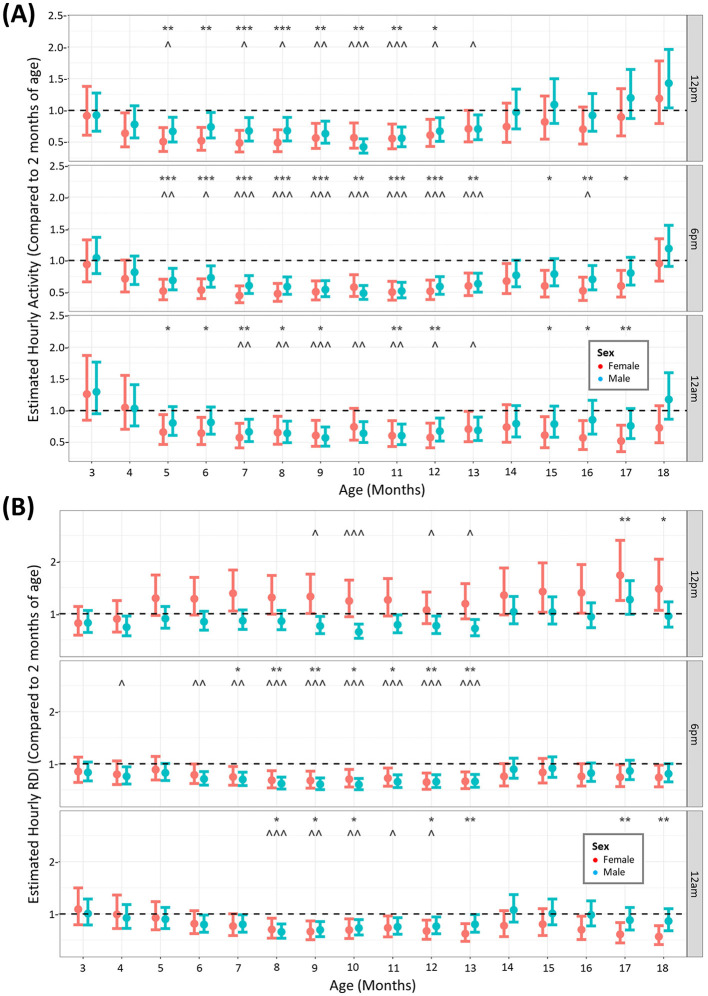
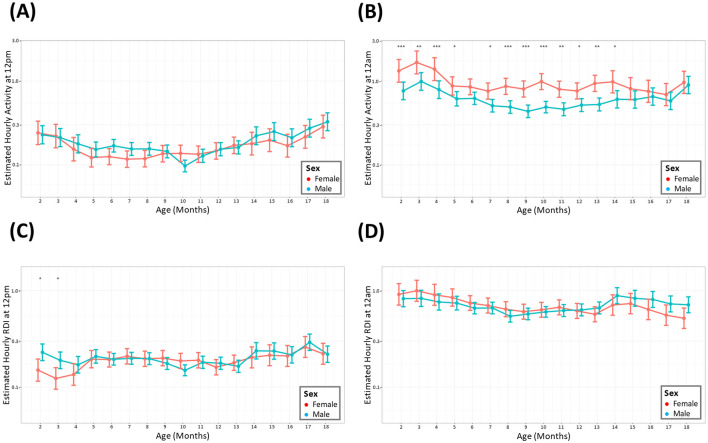
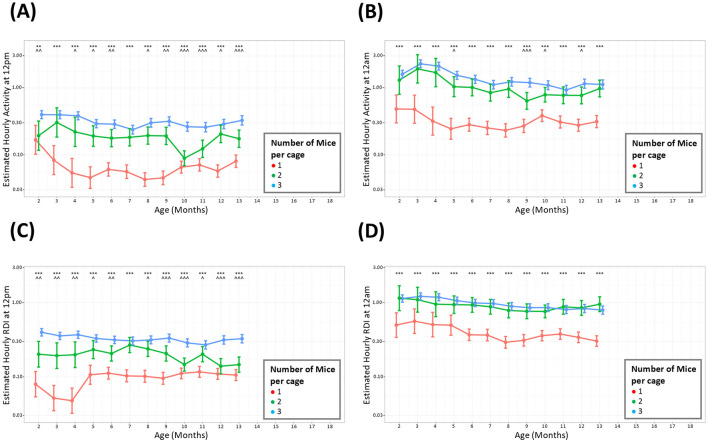
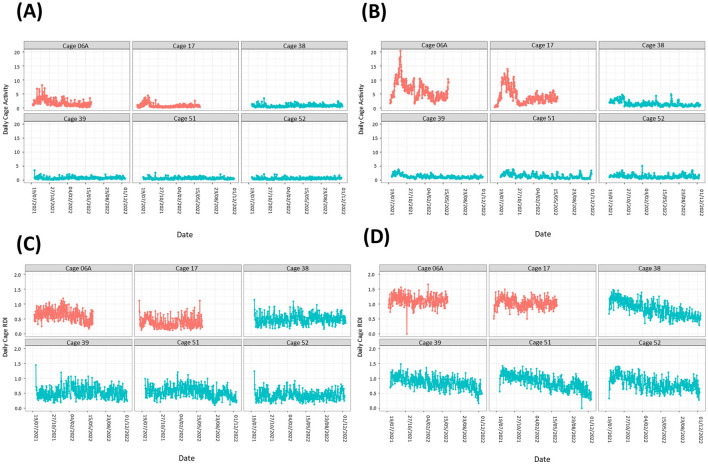
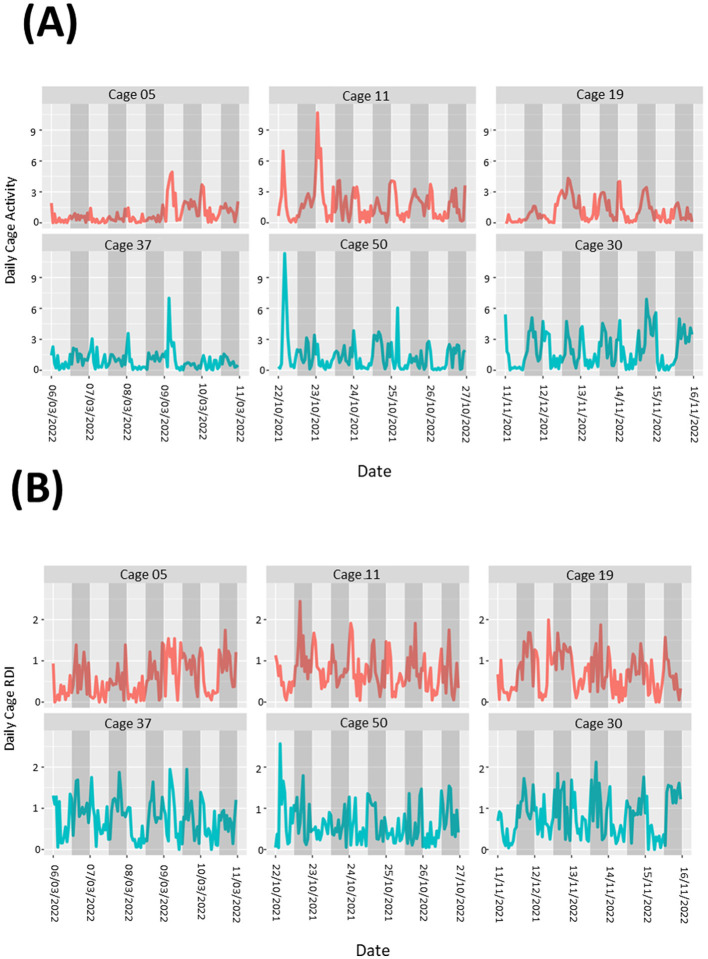
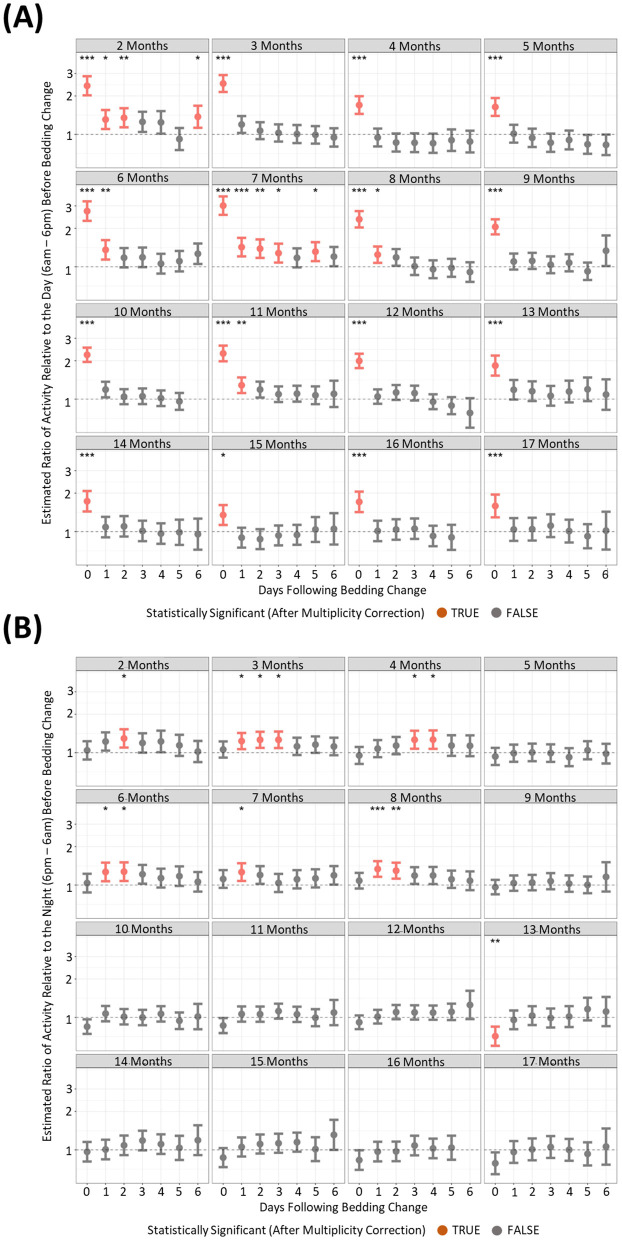
As expected during the study, mice were less active during the light phase compared to the dark phase. However, on arrival mice displayed heightened activity and RDI during the light phase and reduced activity and RDI during the dark phase, taking several days to adjust to baseline "acclimatized" patterns. With age, overall activity significantly decreased from 5 months until 14 months of age, after which it increased back toward baseline levels. We also observed activity spikes during our monitoring of this colony. Prolonged housing can lead to alarming stereotypic behaviors in animals. Cages of mice flagged for potential stereotypy displayed sustained activity spikes in the light and dark phases. Spikes in activity during the dark phase were much more pronounced than in the light phase. Cage changing led to an increase in the light phase activity and RDI compared to the previous day, with no observed difference in the dark phase post-cage change. This effect remained consistent as the animals aged.
This study explores changes in the activity patterns of an aging colony of male and female C57/BL6 mice housed in the Digitally Ventilated Cage system. We identified distinct aging phases concerning activity and RDI differences and a potential new welfare application for the DVC, specifically for early detection of stereotypy. In conclusion, the adoption of HCM systems should be considered for long-term animal housing from both a welfare and behavioral perspective.
我们对实验动物行为以及饲养活动对其健康的影响的理解仍不完整。对于老龄化种群而言尤其如此,因为随着它们的成熟,其活动模式可能会发生变化。笼内监测(HCM)能为了解动物自身环境中的小鼠活动提供有价值的见解,并能揭示适应期以及对诸如更换笼子等饲养活动的反应。本研究的目的是监测和探索老龄化的雄性和雌性C57/BL6小鼠种群的活动和休息干扰(RDI)模式的变化。
将小鼠饲养在数字通风笼系统中,直至18月龄。然后下载数据以研究小鼠的活动模式和RDI如何随时间变化。使用线性混合模型进行习惯化、衰老和笼子更换评估,而通过对数据的目视检查进行笼子分离和刻板行为调查。
在研究期间,正如预期的那样,与黑暗阶段相比,小鼠在光照阶段的活动较少。然而,刚到达时,小鼠在光照阶段表现出活动增强和RDI升高,在黑暗阶段活动和RDI降低,需要几天时间才能调整到基线“适应”模式。随着年龄增长,总体活动从5个月到14个月龄显著下降,之后又回升至基线水平。在对这个种群的监测过程中,我们还观察到了活动峰值。长期饲养会导致动物出现令人担忧的刻板行为。被标记为可能出现刻板行为的小鼠笼在光照和黑暗阶段都显示出持续的活动峰值。黑暗阶段的活动峰值比光照阶段更为明显。与前一天相比,更换笼子导致光照阶段的活动和RDI增加,笼子更换后黑暗阶段未观察到差异。随着动物年龄增长,这种影响保持一致。
本研究探索了饲养在数字通风笼系统中的老龄化雄性和雌性C57/BL6小鼠种群的活动模式变化。我们确定了与活动和RDI差异相关的不同衰老阶段,以及数字通风笼的一种潜在新的福利应用,特别是用于刻板行为的早期检测。总之,从福利和行为角度来看,对于长期动物饲养应考虑采用笼内监测系统。