
功能性近红外光谱和迷走神经体感诱发电位增强了诸如认知功能差、嗅觉障碍和载脂蛋白E(APOE)基因型等既定参数的预测能力,以预测老年人8年内的认知衰退。
Functional near-infrared spectroscopy and vagus somatosensory evoked potentials add to the power of established parameters such as poor cognitive performance, dsyosmia and APOe genotype to predict cognitive decline over 8 years in the elderly.
作者信息
Herrmann Martin J, Wuttke Alexandra, Breuninger Linda, Eff Judith, Ettlinger Sophia, Fischer Matthias, Götzelmann Andrea, Gram Annika, Pomper Laura D, Schneider Evelyn, Schwitalla Lisa, Siminski Niklas, Spielmann Fabian, Weinmann Erik, Weyel Viona, Zeller Julia B M, Lauer Martin, Deckert Jürgen, Polak Thomas
机构信息
Department of Psychiatry, Psychosomatics and Psychotherapy, Center of Mental Health, University Hospital Würzburg, Margarete-Höppel-Platz 1, D-97080, Würzburg, Germany.
SigmaCenter, Weihermatten 1, D-79713, Bad Säckingen, Germany.
出版信息
J Neural Transm (Vienna). 2025 Mar;132(3):455-468. doi: 10.1007/s00702-024-02859-y. Epub 2024 Nov 13.
Alzheimer's dementia is the main cause of cognitive impairment in people over the age of 65, with Alzheimer's disease starting presumably 10-15 years before the onset of clinical symptoms. It is therefore important to recognize dementia at an early stage and identify possible predictors. The existing methods, like different parameters of ß-Amyloid and Tau quantification in cerebrospinal fluid (CSF) or the living brain by measure of PET, are invasive and expensive. Therefore, the present study investigates the predictive value of a battery of clinical, neuropsychological, and blood parameters as well as two neurophysiological methods (functional near-infrared spectroscopy [fNIRS] and vagus somatosensory evoked potentials [VSEP]) which are easy to perform, less invasive and cost-efficient, for developing cognitive impairments in the elderly.In this longitudinal, prospective study, we enrolled 604 healthy participants between 70 and 77 years of age. The participants were invited back after a mean time interval of 3 years and 11 months, and after 7 years and 8 months, and their cognitive impairments were determined.Here we show that the development of cognitive impairments after approximately 8 years can be predicted not only by previously known risk factors such as ApoE4 risk alleles, dysosmia, or poor cognitive performance at baseline but that latency prolongation in the VSEP and altered functional activation patterns measured by NIRS at baseline also provide additional predictive value.We therefore suggest that both neurophysiological parameters, VSEP and NIRS, should be included in future studies, investigating the prediction of dementia. Dementia ClinicalTrials.gov Identifier: NCT02224326.
阿尔茨海默病性痴呆是65岁以上人群认知障碍的主要原因,阿尔茨海默病可能在临床症状出现前10 - 15年就已开始。因此,早期识别痴呆并确定可能的预测因素非常重要。现有的方法,如通过测量脑脊液(CSF)或活体大脑中β - 淀粉样蛋白和 Tau 定量的不同参数来进行PET检测,具有侵入性且成本高昂。因此,本研究调查了一系列临床、神经心理学和血液参数以及两种神经生理学方法(功能性近红外光谱 [fNIRS] 和迷走神经体感诱发电位 [VSEP])的预测价值,这些方法易于实施、侵入性较小且成本效益高,用于预测老年人认知障碍的发生。
在这项纵向、前瞻性研究中,我们招募了604名年龄在70至77岁之间的健康参与者。参与者在平均3年11个月以及7年8个月的时间间隔后被再次邀请,然后确定他们的认知障碍情况。
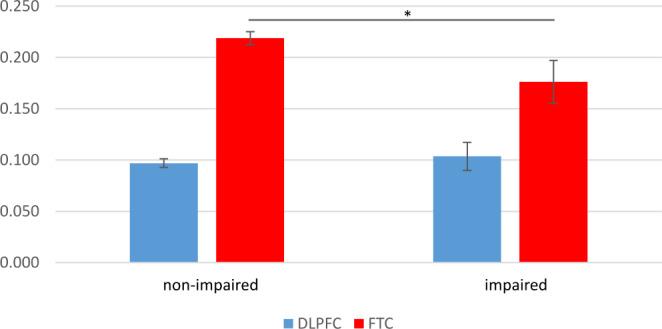
在此我们表明,大约8年后认知障碍的发展不仅可以通过先前已知的风险因素如载脂蛋白E4风险等位基因、嗅觉障碍或基线时认知表现不佳来预测,而且基线时VSEP潜伏期延长和NIRS测量的功能激活模式改变也提供了额外的预测价值。
因此,我们建议在未来研究痴呆预测时,应将VSEP和NIRS这两种神经生理学参数都纳入其中。痴呆临床试验.gov标识符:NCT02224326。


 Zotero 插件