González-Tuyub Yair Humberto, González-Iñiguez Karla Daniela, Lizarazo-Guiza Paula Catalina, García-García Sergio Ricardo
Clinical Immunology and Allergy Service, ISSSTE Hospital Regional General, Ignacio Zaragoza, Ciudad de México, México.
Medical Scientific Liaison, AstraZeneca, Ciudad de México, México.
J Asthma Allergy. 2024 Nov 9;17:1141-1149. doi: 10.2147/JAA.S472490. eCollection 2024.
Asthma is a health condition with worldwide relevance, evaluated based on the necessary treatment to control symptoms and exacerbations. Severe asthma is uncontrolled despite high doses of ICS-LABA and treatment for triggering factors. Severe eosinophilic asthma is characterized by an increase in eosinophils in the peripheral circulation, walls, and passages of the respiratory tract. Biologic treatments such as benralizumab have demonstrated effectiveness as aids in decreasing respiratory tract inflammation and improving the management of symptoms in patients living with asthma.
To assess the efficacy and safety of benralizumab as an add-on therapy for patients with severe, uncontrolled asthma and elevated blood eosinophil counts.
Observational, analytic and ambispective study in 21 patients diagnosed with severe eosinophilic asthma treated with benralizumab, to determine the treatment's effectiveness through the change in estimated respiratory function by spirometry through the forced expiratory volume in one second (FEV1) value, reduction in second controlling treatment, serum eosinophil reduction, change in the Asthma Control Test score and the Asthma Control Questionnaire test at 6 and 16 months of treatment.
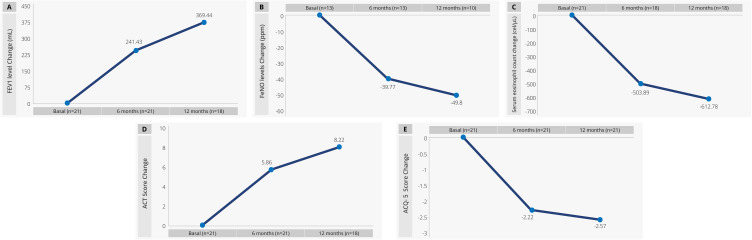
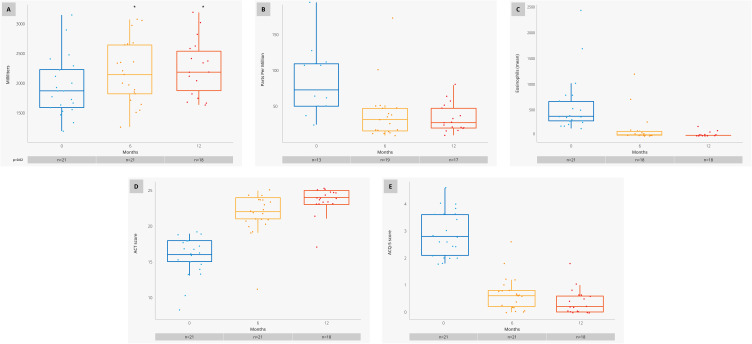
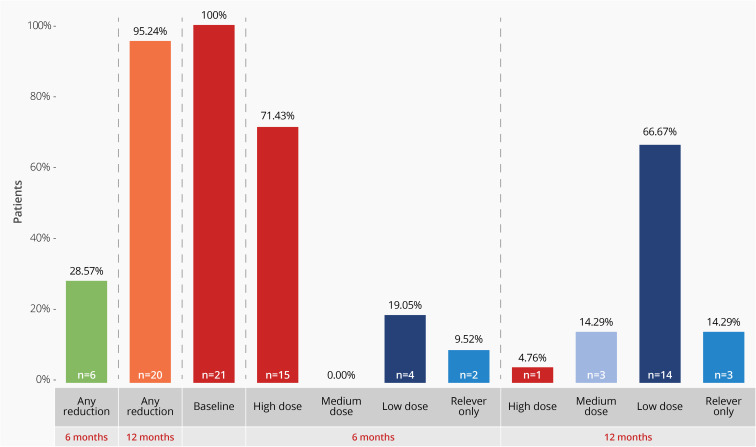
An average difference of 241.43 mL (±461.43) in FEV1 at 6 months was found, as well as an average FeNO reduction of 49.8 ppm and eosinophil reduction of 612.78 cells at 12 months of treatment, additionally, CSI requirements were reduced in 95% of patients.
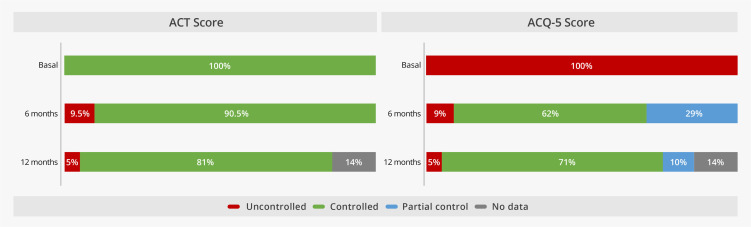
Benralizumab improved respiratory function as well as key biomarkers such as eosinophil count, exhaled nitric oxide fraction (FeNO), which reflected in a decreased requirement of inhaled corticosteroids and improved symptom control.
哮喘是一种具有全球相关性的健康状况,根据控制症状和加重发作所需的治疗进行评估。尽管使用高剂量吸入性糖皮质激素-长效β2受体激动剂(ICS-LABA)并针对触发因素进行治疗,但重度哮喘仍无法得到控制。重度嗜酸性粒细胞性哮喘的特征是外周循环、呼吸道壁和气道中的嗜酸性粒细胞增多。诸如贝那利珠单抗等生物治疗已证明可有效减少呼吸道炎症,并改善哮喘患者的症状管理。
评估贝那利珠单抗作为重度、未控制哮喘且血液嗜酸性粒细胞计数升高患者的附加治疗的疗效和安全性。
对21例诊断为重度嗜酸性粒细胞性哮喘并接受贝那利珠单抗治疗的患者进行观察性、分析性和双向性研究,通过肺活量测定法测量一秒用力呼气容积(FEV1)值来评估呼吸功能变化,以确定治疗效果,同时观察治疗6个月和16个月时第二控制治疗的减少情况、血清嗜酸性粒细胞减少情况、哮喘控制测试评分和哮喘控制问卷测试的变化。
治疗6个月时,FEV1平均差异为241.43 mL(±461.43),治疗12个月时,呼出一氧化氮(FeNO)平均降低49.8 ppm,嗜酸性粒细胞减少612.78个,此外,95%的患者对吸入性糖皮质激素的需求减少。
贝那利珠单抗改善了呼吸功能以及关键生物标志物,如嗜酸性粒细胞计数、呼出一氧化氮分数(FeNO),这反映在吸入性糖皮质激素需求减少和症状控制改善方面。