Department of Neurology, Graduate School of Medicine, Chiba University, 1-8-1 Inohana, Chuo-ku, Chiba, 260-8677, Japan.
Department of Neurology, Chiba Aoba Municipal Hospital, Chiba, Japan.
BMC Neurol. 2024 Nov 14;24(1):446. doi: 10.1186/s12883-024-03950-3.
This case report presents the case of a patient with P369S and R408Q variants in the MEFV gene who exhibited clinical features of Kikuchi disease and Mollaret meningitis. Furthermore, it discusses colchicine as a new potential treatment option for Kikuchi disease-associated meningitis.
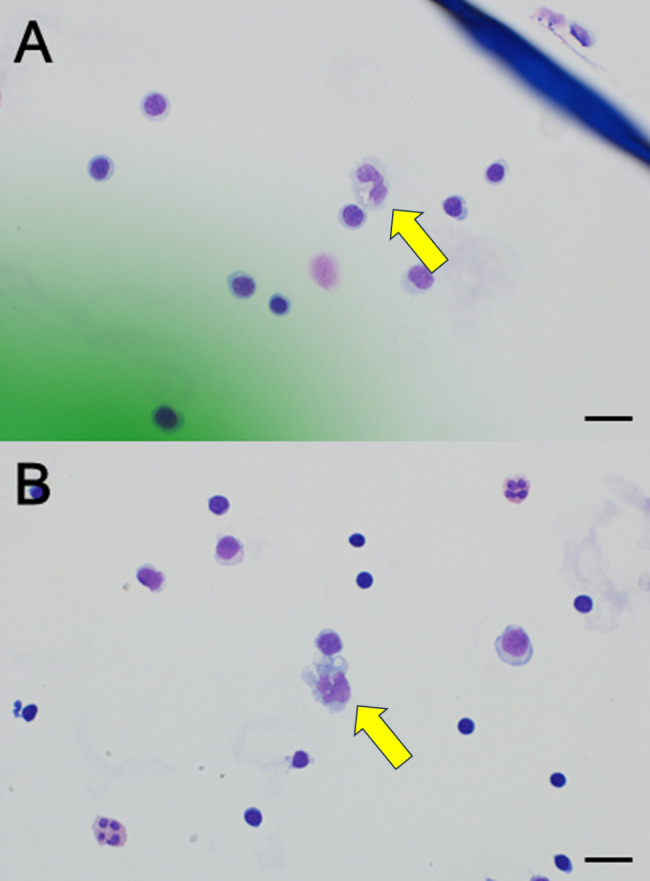
A 41-year-old Japanese woman presented with fever and headache. She had nuchal rigidity and bilateral cervical lymphadenopathies. Her past medical history included multiple episodes of aseptic meningitis and cervical lymphadenopathy for more than twenty years. Lumbar puncture showed increased lymphocytes and IL-6 level and pathognomonic Mollaret cells. Excisional lymph node biopsy revealed histiocytic necrotizing lymphadenitis, confirming the diagnosis of Kikuchi disease. Subsequently, her recurrent Kikuchi disease and meningitis were successfully treated with colchicine. Furthermore, genetic analysis of the MEFV gene revealed heterozygous P369S/R408Q variants in exon 3.
Mollaret meningitis can be associated with Kikuchi disease, and recurrence of both conditions may be suppressed by colchicine when these two coexist.
本病例报告介绍了一位 MEFV 基因 P369S 和 R408Q 变异的患者,其表现出了 Kikuchi 病和 Mollaret 脑膜炎的临床特征。此外,还讨论了秋水仙碱作为治疗 Kikuchi 病相关脑膜炎的新潜在治疗选择。
一名 41 岁的日本女性因发热和头痛就诊。她有颈项强直和双侧颈淋巴结肿大。她的既往病史包括多次无菌性脑膜炎和颈淋巴结病超过二十年。腰椎穿刺显示淋巴细胞增多和 IL-6 水平升高,并有特征性的 Mollaret 细胞。切除性淋巴结活检显示组织细胞性坏死性淋巴结炎,确诊为 Kikuchi 病。随后,她的复发性 Kikuchi 病和脑膜炎通过秋水仙碱成功治疗。此外,MEFV 基因的基因分析显示外显子 3 存在杂合 P369S/R408Q 变异。
Mollaret 脑膜炎可与 Kikuchi 病相关,当这两种情况共存时,秋水仙碱可能会抑制两种疾病的复发。