Department of Internal Medicine, Yale Center for Clinical Investigation, Yale School of Medicine, New Haven, CT, USA.
Department of Internal Medicine, Equity Research and Innovation Center, Yale School of Medicine, New Haven, CT, USA.
Trials. 2024 Nov 14;25(1):764. doi: 10.1186/s13063-024-08594-9.
Among the most powerful barriers to broader inclusion of diverse participants in clinical trials are social determinants of health, trustworthiness of health care providers and research institutions, and competing pressures on potential participants. Nevertheless, current tools to assess organizational capabilities for clinical trial diversity focus primarily on trial infrastructure, rely solely on quantitative self-reported data, and lack meaningful assessment of capabilities related to community engagement.
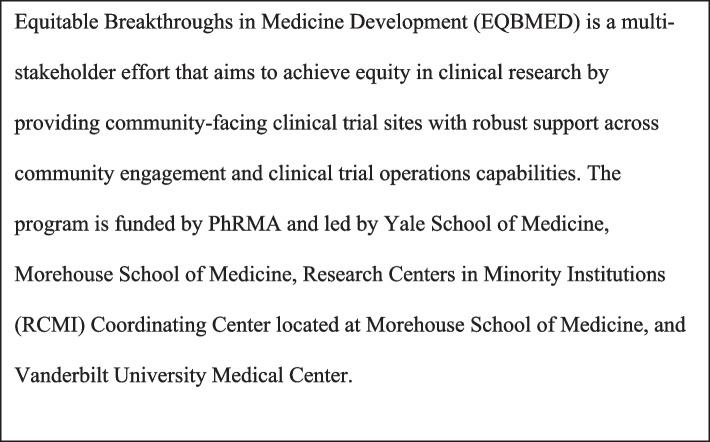
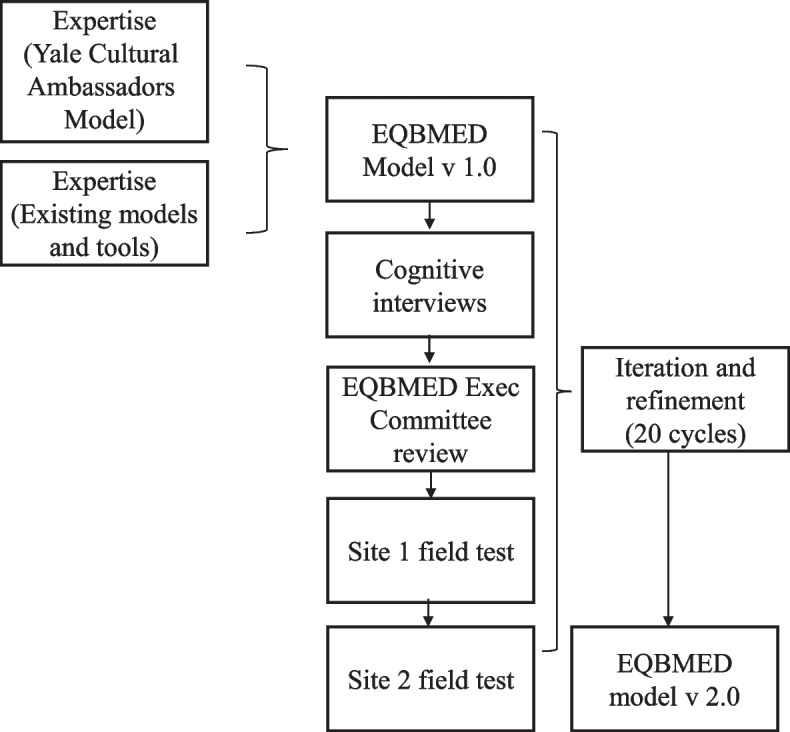
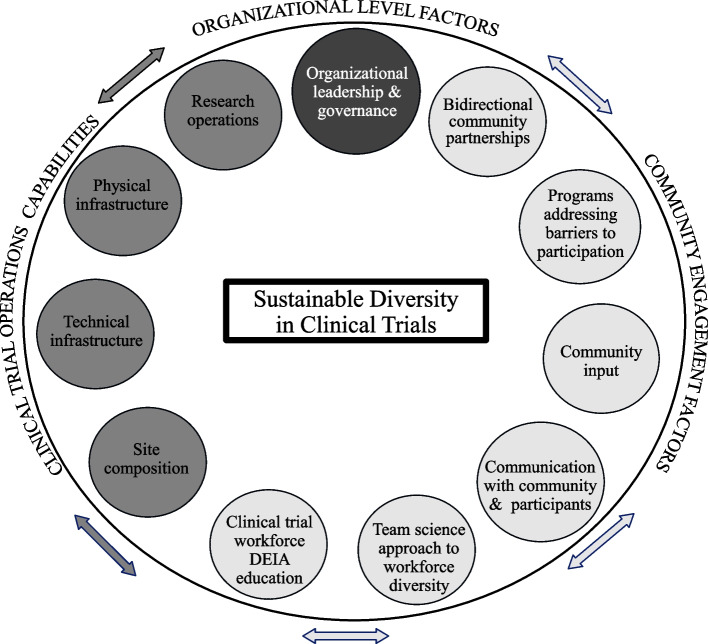
The Equitable Breakthroughs in Medicine (EQBMED) initiative developed a holistic, collaborative, site-driven formative model and accompanying assessment to catalog sites' current capabilities and identify opportunities for growth in both conducting industry-sponsored clinical trials and enriching diversity of those trials. The model builds upon prior work and reflects unification of two historically distinct components-research operations and community engagement-since sustainable clinical trial diversity efforts must overcome these silos. Here we present the methodology we used to develop the model and accompanying assessment, describe how findings can support clinical trial diversity efforts, and report findings from early field testing at three U.S. sites.
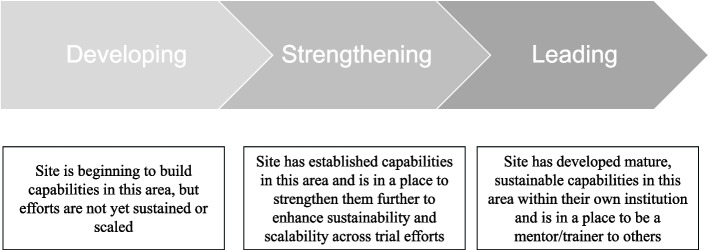
The first three sites were diverse in size (e.g., < 250-1 K beds), with varying levels of clinical trial capabilities and community engagement. The maturity assessment laid the foundation for sites to identify and prioritize key areas to advance clinical trial diversity capabilities, and each has made tangible progress. In parallel to completing the assessment with these early sites to understand their maturity and set actionable goals, we also collected their feedback on content validity (e.g., clarity, comprehensiveness, terminology) and feasibility (e.g., ability to collect needed information and data, time required). We describe refinements made to improve the assessment and streamline the process. The EQBMED program will deploy the assessment across various site types (e.g., FQHCs, safety net hospitals) and make further refinements as warranted.
Strategic investment in clinical trial diversity requires structured assessment of site maturity as a starting point for collaborative action. We propose the EQBMED maturity model as a first step toward informing efforts to increase representation of diverse populations in clinical research.
在更广泛地将不同参与者纳入临床试验的最大障碍中,有健康的社会决定因素、医疗保健提供者和研究机构的可信度、以及对潜在参与者的竞争压力。尽管如此,目前用于评估临床试验多样性组织能力的工具主要侧重于试验基础设施,仅依靠定量自我报告数据,并且缺乏对与社区参与相关的能力进行有意义的评估。
平等医学突破(EQBMED)计划制定了一个整体的、协作的、以站点为驱动的形成性模型和配套评估,以记录站点目前的能力,并确定在开展行业赞助的临床试验和丰富这些试验多样性方面的增长机会。该模型建立在之前的工作基础上,并反映了两个历史上截然不同的组成部分——研究运营和社区参与——的统一,因为可持续的临床试验多样性工作必须克服这些隔阂。在这里,我们介绍了我们用于开发模型和配套评估的方法,描述了这些发现如何支持临床试验多样性工作,并报告了三个美国站点早期现场测试的结果。
前三个站点的规模不同(例如,<250-1K 张床位),临床试验能力和社区参与程度也不同。成熟度评估为站点确定和优先考虑推进临床试验多样性能力的关键领域奠定了基础,每个站点都取得了切实的进展。在与这些早期站点一起完成评估以了解他们的成熟度并设定可操作的目标的同时,我们还收集了他们对内容有效性(例如,清晰度、全面性、术语)和可行性(例如,收集所需信息和数据的能力、所需时间)的反馈。我们描述了为提高评估的准确性和简化流程而进行的改进。EQBMED 计划将在各种类型的站点(例如,FQHCs、医疗救助医院)中部署评估,并在必要时进行进一步改进。
对临床试验多样性的战略投资需要对站点成熟度进行结构化评估,作为合作行动的起点。我们提出 EQBMED 成熟度模型,作为增加不同人群在临床研究中代表性的努力的第一步。