Okada Kentaro, Yachi Koei, Nguyen Tan Anh Nhi, Kanno Satomi, Yasuda Shigetaka, Tadai Haruna, Tateda Chika, Lee Tae-Hong, Nguyen Uyen, Inoue Kanako, Tsuchida Natsuki, Ishihara Taiga, Miyashima Shunsuke, Hiruma Kei, Miwa Kyoko, Maekawa Takaki, Notaguchi Michitaka, Saijo Yusuke
Graduate School of Science and Technology, Nara Institute of Science and Technology, Takayama-cho, Ikoma, 630-0192, Japan.
Bioscience and Biotechnology Center, Nagoya University, Furo-cho, Chikusa-ku, Nagoya, 464-8601, Japan.
Plant J. 2024 Dec;120(6):2639-2655. doi: 10.1111/tpj.17134. Epub 2024 Nov 15.
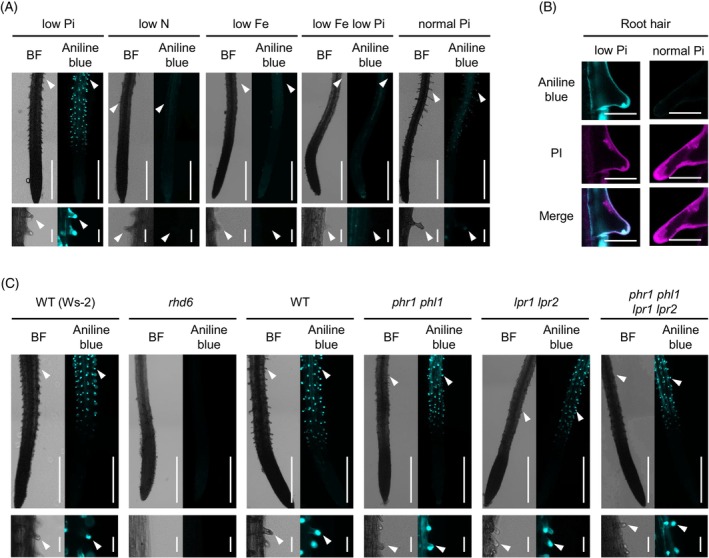
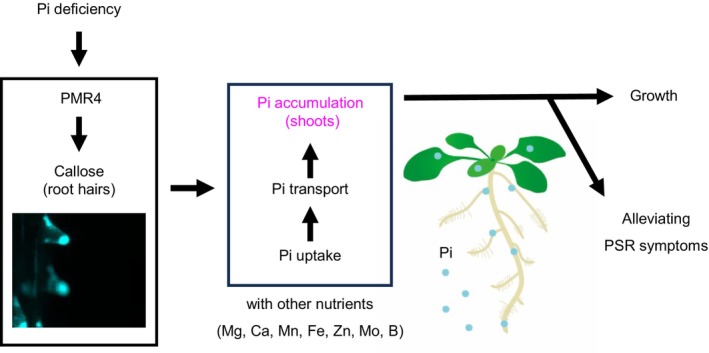
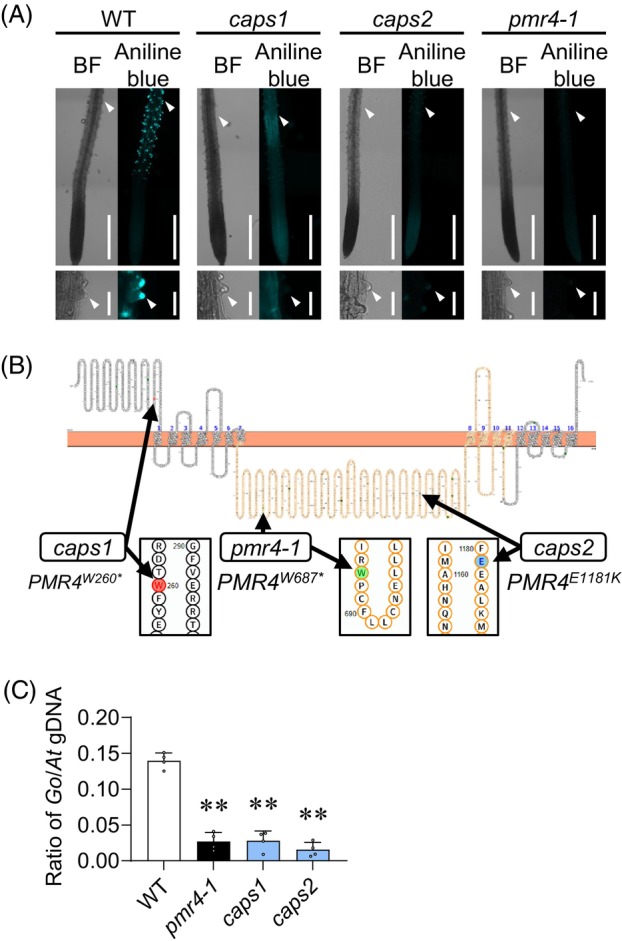
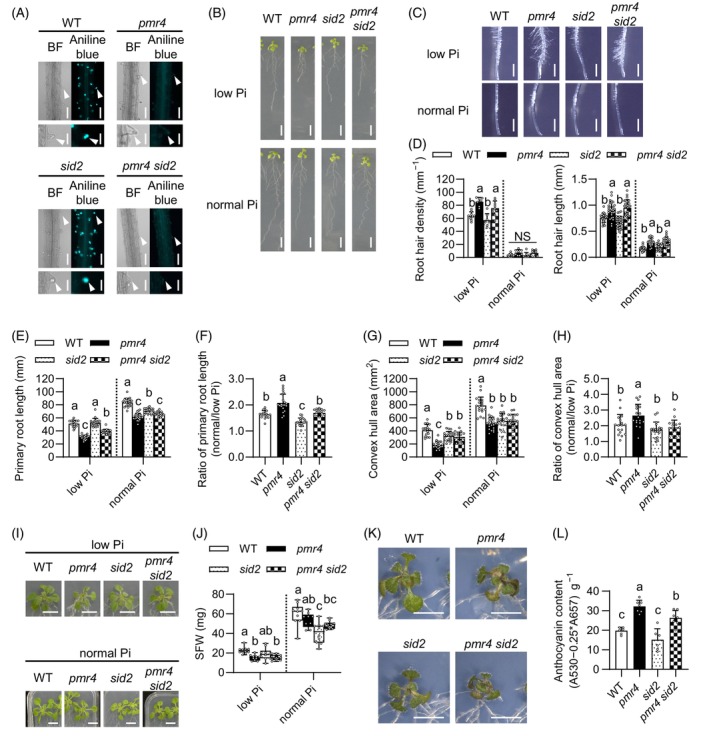
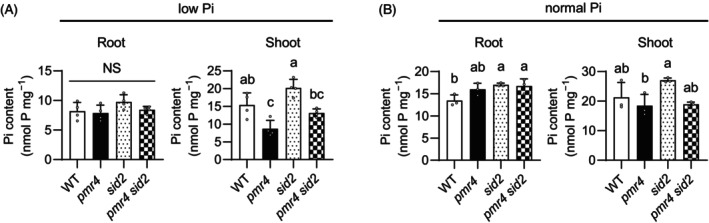
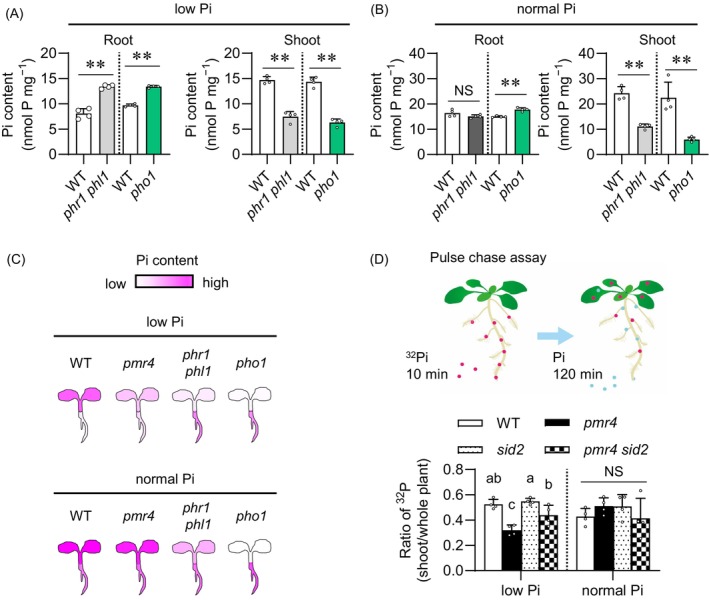
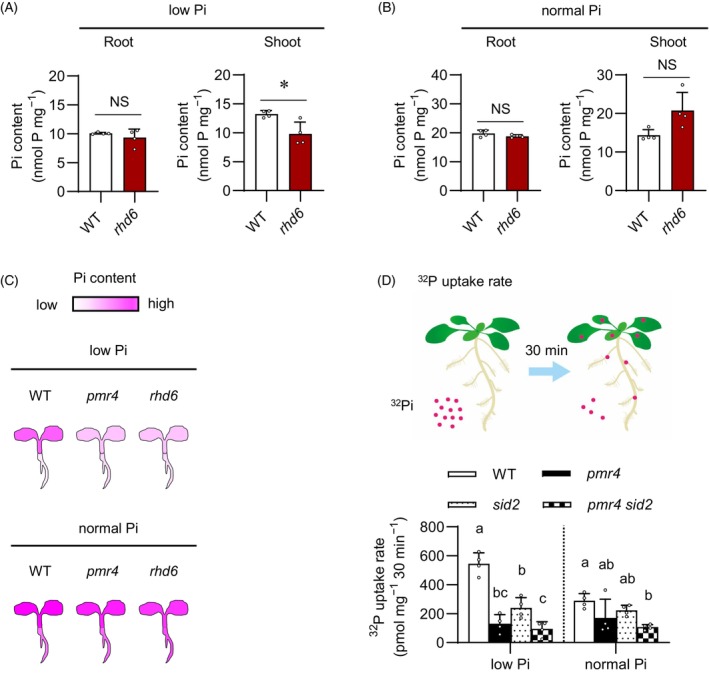
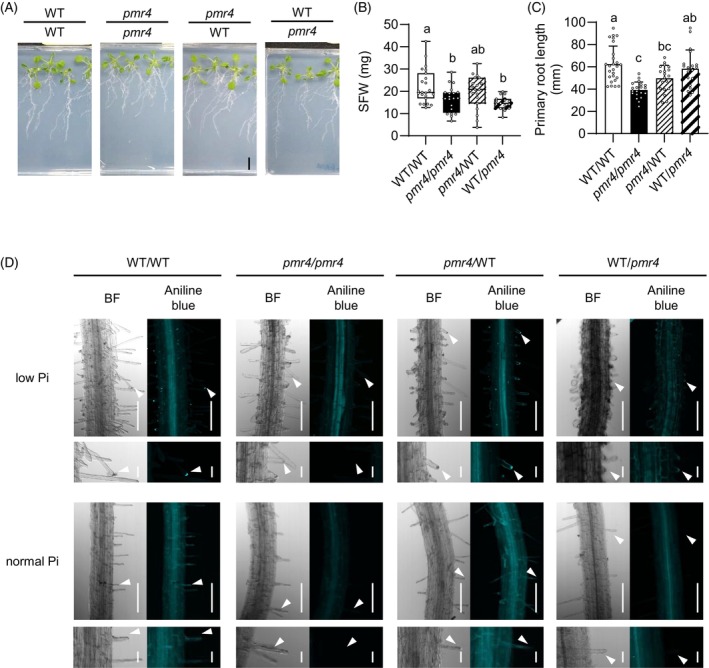
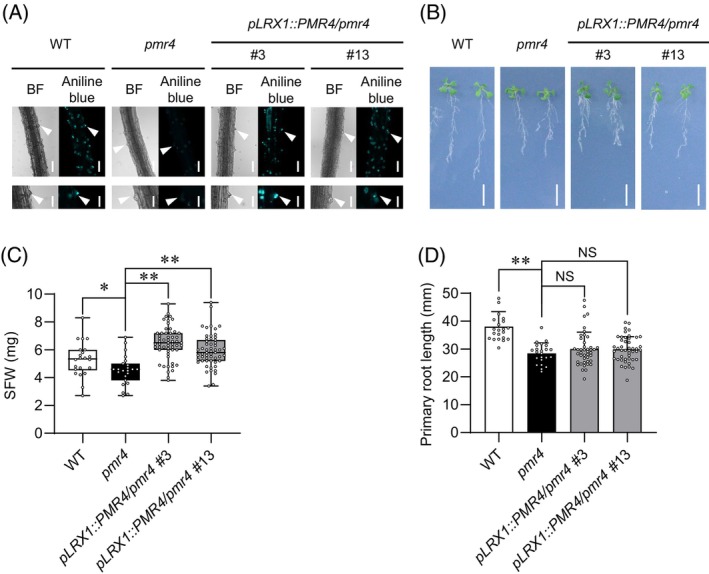
Plants acquire phosphorus (P) primarily as inorganic phosphate (Pi) from the soil. Under Pi deficiency, plants induce an array of physiological and morphological responses, termed phosphate starvation response (PSR), thereby increasing Pi acquisition and use efficiency. However, the mechanisms by which plants adapt to Pi deficiency remain to be elucidated. Here, we report that deposition of a β-1,3-glucan polymer called callose is induced in Arabidopsis thaliana root hairs under Pi deficiency, in a manner independent of PSR-regulating PHR1/PHL1 transcription factors and LPR1/LPR2 ferroxidases. Genetic studies revealed PMR4 (GSL5) callose synthase being required for the callose deposition in Pi-depleted root hairs. Loss of PMR4 also reduces Pi acquisition in shoots and plant growth under low Pi conditions. The defects are not recovered by simultaneous disruption of SID2, mediating defense-associated salicylic acid (SA) biosynthesis, excluding SA defense activation from the cause of the observed pmr4 phenotypes. Grafting experiments and characterization of plants expressing PMR4 specifically in root hair cells suggest that a PMR4 pool in the cell type contributes to shoot growth under Pi deficiency. Our findings thus suggest an important role for PMR4 in plant adaptation to Pi deficiency.
植物主要从土壤中以无机磷酸盐(Pi)的形式获取磷(P)。在Pi缺乏的情况下,植物会引发一系列生理和形态反应,称为磷饥饿反应(PSR),从而提高Pi的获取和利用效率。然而,植物适应Pi缺乏的机制仍有待阐明。在此,我们报道在Pi缺乏条件下,拟南芥根毛中会诱导一种名为胼胝质的β-1,3-葡聚糖聚合物沉积,其方式独立于调节PSR的PHR1/PHL1转录因子和LPR1/LPR2铁氧化酶。遗传学研究表明,PMR4(GSL5)胼胝质合酶是Pi缺乏的根毛中胼胝质沉积所必需的。PMR4的缺失也会降低低Pi条件下地上部的Pi获取和植物生长。同时破坏介导防御相关水杨酸(SA)生物合成的SID2并不能恢复这些缺陷,排除了SA防御激活是观察到的pmr4表型的原因。嫁接实验以及在根毛细胞中特异性表达PMR4的植物的表征表明,细胞类型中的PMR4库有助于Pi缺乏条件下的地上部生长。因此,我们的研究结果表明PMR4在植物适应Pi缺乏中起重要作用。