Key Laboratory of Spine and Spinal Cord Injury Repair and Regeneration of Ministry of Education, Orthopaedic Department of Tongji Hospital, School of Medicine, School of Life Sciences and Technology, Tongji University, Shanghai, China.
Division of Spine, Department of Orthopedics, Tongji Hospital, Tongji University School of Medicine, Tongji University, Shanghai, China.
Elife. 2024 Nov 15;13:RP95672. doi: 10.7554/eLife.95672.
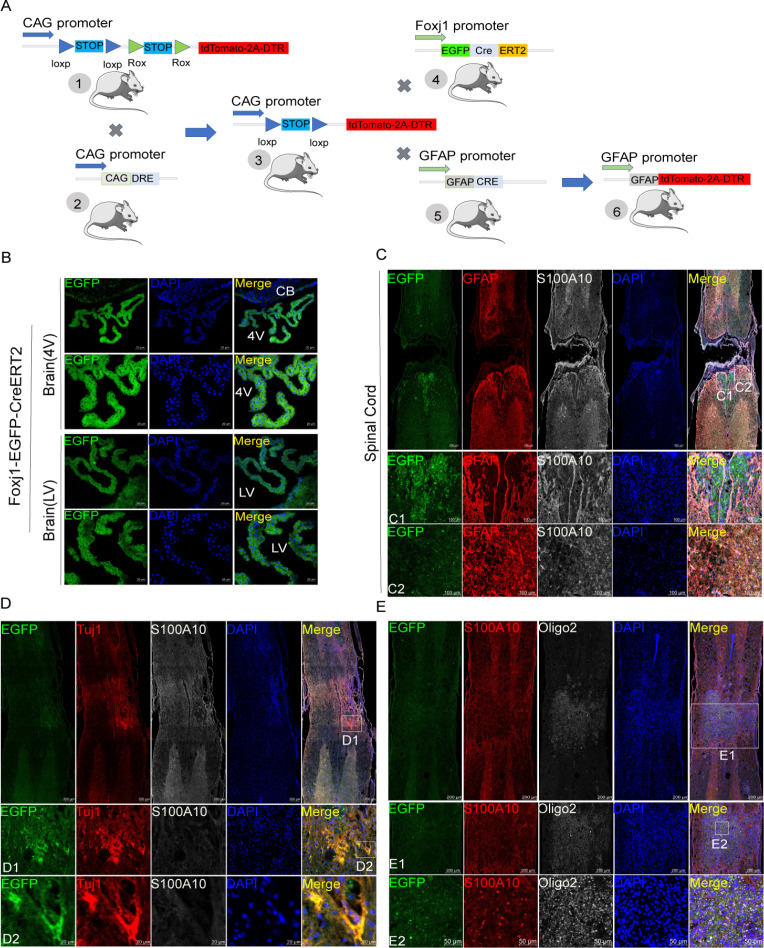
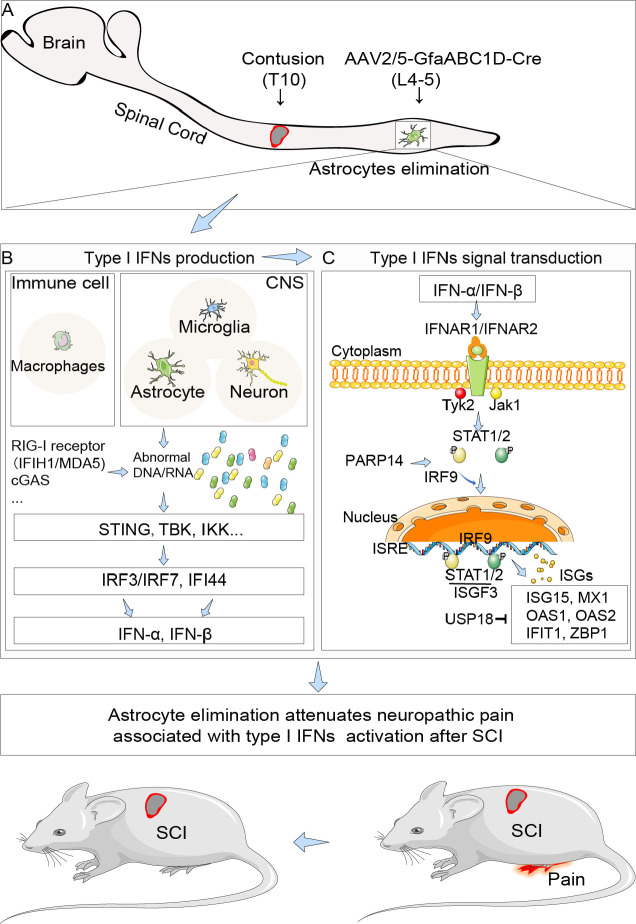
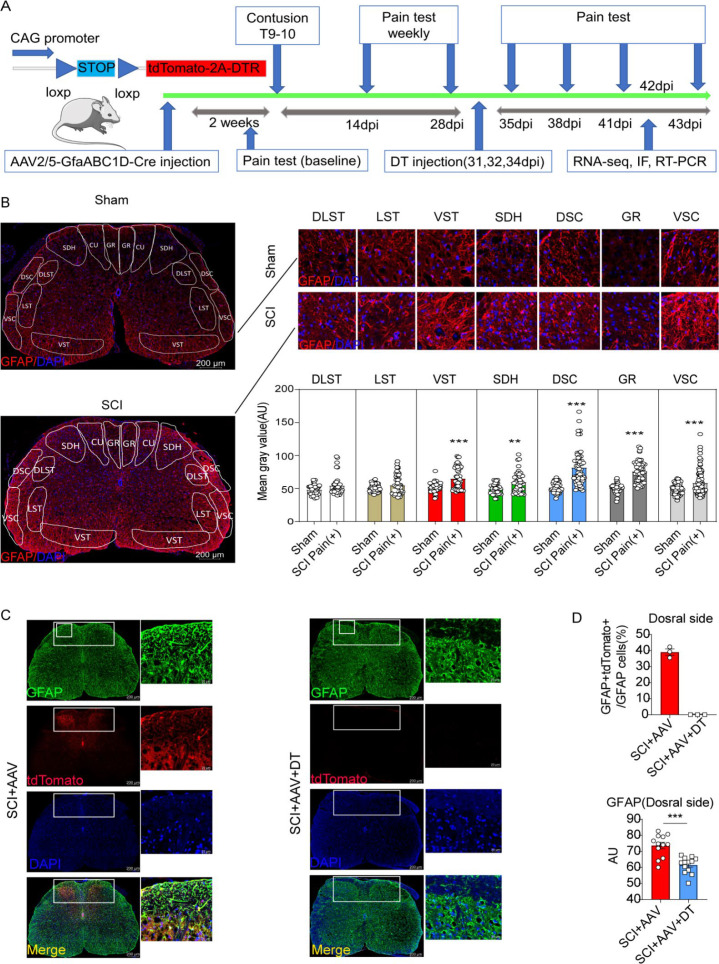
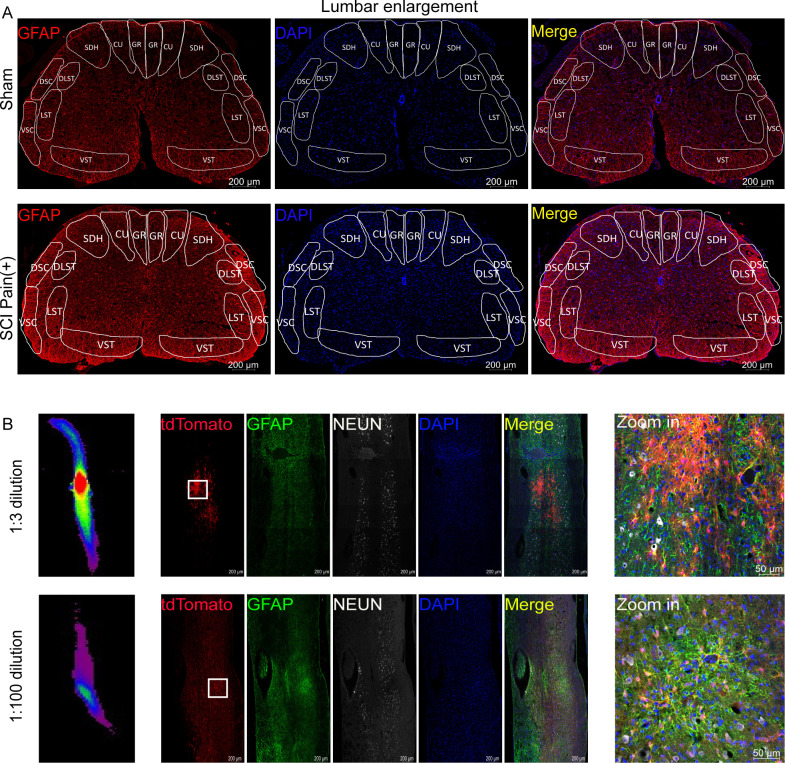
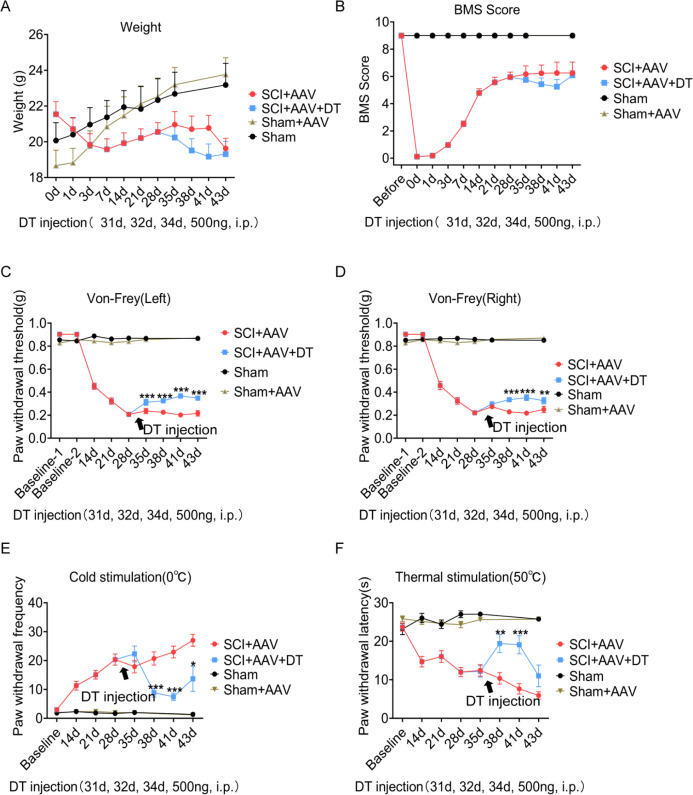
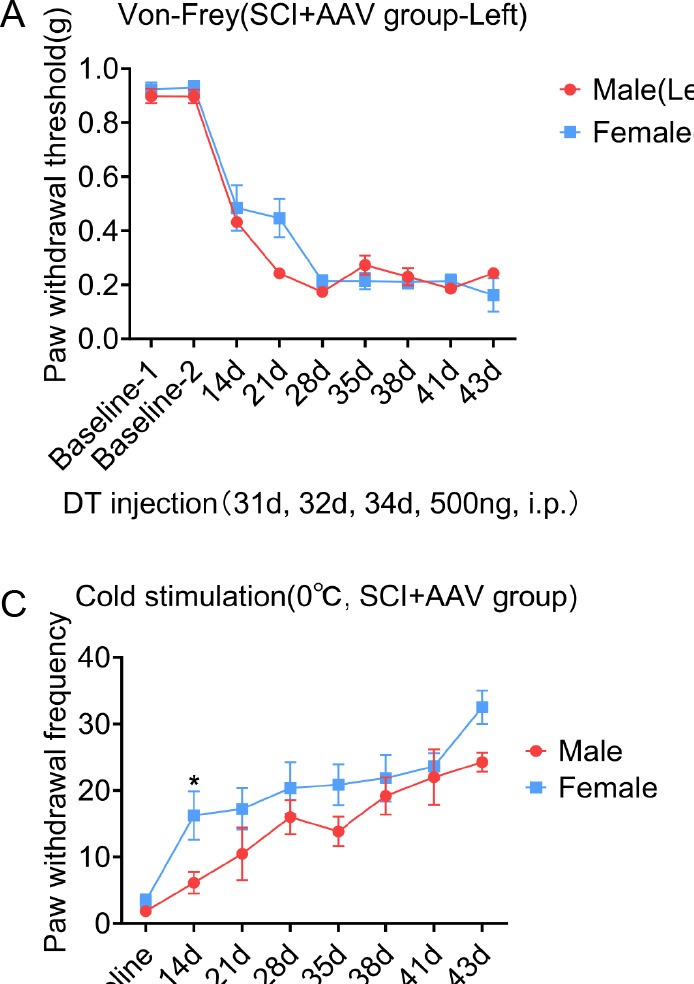
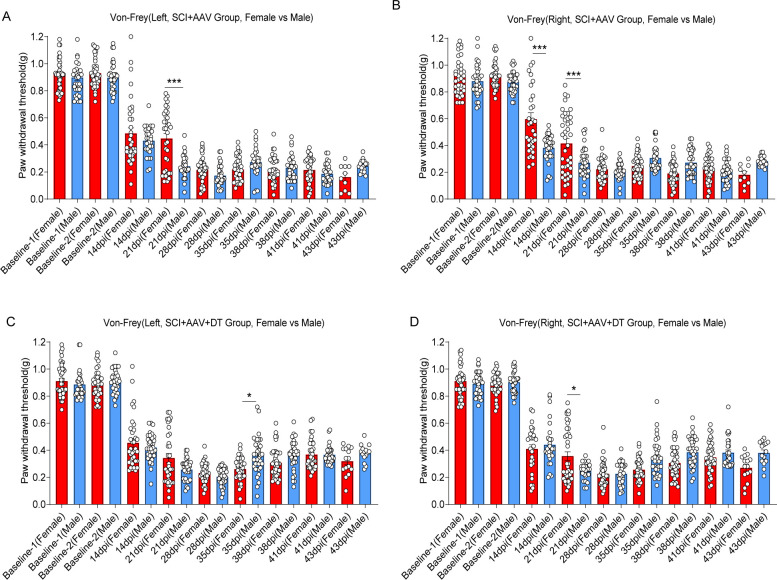
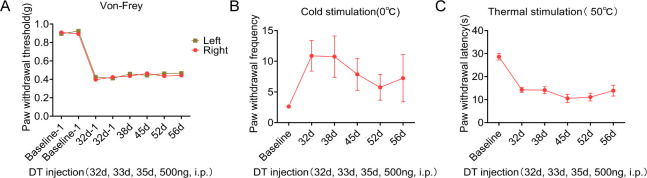
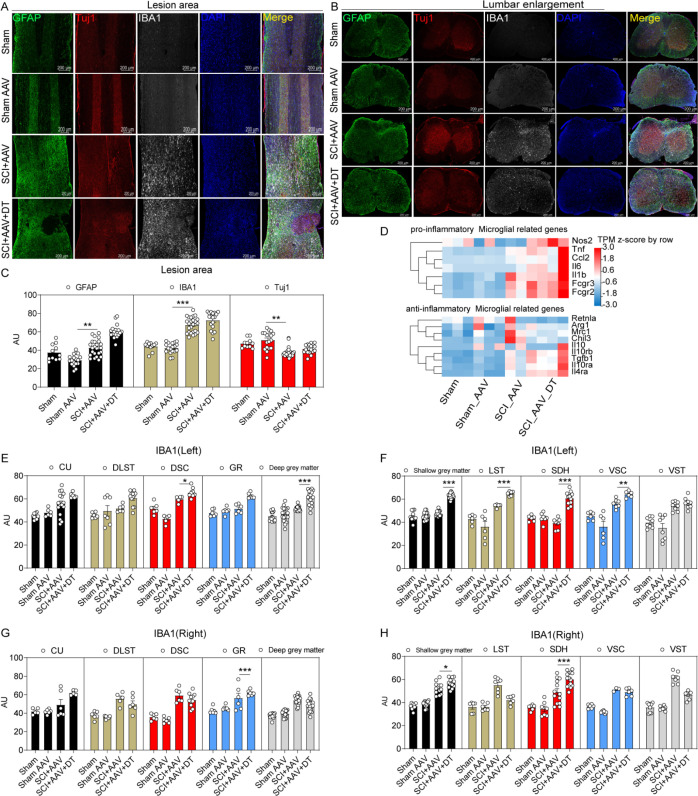
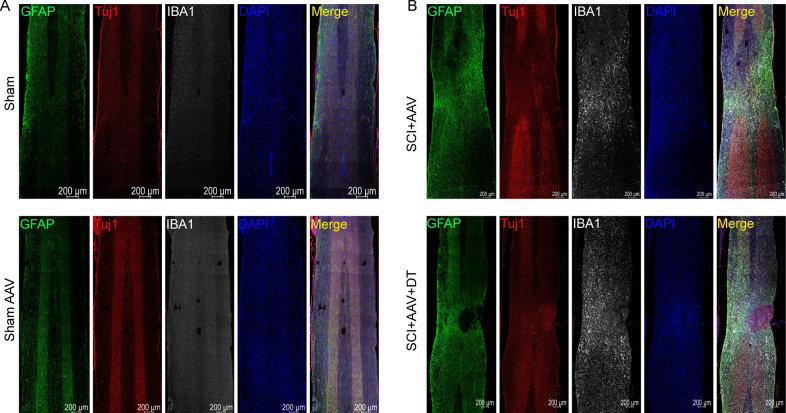
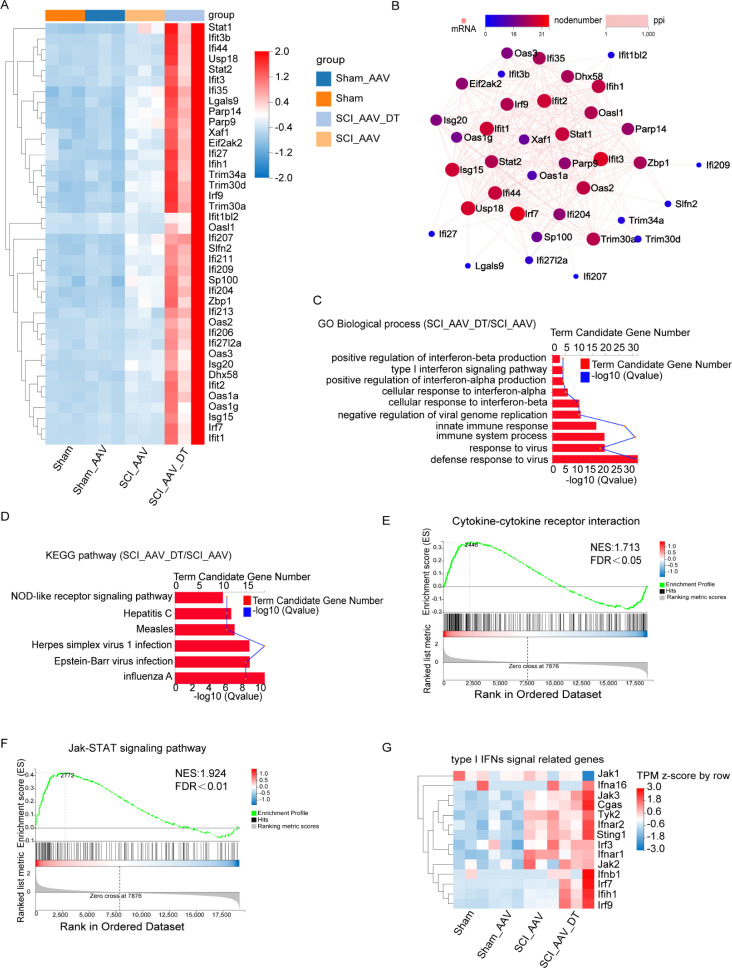
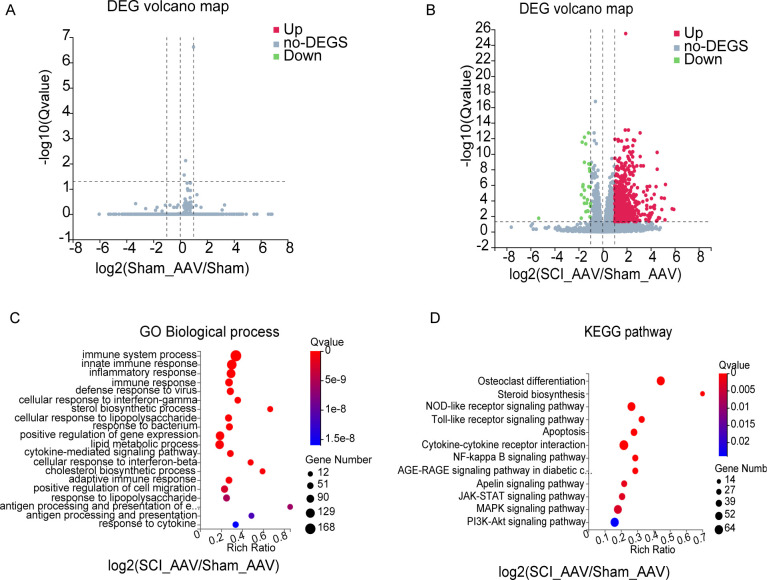
Astrocytes derive from different lineages and play a critical role in neuropathic pain after spinal cord injury (SCI). Whether selectively eliminating these main origins of astrocytes in lumbar enlargement could attenuate SCI-induced neuropathic pain remains unclear. Through transgenic mice injected with an adeno-associated virus vector and diphtheria toxin, astrocytes in lumbar enlargement were lineage traced, targeted, and selectively eliminated. Pain-related behaviors were measured with an electronic von Frey apparatus and a cold/hot plate after SCI. RNA sequencing, bioinformatics analysis, molecular experiment, and immunohistochemistry were used to explore the potential mechanisms after astrocyte elimination. Lineage tracing revealed that the resident astrocytes but not ependymal cells were the main origins of astrocytes-induced neuropathic pain. SCI-induced mice to obtain significant pain symptoms and astrocyte activation in lumbar enlargement. Selective resident astrocyte elimination in lumbar enlargement could attenuate neuropathic pain and activate microglia. Interestingly, the type I interferons (IFNs) signal was significantly activated after astrocytes elimination, and the most activated Gene Ontology terms and pathways were associated with the type I IFNs signal which was mainly activated in microglia and further verified in vitro and in vivo. Furthermore, different concentrations of interferon and Stimulator of interferon genes (STING) agonist could activate the type I IFNs signal in microglia. These results elucidate that selectively eliminating resident astrocytes attenuated neuropathic pain associated with type I IFNs signal activation in microglia. Targeting type I IFNs signals is proven to be an effective strategy for neuropathic pain treatment after SCI.
星形胶质细胞起源于不同的谱系,在脊髓损伤 (SCI) 后神经病理性疼痛中发挥关键作用。选择性消除这些腰膨大星形胶质细胞的主要来源是否能减轻 SCI 诱导的神经病理性疼痛尚不清楚。通过注射腺相关病毒载体和白喉毒素的转基因小鼠,对腰膨大星形胶质细胞进行谱系追踪、靶向和选择性消除。SCI 后,用电子von Frey 仪器和冷热板测量与疼痛相关的行为。通过 RNA 测序、生物信息学分析、分子实验和免疫组织化学来探索星形胶质细胞消除后的潜在机制。谱系追踪显示,固有星形胶质细胞而不是室管膜细胞是星形胶质细胞诱导神经病理性疼痛的主要来源。SCI 诱导的小鼠在腰膨大处获得明显的疼痛症状和星形胶质细胞激活。选择性消除腰膨大的固有星形胶质细胞可减轻神经病理性疼痛并激活小胶质细胞。有趣的是,星形胶质细胞消除后 I 型干扰素 (IFN) 信号明显激活,最活跃的基因本体论术语和途径与 I 型 IFN 信号相关,该信号主要在小胶质细胞中激活,并在体外和体内进一步验证。此外,不同浓度的干扰素和干扰素基因刺激物 (STING) 激动剂可激活小胶质细胞中的 I 型 IFN 信号。这些结果表明,选择性消除固有星形胶质细胞可减轻与小胶质细胞中 I 型 IFN 信号激活相关的神经病理性疼痛。靶向 I 型 IFN 信号已被证明是 SCI 后治疗神经病理性疼痛的有效策略。