Biological Sciences, Superior University, Lahore, Pakistan.
Khawaja Muhammad Safdar Medical College, Sialkot, Pakistan.
PLoS One. 2024 Nov 15;19(11):e0312860. doi: 10.1371/journal.pone.0312860. eCollection 2024.
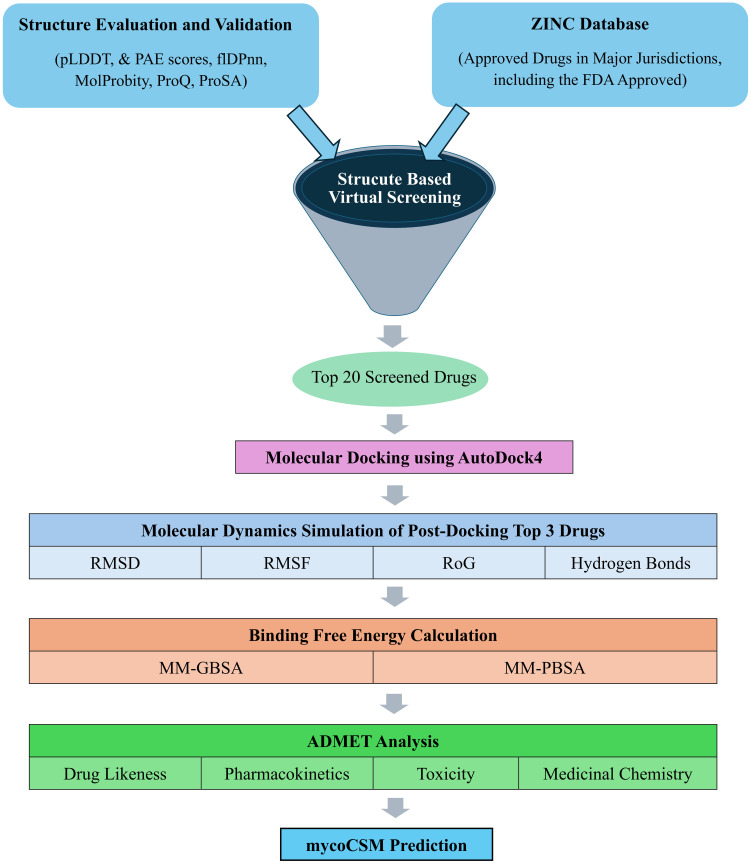
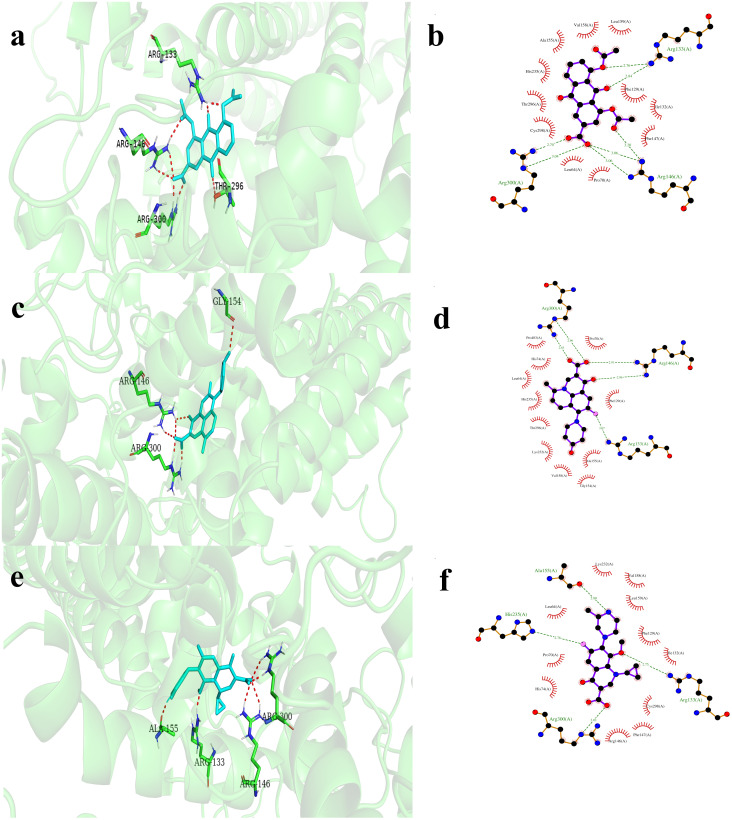
Tuberculosis (TB) continues to be a major global health burden, with high incidence and mortality rates, compounded by the emergence and spread of drug-resistant strains. The limitations of current TB medications and the urgent need for new drugs targeting drug-resistant strains, particularly multidrug-resistant (MDR) and extensively drug-resistant (XDR) TB, underscore the pressing demand for innovative anti-TB drugs that can shorten treatment duration. This has led to a focus on targeting energy metabolism of Mycobacterium tuberculosis (Mtb) as a promising approach for drug discovery. This study focused on repurposing drugs against the crucial mycobacterial protein, electron transfer flavoprotein oxidoreductase (EtfD), integral to utilizing fatty acids and cholesterol as a carbon source during infection. The research adopted an integrative approach, starting with virtual screening of approved drugs from the ZINC20 database against EtfD, followed by molecular docking, and concluding with molecular dynamics (MD) simulations. Diacerein, levonadifloxacin, and gatifloxacin were identified as promising candidates for repurposing against TB based on their strong binding affinity, stability, and interactions with EtfD. ADMET analysis and anti-TB sensitivity predictions assessed their pharmacokinetic and therapeutic potential. Diacerein and levonadifloxacin, previously unexplored in anti-tuberculous therapy, along with gatifloxacin, known for its efficacy in drug-resistant TB, have broad-spectrum antimicrobial properties and favorable pharmacokinetic profiles, suggesting potential as alternatives to current TB treatments, especially against resistant strains. This study underscores the efficacy of computational drug repurposing, highlighting bacterial energy metabolism and lipid catabolism as fruitful targets. Further research is necessary to validate the clinical suitability and efficacy of diacerein, levonadifloxacin, and gatifloxacin, potentially enhancing the arsenal against global TB.
结核病(TB)仍然是一个主要的全球健康负担,其发病率和死亡率都很高,再加上耐药菌株的出现和传播,情况更加复杂。目前的结核病药物存在局限性,急需针对耐药菌株的新药,特别是耐多药(MDR)和广泛耐药(XDR)结核病,这突显了对能够缩短治疗时间的创新抗结核病药物的迫切需求。这导致人们将结核分枝杆菌(Mtb)的能量代谢作为药物发现的一个有前途的目标。本研究专注于重新利用针对关键的分枝杆菌蛋白电子传递黄素蛋白氧化还原酶(EtfD)的药物,该蛋白在感染过程中利用脂肪酸和胆固醇作为碳源时是不可或缺的。该研究采用了一种综合方法,首先从 ZINC20 数据库中的已批准药物中对 EtfD 进行虚拟筛选,然后进行分子对接,最后进行分子动力学(MD)模拟。根据与 EtfD 的强结合亲和力、稳定性和相互作用,二乙酰水杨酸、左氧氟沙星和加替沙星被确定为针对结核病重新利用的有前途的候选药物。ADMET 分析和抗结核病敏感性预测评估了它们的药代动力学和治疗潜力。二乙酰水杨酸和左氧氟沙星在抗结核治疗中以前没有被探索过,而加替沙星以其在耐药结核病中的疗效而闻名,它们具有广谱抗菌特性和良好的药代动力学特征,这表明它们有可能替代当前的结核病治疗方法,特别是针对耐药菌株。本研究强调了计算药物再利用的有效性,突出了细菌能量代谢和脂质分解代谢作为有前途的靶点。需要进一步研究以验证二乙酰水杨酸、左氧氟沙星和加替沙星的临床适用性和疗效,这有可能增强对抗全球结核病的武器库。