Siwakoti Ram C, Harris Sean M, Ferguson Kelly K, Hao Wei, Cantonwine David E, Mukherjee Bhramar, McElrath Thomas F, Meeker John D
Department of Environmental Health Sciences, University of Michigan School of Public Health, Ann Arbor, MI, USA.
Epidemiology Branch, Division of Intramural Research, National Institute of Environmental Health Sciences, National Institutes of Health, Department of Health and Human Services, Research Triangle Park, NC, USA.
Environ Int. 2024 Dec;194:109145. doi: 10.1016/j.envint.2024.109145. Epub 2024 Nov 13.
Per- and polyfluoroalkyl substances (PFAS) are fluorinated chemicals linked to adverse pregnancy and birth outcomes. However, the underlying mechanisms, specifically their effects on maternal inflammatory processes, are not well characterized.
We examined associations between prenatal PFAS exposure and repeated measures of inflammatory biomarkers, including C-reactive protein (CRP) and four cytokines [Interleukin-10 (IL-10), IL-1β, IL-6, and tumor necrosis factor-α (TNF-α)].
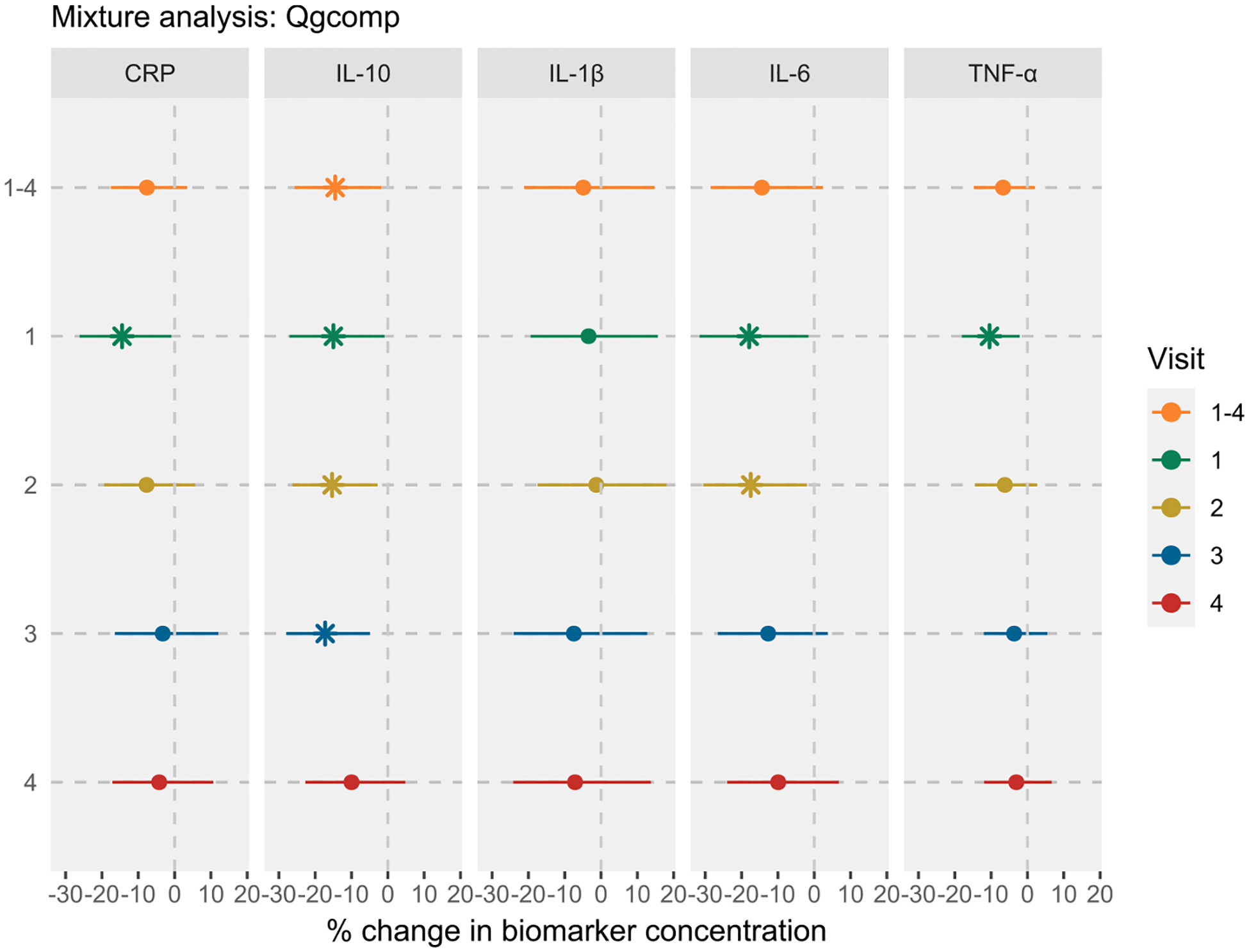
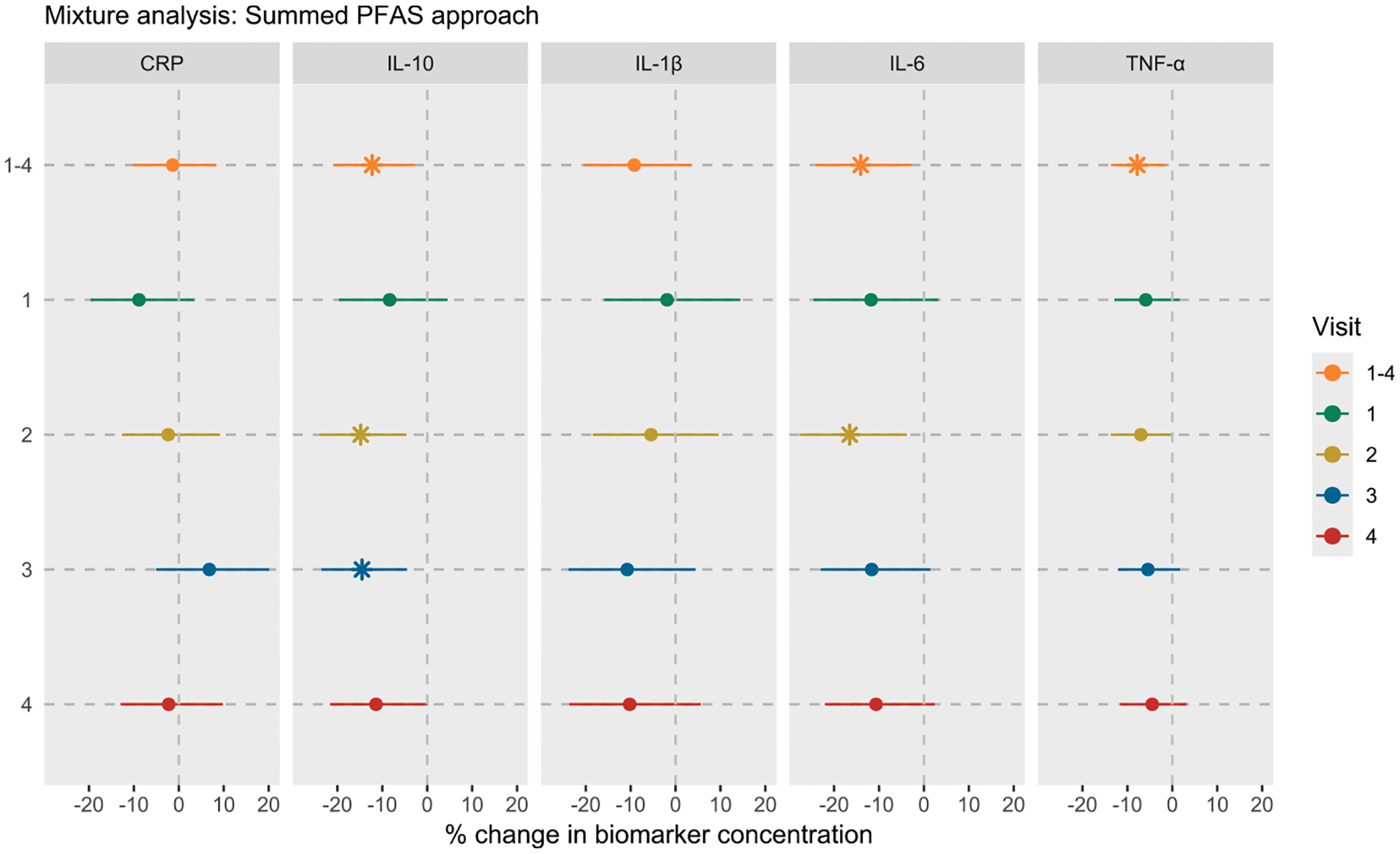
We analyzed data from 469 pregnant women in a nested case-control study of preterm birth at Brigham and Women's Hospital in Boston, Massachusetts (2006-2008). We measured nine PFAS in early pregnancy plasma samples (median gestation: 10 weeks), with inflammatory biomarkers measured at median gestations of 10, 18, 26, and 35 weeks. We used linear mixed models for repeated measures and multivariable regression for visit-specific analysis to examine associations between each PFAS and inflammation biomarker, adjusting for maternal demographics, pre-pregnancy BMI, and parity. We examined the effects of PFAS mixture using sum of all PFAS (∑PFAS) and quantile-based g-computation approaches.
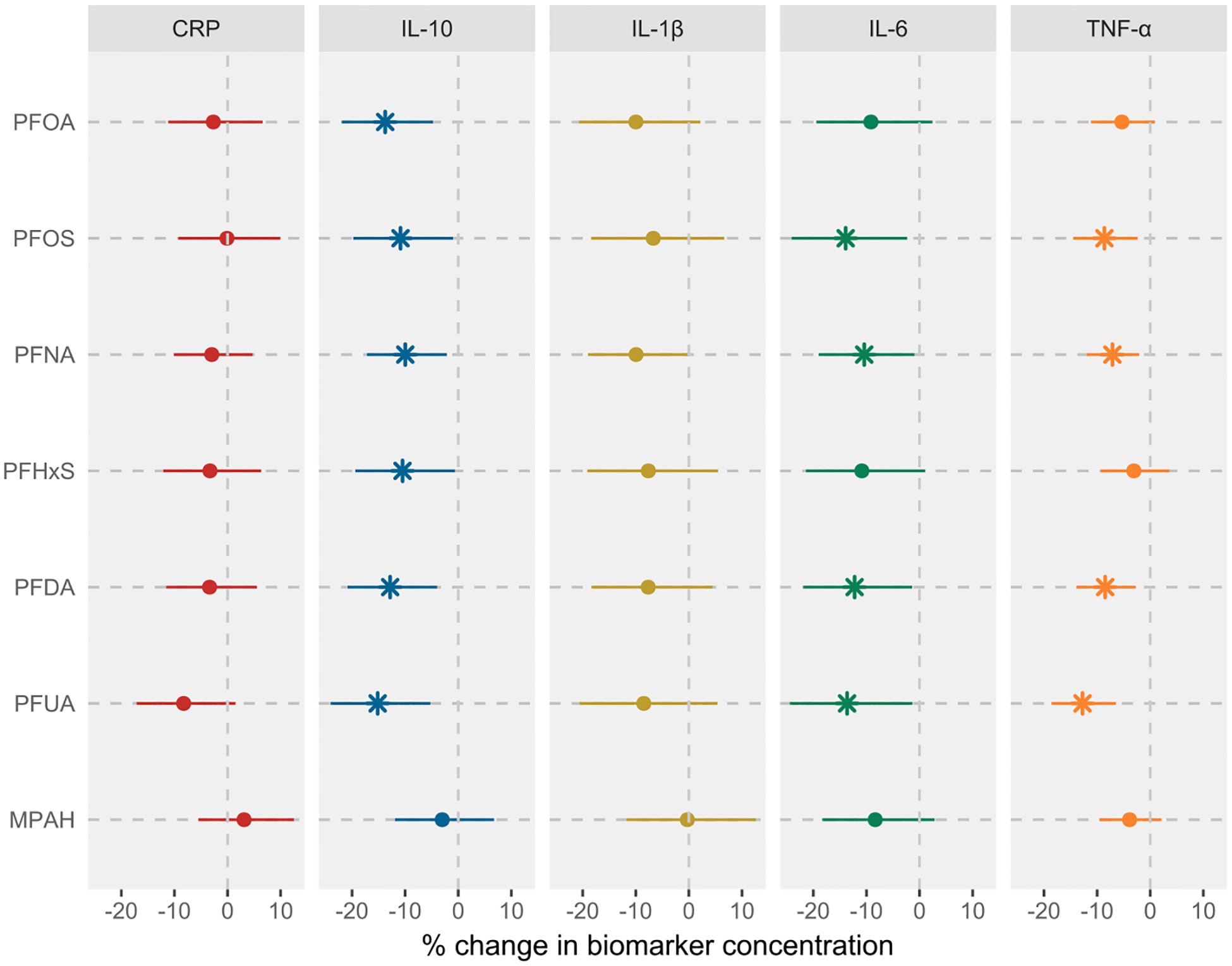
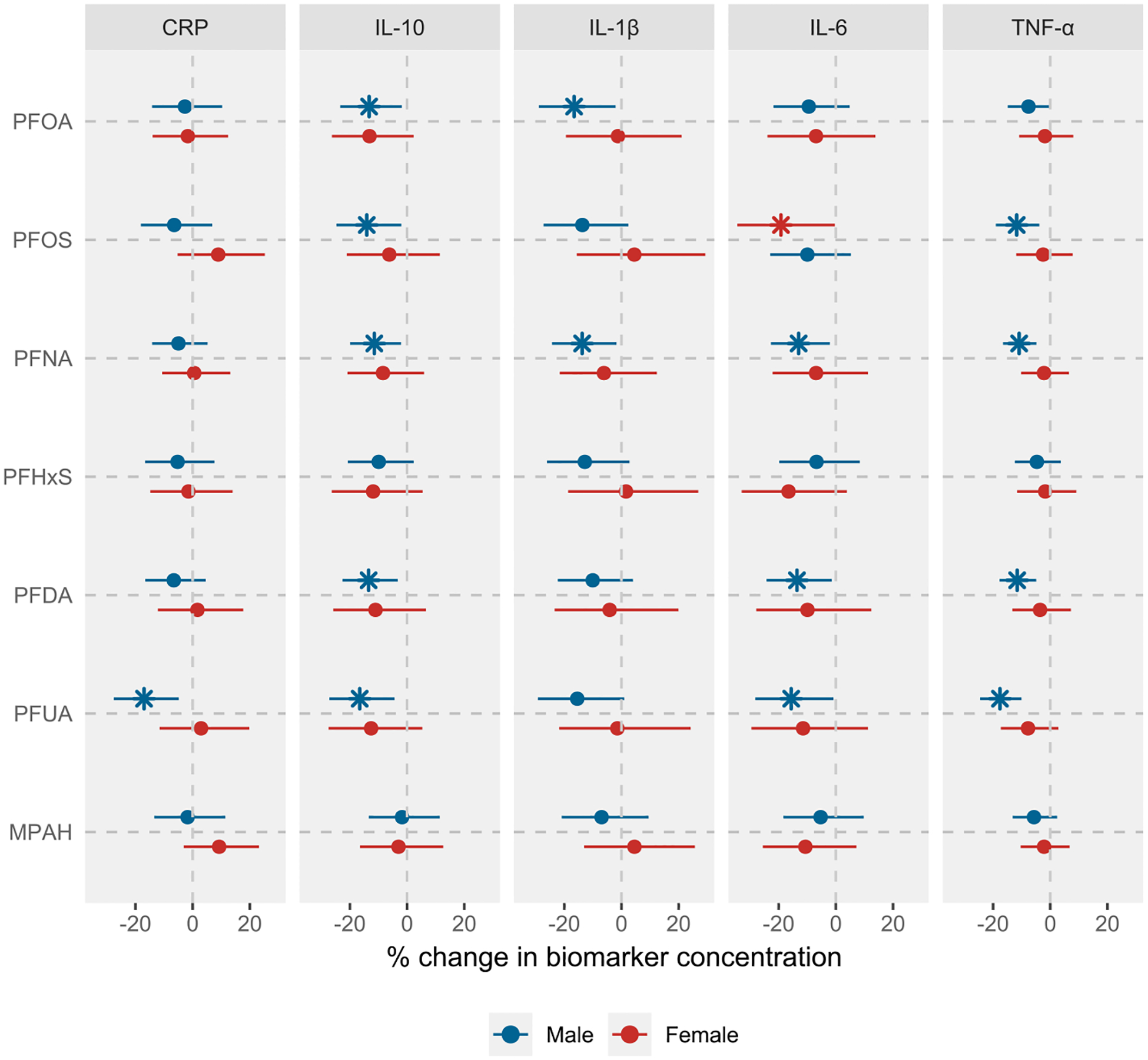
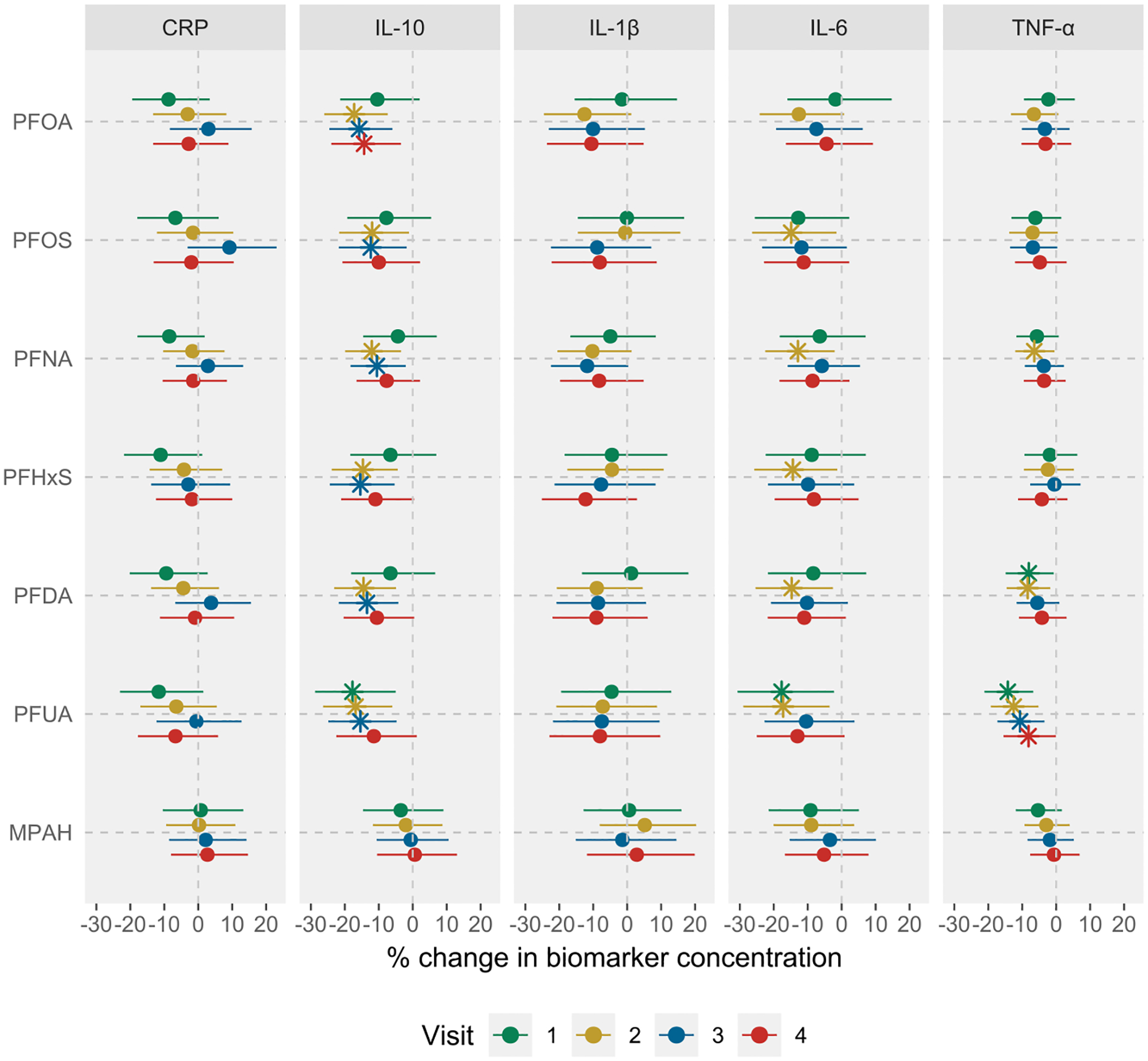
We observed consistent inverse associations between most PFAS and cytokines, specifically IL-10, IL-6, and TNF-α, in both single pollutant and mixture analyses. For example, an interquartile range increase in perfluorooctanesulfonic acid was associated with -10.87 (95% CI: -19.75, -0.99), -13.91 (95% CI: -24.11, -2.34), and -8.63 (95% CI: -14.51, -2.35) percent change in IL-10, IL-6, and TNF-α levels, respectively. Fetal sex, maternal race, and visit-specific analyses showed associations between most PFAS and cytokines were generally stronger in mid-pregnancy and among women who delivered males or identified as African American.
The observed suppression of both regulatory (IL-10) and pro-inflammatory (TNF-α) cytokines suggests that PFAS may alter maternal inflammatory processes or immune functions during pregnancy. Further research is needed to understand the effects of both legacy and newer PFAS on inflammatory pathways and their broader clinical implications.
全氟和多氟烷基物质(PFAS)是一类与不良妊娠和分娩结局相关的氟化化学品。然而,其潜在机制,特别是对母体炎症过程的影响,尚未得到充分表征。
我们研究了产前PFAS暴露与炎症生物标志物重复测量值之间的关联,这些生物标志物包括C反应蛋白(CRP)和四种细胞因子[白细胞介素-10(IL-10)、IL-1β、IL-6和肿瘤坏死因子-α(TNF-α)]。
我们分析了马萨诸塞州波士顿布莱根妇女医院一项关于早产的巢式病例对照研究中469名孕妇的数据(2006 - 2008年)。我们测量了孕早期血浆样本(中位孕周:10周)中的九种PFAS,并在孕周为10、18、26和35周时测量炎症生物标志物。我们使用线性混合模型进行重复测量分析,并使用多变量回归进行特定访视分析,以检验每种PFAS与炎症生物标志物之间的关联,同时对产妇人口统计学特征、孕前体重指数和产次进行调整。我们使用所有PFAS的总和(∑PFAS)和基于分位数的g计算方法来研究PFAS混合物的影响。
在单一污染物和混合物分析中,我们观察到大多数PFAS与细胞因子,特别是IL-10、IL-6和TNF-α之间存在一致的负相关。例如,全氟辛烷磺酸四分位数间距的增加分别与IL-10、IL-6和TNF-α水平变化-10.87%(95%置信区间:-19.75,-0.99)、-13.91%(95%置信区间:-24.11,-2.34)和-8.63%(95%置信区间:-14.51,-2.35)相关。胎儿性别、产妇种族以及特定访视分析表明,大多数PFAS与细胞因子之间的关联在孕中期以及分娩男性的女性或非裔美国女性中通常更强。
观察到的调节性(IL-10)和促炎性(TNF-α)细胞因子均受到抑制,这表明PFAS可能在孕期改变母体炎症过程或免疫功能。需要进一步研究以了解传统和新型PFAS对炎症途径的影响及其更广泛的临床意义。