Nokura Yuka, Maezawa Mika, Miyasaka Koumi, Hirofuji Sakiko, Nakao Satoshi, Yamashita Moe, Ichihara Nanaka, Sugishita Kana, Yamazaki Tomofumi, Tamaki Hirofumi, Iguchi Kazuhiro, Tahara Kohei, Nakamura Mitsuhiro
Laboratory of Drug Informatics, Gifu Pharmaceutical University, Gifu, JPN.
Department of Pharmacy, Kyushu University Hospital, Fukuoka, JPN.
Cureus. 2024 Oct 16;16(10):e71588. doi: 10.7759/cureus.71588. eCollection 2024 Oct.
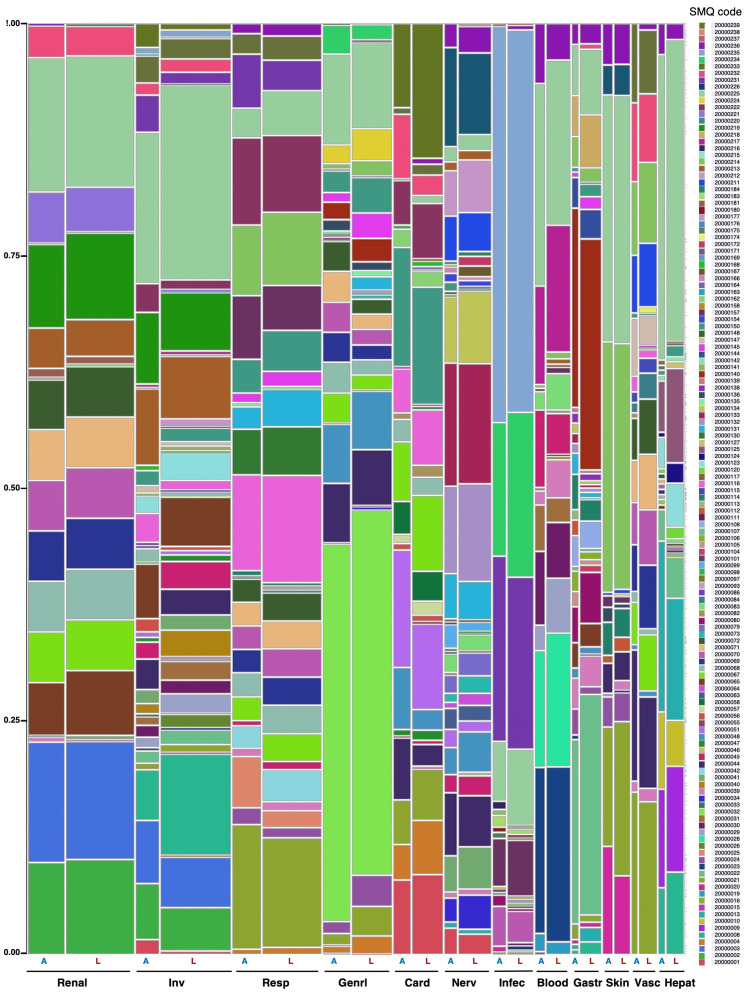
Amphotericin B deoxycholate (AMPH-B) is a polyene macrolide with antifungal activity. Liposomal AMPH-B (L-AMB) was developed to reduce side effects while maintaining antifungal activity. This study was aimed at evaluating and comparing the adverse event profiles of AMPH-B and L-AMB using a spontaneous reporting system. We analyzed the adverse event reports of AMPH-B and L-AMB from the United States Food and Drug Administration Adverse Event Reporting System (FAERS). Case report counts of adverse events were generated according to the preferred terms of the Medical Dictionary for Regulatory Activities (MedDRA). Standardized MedDRA queries (SMQs) and system organ classes (SOCs) were used to compare the organ-specific adverse event profiles of AMPH-B and L-AMB. The reporting odds ratio and proportional reporting rate were used to detect pharmacovigilance signals. The FAERS database contains 21,173,818 cases from January 2004 to March 2024. Adverse events were reported in 2438 cases receiving AMPH-B treatment and 3344 cases receiving L-AMB treatment, including 848 and 1591 cases receiving intravenous AMPH-B and L-AMB injections, respectively. The most frequently reported drug-related adverse event in the AMPH-B and L-AMB groups was hypokalemia. SOCs with statistically significant differences were "Inv" (laboratory tests), "Resp" (respiratory, thoracic, and mediastinal disorders), "Genrl" (general and systemic disorders and conditions at the site of administration), "Card" (cardiac disorders), and "Blood" (blood and lymphatic system disorders). No statistically significant difference was observed in the SMQ profile of adverse events in "Renal" (renal and urinary disorders) and "Hepat" (hepatobiliary disorders) between the L-AMB and AMPH-B formulations in this study. Based on real-world data from FAERS, adverse event profiles of AMPH-B and L-AMB were compared. No statistically significant difference was observed in the SMQ profile of adverse events in the renal and hepatic SOCs between the L-AMB and AMPH-B formulations. Our results suggest that L-AMB is more tolerated by the kidneys than AMPH-B.
两性霉素B脱氧胆酸盐(AMPH - B)是一种具有抗真菌活性的多烯大环内酯类药物。脂质体两性霉素B(L - AMB)的研发目的是在保持抗真菌活性的同时减少副作用。本研究旨在使用自发报告系统评估和比较AMPH - B和L - AMB的不良事件谱。我们分析了来自美国食品药品监督管理局不良事件报告系统(FAERS)中AMPH - B和L - AMB的不良事件报告。根据《监管活动医学词典》(MedDRA)的首选术语生成不良事件的病例报告计数。使用标准化MedDRA查询(SMQ)和系统器官分类(SOC)来比较AMPH - B和L - AMB的器官特异性不良事件谱。报告比值比和比例报告率用于检测药物警戒信号。FAERS数据库包含2004年1月至2024年3月的21,173,818例病例。接受AMPH - B治疗的2438例和接受L - AMB治疗的3344例报告了不良事件,其中分别有848例和1591例接受了静脉注射AMPH - B和L - AMB。AMPH - B组和L - AMB组中最常报告的与药物相关的不良事件是低钾血症。具有统计学显著差异的SOC是“Inv”(实验室检查)、“Resp”(呼吸、胸和纵隔疾病)、“Genrl”(全身和全身性疾病以及给药部位情况)、“Card”(心脏疾病)和“Blood”(血液和淋巴系统疾病)。在本研究中,L - AMB和AMPH - B制剂在“Renal”(肾脏和泌尿系统疾病)和“Hepat”(肝胆系统疾病)的不良事件SMQ谱中未观察到统计学显著差异。基于FAERS的真实世界数据,比较了AMPH - B和L - AMB的不良事件谱。在L - AMB和AMPH - B制剂的肾脏和肝脏SOC不良事件SMQ谱中未观察到统计学显著差异。我们的结果表明,与AMPH - B相比,L - AMB对肾脏的耐受性更好。