Lo Chien-Hui, Chen Siyu, Zhao Jingyu, Liu Zhiquan, Wang Biao, Wang Qing, Kowal Tia J, Sun Yang
Department of Ophthalmology, Stanford University School of Medicine, Palo Alto, CA, USA.
Palo Alto Veterans Administration, Palo Alto, CA, USA.
bioRxiv. 2024 Nov 1:2024.11.01.621496. doi: 10.1101/2024.11.01.621496.
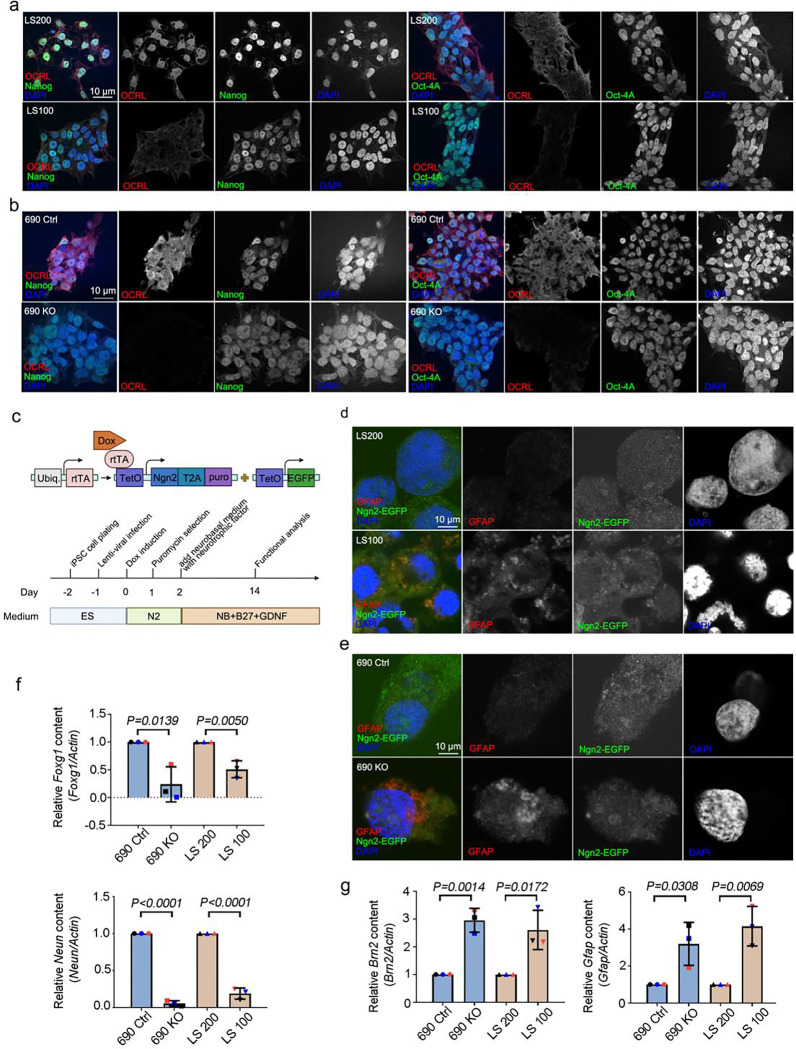
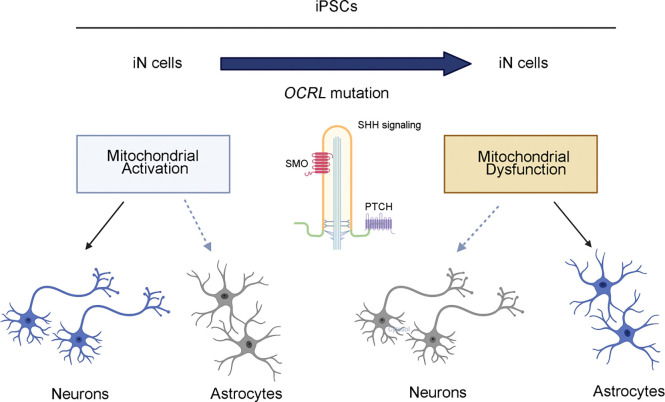
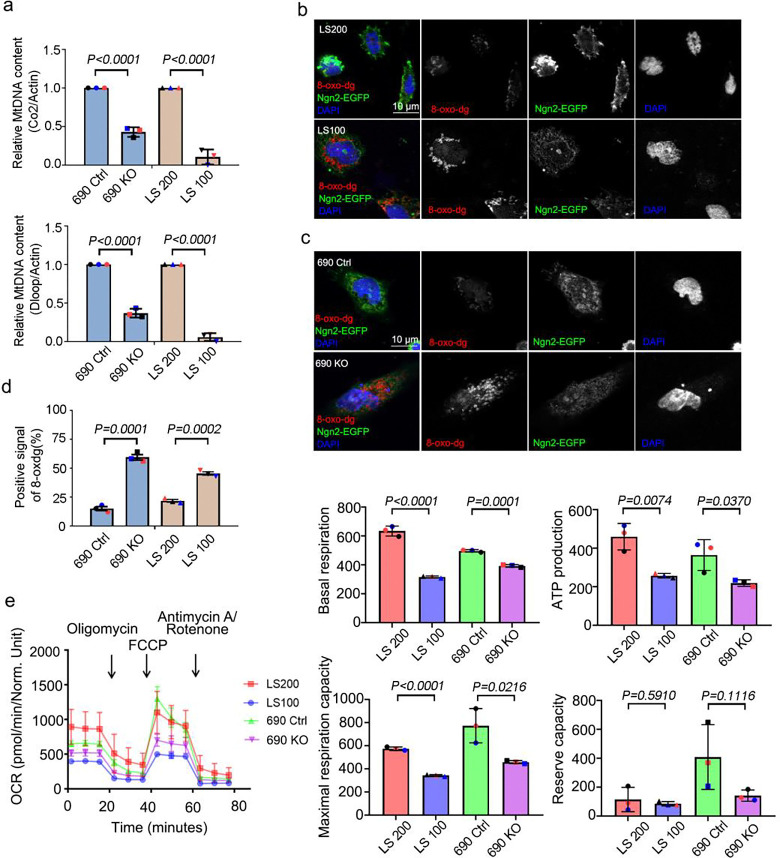
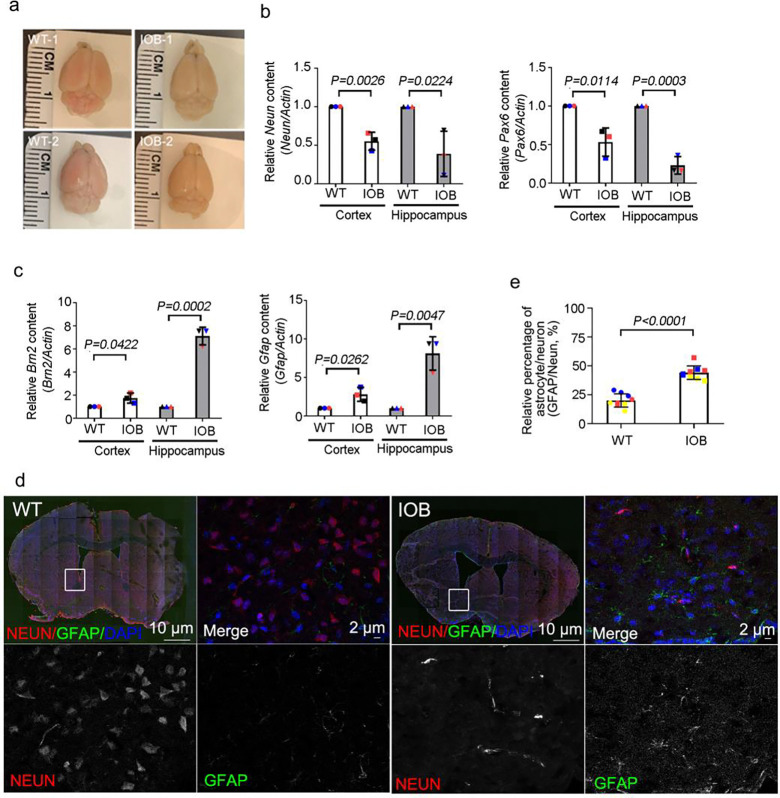
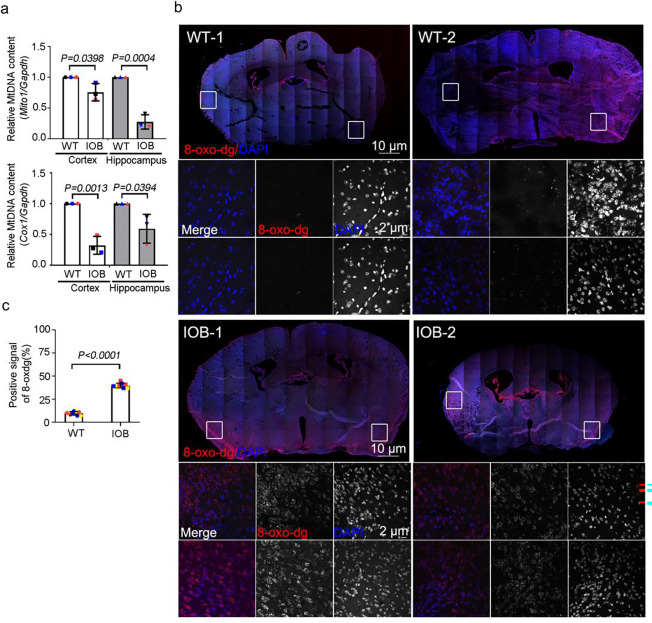
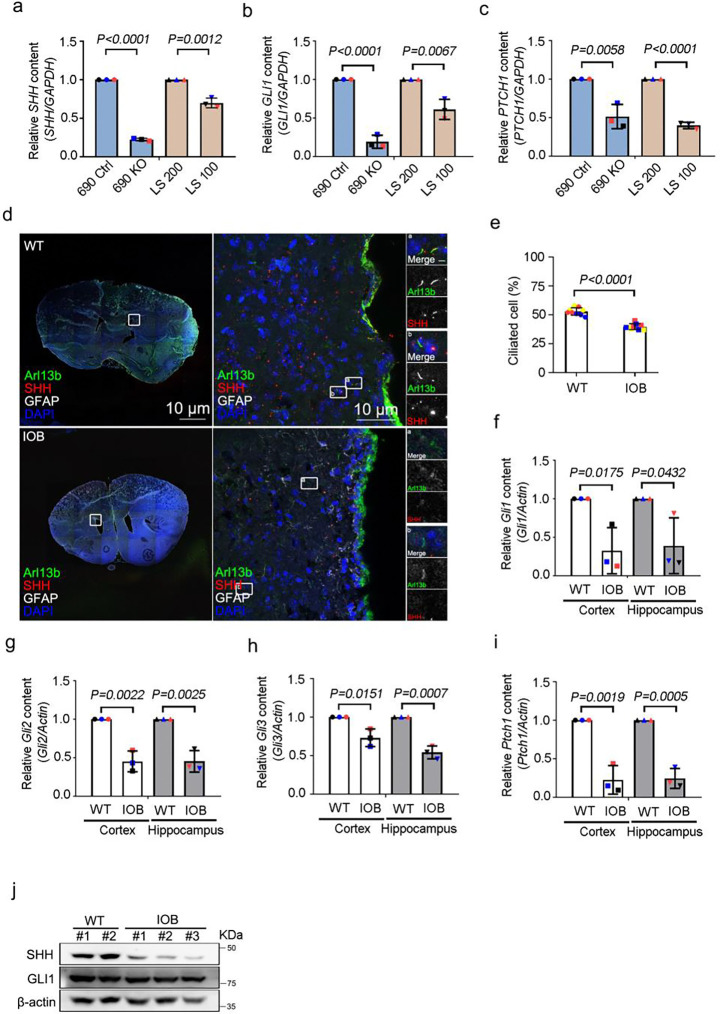
Human brain development is a complex process that requires intricate coordination of multiple cellular and developmental events. Dysfunction of lipid metabolism can lead to neurodevelopmental disorders. Lowe syndrome (LS) is a recessive X-linked disorder associated with proximal tubular renal disease, congenital cataracts and glaucoma, and central nervous system developmental delays. Mutations in OCRL, which encodes an inositol polyphosphate 5-phosphatase, lead to the development of LS. The cellular mechanism responsible for neuronal dysfunction in LS is unknown. Here we show depletion of mitochondrial DNA and decrease in mitochondrial activities result in neuronal differentiation defects. Increased astrocytes, which are secondary responders to neurodegeneration, are observed in neuronal (iN) cells differentiated from Lowe patient-derived iPSCs and an LS mouse model. Inactivation of cilia-related sonic hedgehog signaling, which organizes the pattern of cellular neuronal differentiation, is observed in an OCRL knockout, iN cells differentiated from Lowe patient-derived iPSCs, and an LS mouse model. Taken together, our findings indicate that mitochondrial dysfunction and impairment of the ciliary sonic hedgehog signaling pathway represent a novel pathogenic mechanism underlying the disrupted neuronal differentiation observed in LS.
人类大脑发育是一个复杂的过程,需要多种细胞和发育事件的精细协调。脂质代谢功能障碍可导致神经发育障碍。劳氏综合征(LS)是一种隐性X连锁疾病,与近端肾小管肾病、先天性白内障和青光眼以及中枢神经系统发育迟缓有关。编码肌醇多磷酸5-磷酸酶的OCRL基因突变会导致劳氏综合征的发生。劳氏综合征中神经元功能障碍的细胞机制尚不清楚。在这里,我们表明线粒体DNA的耗竭和线粒体活性的降低会导致神经元分化缺陷。在源自劳氏综合征患者的诱导多能干细胞(iPSC)分化的神经元(iN)细胞和一个劳氏综合征小鼠模型中,观察到作为神经退行性变次级反应者的星形胶质细胞增多。在OCRL基因敲除、源自劳氏综合征患者的诱导多能干细胞分化的iN细胞以及一个劳氏综合征小鼠模型中,观察到与细胞神经元分化模式相关的纤毛相关音猬因子信号通路失活。综上所述,我们的研究结果表明,线粒体功能障碍和纤毛音猬因子信号通路受损代表了劳氏综合征中观察到的神经元分化紊乱的一种新的致病机制。