Nishida Sakiya, Hisata Yoshio, Yasaka Aki, Sugioka Takashi, Hirata Risa, Katsuki Naoko E, Tago Masaki, Ueda Yuki, Amenomori Masaki, Higashino Katsumi, Naya Yoshio
Department of Internal Medicine Nagahama City Kohoku Hospital Nagahama Japan.
Department of Family Medicine Shiga Center for Family Medicine Gamo-gun Japan.
J Gen Fam Med. 2024 Jul 29;25(6):333-342. doi: 10.1002/jgf2.721. eCollection 2024 Nov.
Low birthrates and an aging society during population decline have brought about labor shortages and increased medical care needs. Medical resources should be distributed appropriately, particularly in rural areas. High-quality primary care can make the medical system more effective and contribute to rural residents' health. However, there are no reports on the impact of primary care on health in the rural areas of Japan. This study examined the effect of primary care quality on self-rated health in a rural Japanese area.
We conducted a cross-sectional study using a questionnaire survey of residents of a rural area in northern Shiga Prefecture in 2021. Self-rated health (SRH) was used as the health outcome (1-5 points), and the Japanese Primary Care Assessment Tool Short Form (JPCAT-SF) was used to measure the patients' experience of primary care (0-100 points). We conducted a multivariate analysis using logistic regression analysis and examined the association between good SRH (4 points or more) and high JPCAT-SF scores (above average score), adjusted for sociodemographic confounding factors.
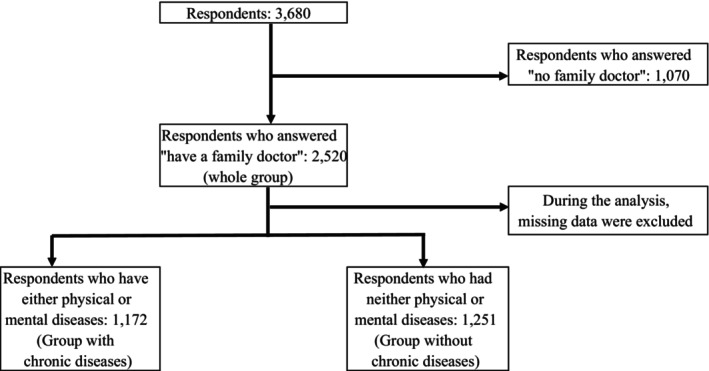
A total of 1108 men and 1412 women responded to the survey. The mean patient age was 69.8 years. The mean JPCAT-SF score was 51.8 points. Among the 1172 patients with chronic diseases, good SRH was associated with high JPCAT-SF scores (odds ratio [OR] 1.32, 95% confidence interval [CI] 1.009-1.73).
Good SRH among rural residents with chronic disease was associated with high primary care quality.
在人口减少的情况下,低出生率和老龄化社会导致劳动力短缺和医疗需求增加。医疗资源应合理分配,尤其是在农村地区。高质量的初级保健可以提高医疗系统的效率,并有助于农村居民的健康。然而,尚无关于初级保健对日本农村地区健康影响的报道。本研究调查了日本农村地区初级保健质量对自评健康的影响。
我们于2021年对滋贺县北部农村地区的居民进行了问卷调查,开展了一项横断面研究。自评健康(SRH)用作健康结局指标(1 - 5分),日本初级保健评估工具简表(JPCAT - SF)用于衡量患者的初级保健体验(0 - 100分)。我们使用逻辑回归分析进行多变量分析,并在对社会人口学混杂因素进行调整后,研究良好的SRH(4分及以上)与高JPCAT - SF分数(高于平均分)之间的关联。
共有1108名男性和1412名女性参与了调查。患者的平均年龄为69.8岁。JPCAT - SF的平均分数为51.8分。在1172名患有慢性病的患者中,良好的SRH与高JPCAT - SF分数相关(比值比[OR]为1.32,95%置信区间[CI]为1.009 - 1.73)。
患有慢性病的农村居民中,良好的SRH与较高的初级保健质量相关。