Pirota Valentina, Stritto Angela Dello, Magnaghi Lisa Rita, Biesuz Raffaela, Doria Filippo, Mella Mariella, Freccero Mauro, Crespan Emmanuele
Department of Chemistry, University of Pavia, via Taramelli 10, I-27100 Pavia, Italy.
G4-INTERACT, USERN, via Taramelli 10, I-27100 Pavia, Italy.
ACS Omega. 2024 Oct 30;9(45):45203-45213. doi: 10.1021/acsomega.4c06430. eCollection 2024 Nov 12.
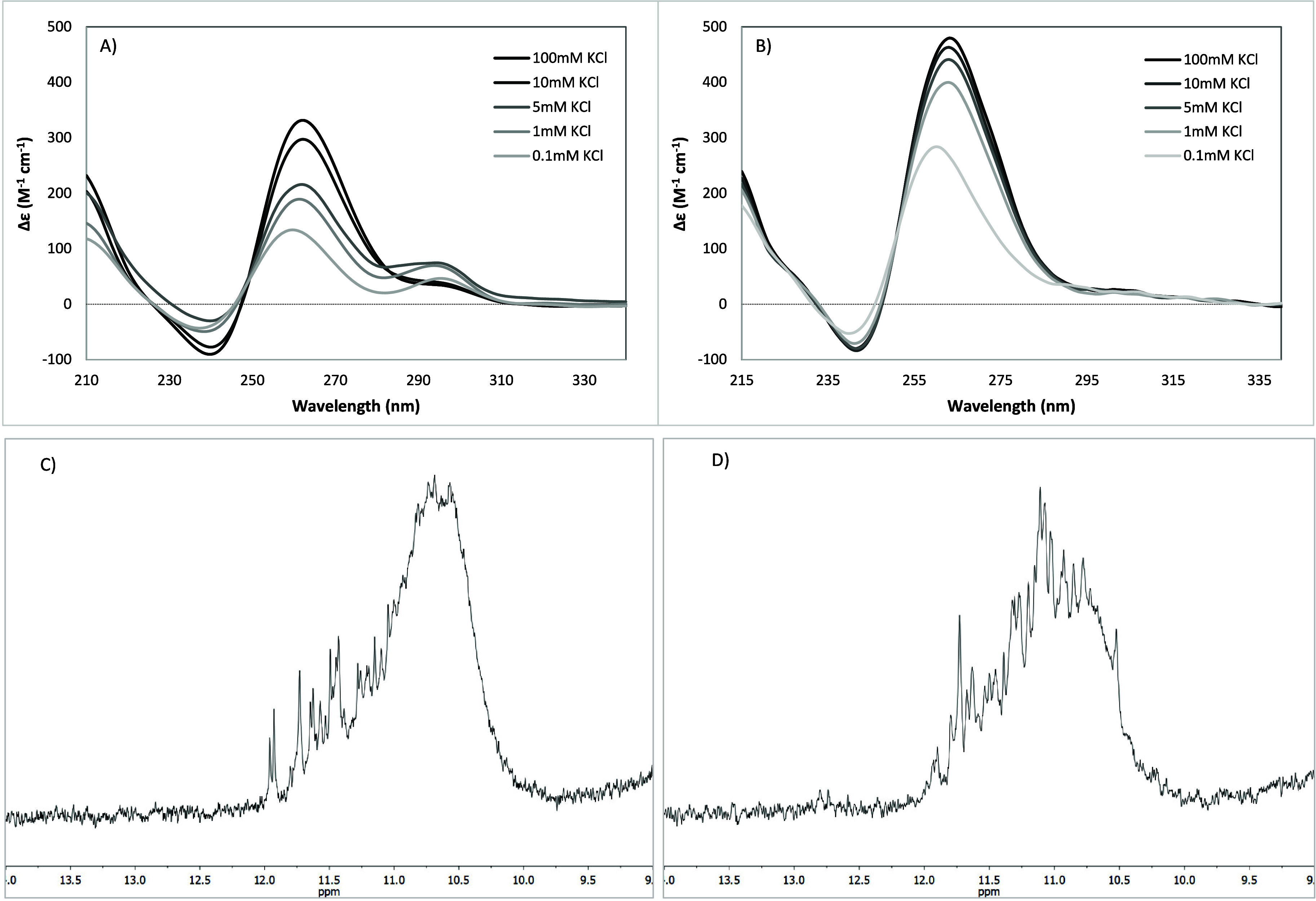
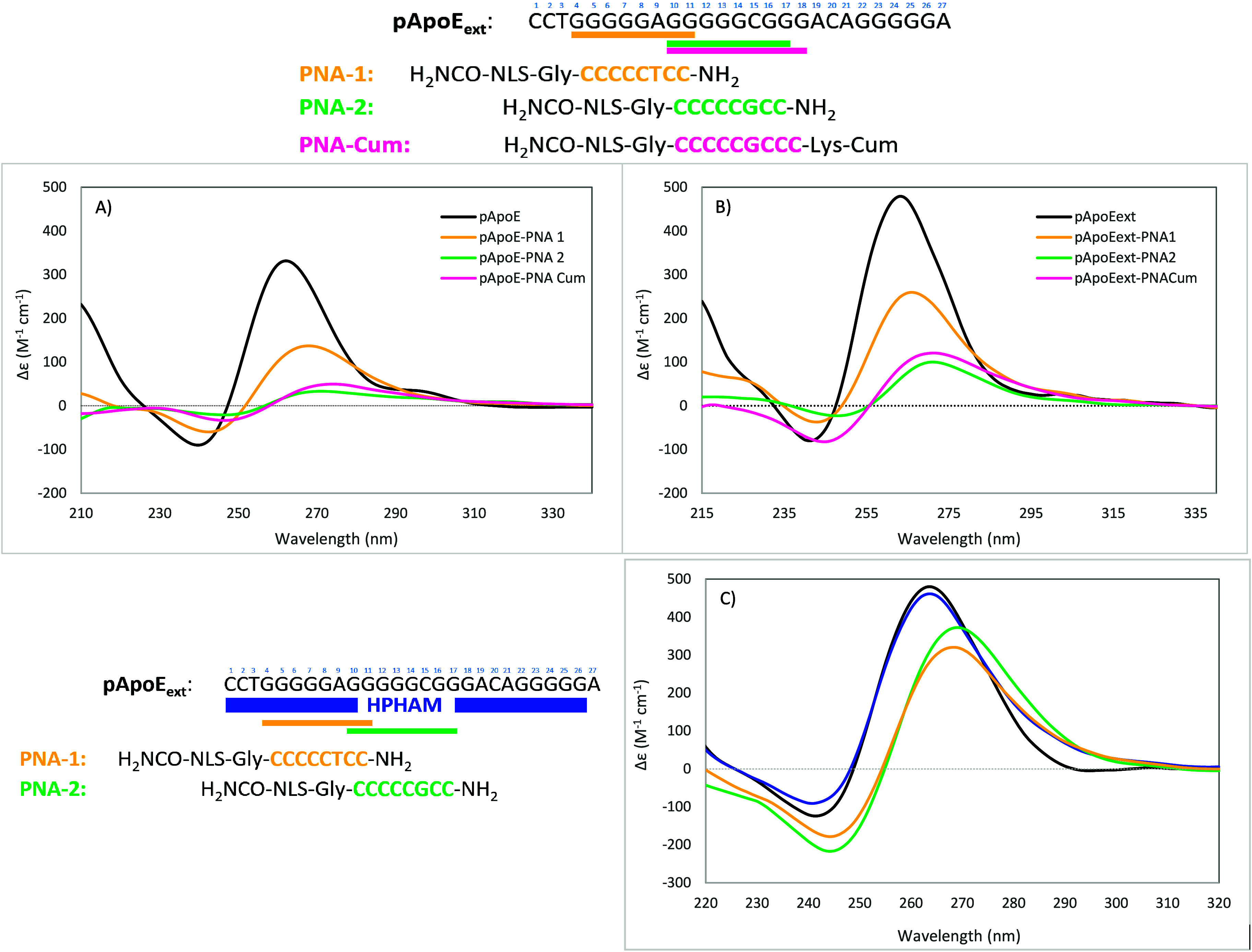
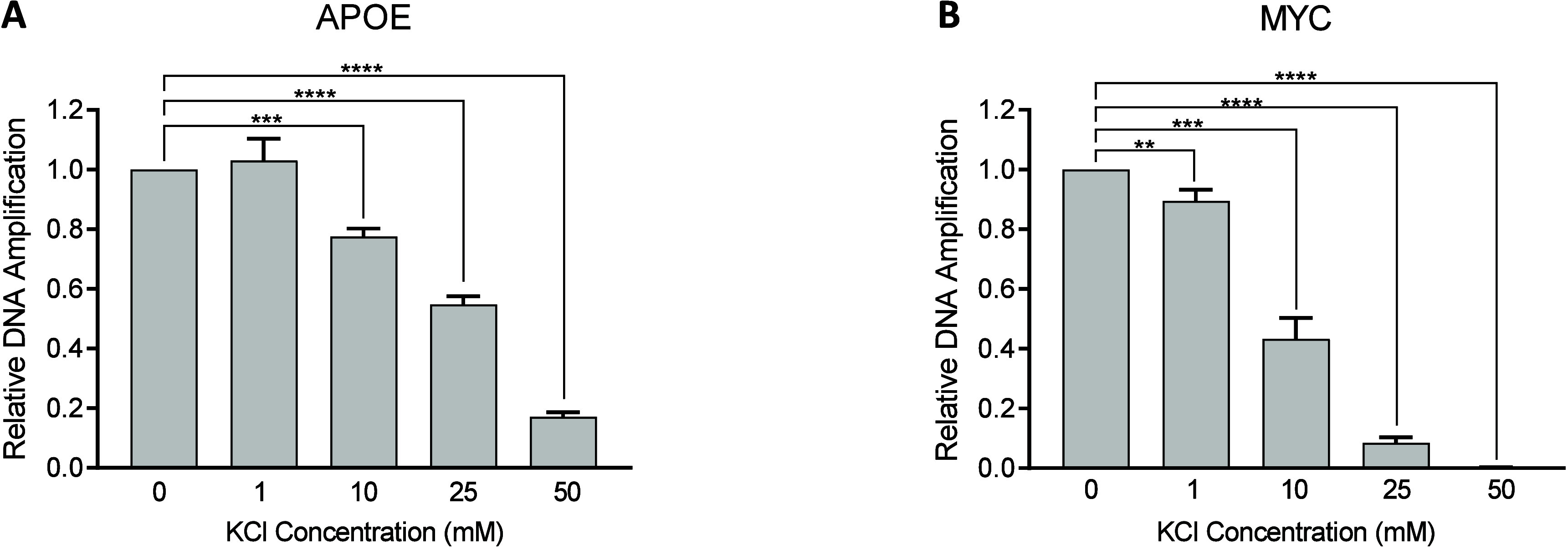
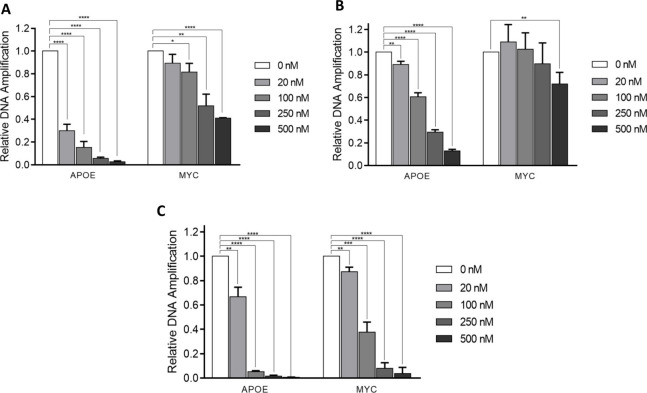
Human apolipoprotein E (APOE) is a crucial lipid transport glycoprotein involved in various biological processes, including lipid metabolism, immune response, and neurodegeneration. Elevated APOE levels are linked to poor prognosis in several cancers and increased risk of Alzheimer's disease (AD). Therefore, modulating APOE expression presents a promising therapeutic strategy for both cancer and AD. Considering the pivotal role of G-quadruplex (G4) structures in medicinal chemistry as modulators of gene expression, here, we present a newly discovered G-quadruplex (G4) structure within the ApoE gene promoter. Bioinformatic analysis identified 21 potential G4-forming sequences in the ApoE promoter, with the more proximal to the transcription start site, pApoE, showing the highest G-score. Biophysical studies confirmed the folding of pApoE into a stable parallel G4 under physiological conditions, supported by circular dichroism, NMR spectroscopy, UV-melting, and a quantitative PCR stop assay. Moreover, the ability to modulate pApoE-G4 folding was demonstrated by using G4-stabilizing ligands (HPHAM, Braco19, and PDS), which increased the thermal stability of pApoE-G4. In contrast, peptide nucleic acid conjugates were synthesized to disrupt G4 formation, effectively hybridizing with pApoE sequences, and confirming the potential to unfold G4 structures. Overall, our findings provide a mainstay for future therapeutic approaches targeting ApoE-G4s to regulate APOE expression, offering potential advancements in cancer and AD treatment.
人类载脂蛋白E(APOE)是一种关键的脂质转运糖蛋白,参与多种生物过程,包括脂质代谢、免疫反应和神经退行性变。APOE水平升高与几种癌症的预后不良以及阿尔茨海默病(AD)风险增加有关。因此,调节APOE表达为癌症和AD治疗提供了一种有前景的治疗策略。考虑到G-四链体(G4)结构在药物化学中作为基因表达调节剂的关键作用,在此,我们展示了在ApoE基因启动子内新发现的一种G-四链体(G4)结构。生物信息学分析在ApoE启动子中鉴定出21个潜在的G4形成序列,其中更靠近转录起始位点的pApoE显示出最高的G分数。生物物理研究通过圆二色性、核磁共振光谱、紫外熔解和定量PCR终止试验证实,在生理条件下pApoE折叠成稳定的平行G4。此外,使用G4稳定配体(HPHAM、Braco19和PDS)证明了调节pApoE-G4折叠的能力,这些配体增加了pApoE-G4的热稳定性。相反,合成了肽核酸缀合物以破坏G4的形成,其与pApoE序列有效杂交,并证实了展开G4结构的潜力。总体而言,我们的发现为未来靶向ApoE-G4s以调节APOE表达的治疗方法提供了支柱,为癌症和AD治疗带来潜在进展。