
真实世界临床结局及依那西普作为抗瓜氨酸化蛋白抗体和类风湿因子阳性类风湿关节炎一线生物制剂的应用依据。
Real-world clinical outcomes and rationale for initiating abatacept as a first-line biologic for patients with anticitrullinated protein antibody- and rheumatoid factor-positive rheumatoid arthritis.
机构信息
Cardinal Health, Dublin, OH 43017, USA.
Bristol Myers Squibb, Princeton, NJ 08540, USA.
出版信息
J Comp Eff Res. 2024 Dec;13(12):e230144. doi: 10.57264/cer-2023-0144. Epub 2024 Nov 18.
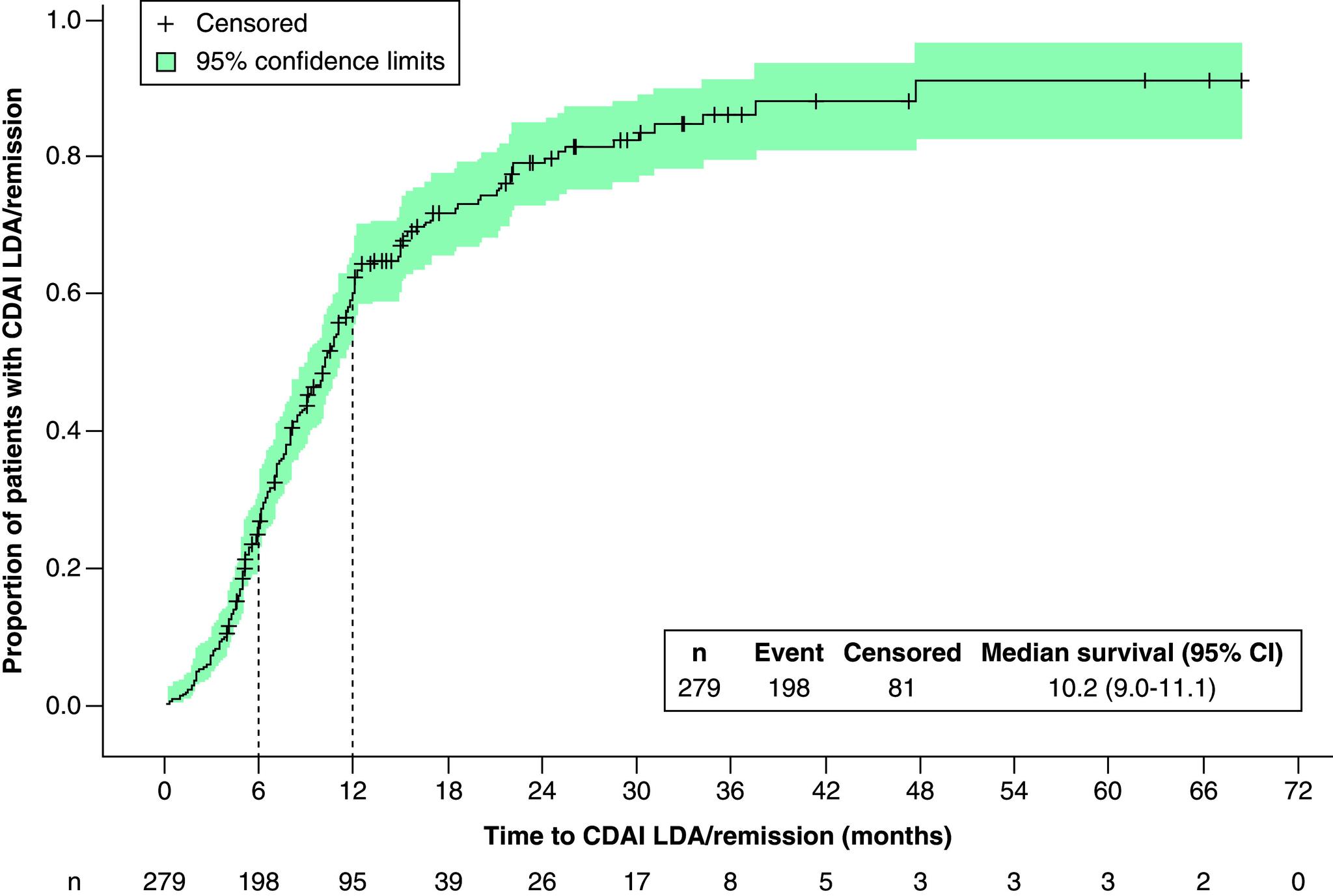
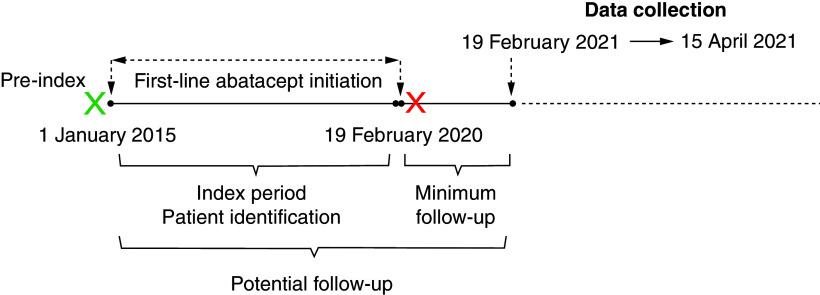
In rheumatoid arthritis (RA), seropositivity for both anticitrullinated protein antibody (ACPA) and rheumatoid factor (RF) is associated with disease severity and therapeutic response. Biologic (b) disease-modifying antirheumatic drugs (DMARDs) such as abatacept are recommended after inadequate response or contraindication to conventional synthetic DMARDs. This retrospective cohort study aimed to describe changes in Clinical Disease Activity Index (CDAI) measures over 12 months among patients with ACPA+ and RF+ RA with an inadequate response to methotrexate treated with abatacept as a first-line bDMARD. Patient data were abstracted from medical records by treating rheumatologists. Analyses included McNemar tests for paired proportions or paired -tests to assess longitudinal changes in CDAI scores, and Kaplan-Meier methods for time-to-event outcomes. Serious AEs and rationale for initiating treatment were recorded. Overall, 296 patients were included. Mean CDAI scores improved (decreased) by 34.0, 61.0 and 74.0% (all p < 0.001) from baseline to 3-6 months, 6-12 months and ≥12 months after abatacept initiation, respectively. Of 279 patients not in CDAI low disease activity (LDA) or remission at baseline, 24.7% of patients achieved it within 6 months, 56.3% within 12 months and 71.0% at any point during follow-up after abatacept initiation. Median time to CDAI LDA/remission was 10.2 months. Serious AEs were reported in 2.4% of patients. Common reasons reported by rheumatologists for initiating abatacept were effectiveness/efficacy (52.7%), safety (31.4%) and patient preference (25.3%). In this analysis of patients with ACPA+ and RF+ RA treated with abatacept as a first-line bDMARD in a clinical practice setting, clinical outcomes and remission rates were improved at all time points, providing real-world evidence to further support the use of abatacept in this patient population.
在类风湿关节炎(RA)中,抗瓜氨酸蛋白抗体(ACPA)和类风湿因子(RF)均为阳性与疾病严重程度和治疗反应相关。在对常规合成疾病修饰抗风湿药物(csDMARD)反应不足或存在禁忌的情况下,建议使用生物制剂(b)DMARD,如阿巴西普。这项回顾性队列研究旨在描述在对甲氨蝶呤治疗反应不足的 ACPA+和 RF+RA 患者中,阿巴西普作为一线 bDMARD 治疗后 12 个月内临床疾病活动指数(CDAI)的变化。患者数据由治疗风湿病专家从病历中提取。分析包括 McNemar 检验配对比例或配对 t 检验,以评估 CDAI 评分的纵向变化,以及 Kaplan-Meier 方法评估时间到事件结局。记录了严重不良事件和开始治疗的理由。总体而言,纳入了 296 名患者。从基线到阿巴西普开始治疗后 3-6 个月、6-12 个月和≥12 个月,平均 CDAI 评分分别改善(降低)34.0、61.0 和 74.0%(均 P < 0.001)。在基线时未达到 CDAI 低疾病活动(LDA)或缓解的 279 名患者中,分别有 24.7%、56.3%和 71.0%的患者在 6 个月内达到 LDA/缓解,在阿巴西普开始治疗后的任何随访时间点达到 LDA/缓解。达到 CDAI LDA/缓解的中位时间为 10.2 个月。报告了 2.4%的患者出现严重不良事件。风湿病学家报告的开始使用阿巴西普的常见原因是有效性/疗效(52.7%)、安全性(31.4%)和患者偏好(25.3%)。在这项阿巴西普作为一线 bDMARD 治疗 ACPA+和 RF+RA 患者的临床实践设置中的分析中,所有时间点的临床结局和缓解率均得到改善,为进一步支持在该患者人群中使用阿巴西普提供了真实世界的证据。
 Zotero 插件