Center for Applied NanoBioscience and Medicine, College of Medicine Phoenix, University of Arizona, Phoenix, AZ, 85004, USA.
Department of Biomedical Engineering, College of Engineering, The University of Arizona, Tucson, AZ, 85721, USA.
J Nanobiotechnology. 2024 Nov 18;22(1):720. doi: 10.1186/s12951-024-02964-w.
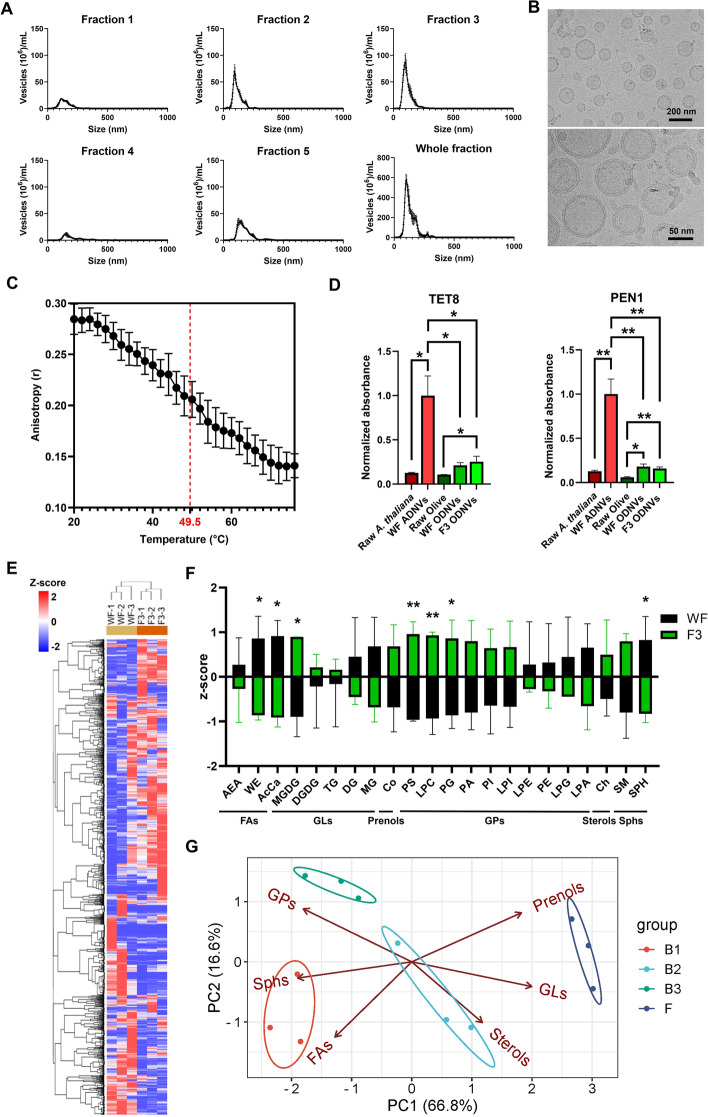
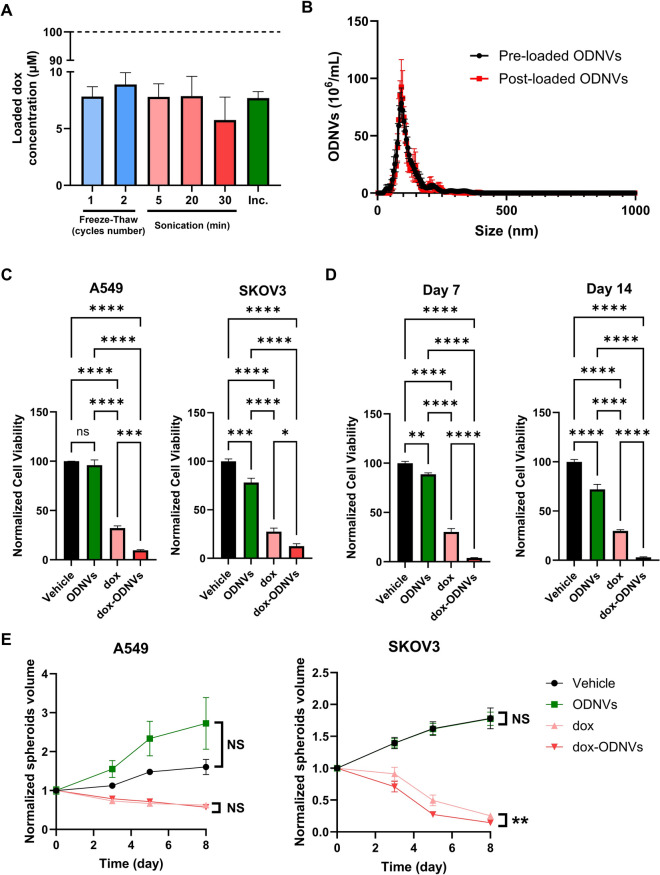
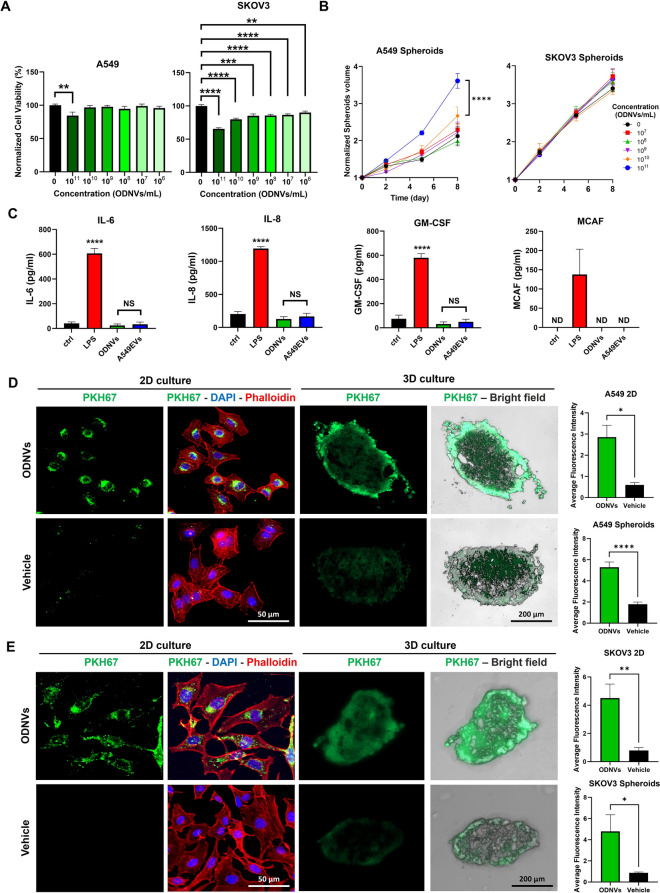
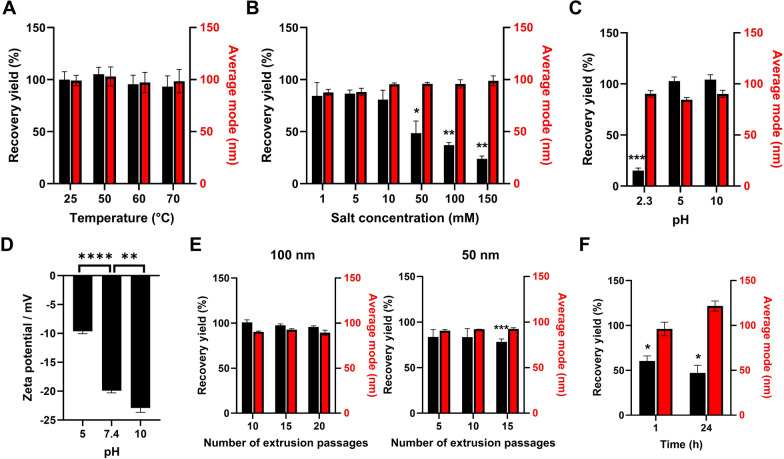
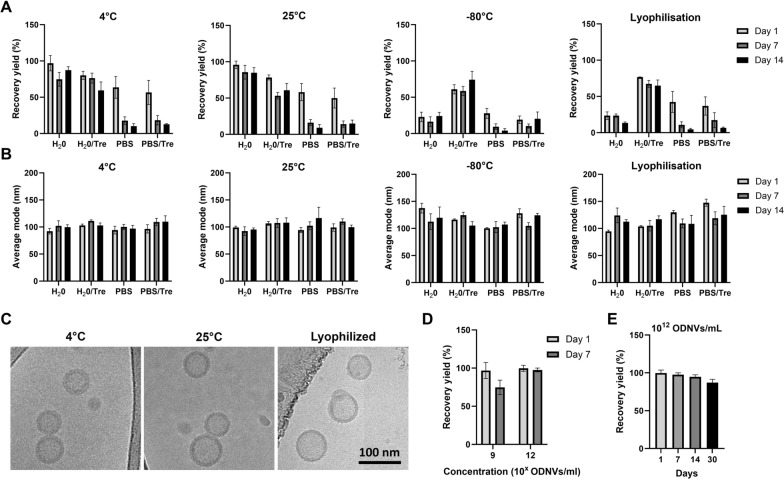
Extracellular vesicles (EVs) have shown great promise as drug delivery system (DDS). However, their complex and costly production limit their development for clinical use. Interestingly, the plant kingdom can also produce EV-like nanovesicles that can easily be isolated and purified from a large quantity of raw material at a high yield. In this study, olive-derived nanovesicles (ODNVs) were isolated from raw fruits using serial centrifugations and their physical and biological features characterized to demonstrate their promising potential to be used as a DDS. Nanotracking particle analysis indicated an average size of 109.5 ± 3.0 nm and yield of 10 ODNVs/mL for the purest fraction. Microscopy imaging, membrane fluidity assay and lipidomics analysis showed the presence of a rich lipid bilayer that significantly varied between different sources of ODNVs but showed a distinct signature compared to human EVs. Moreover, ODNVs were enriched in PEN1 and TET8 compared to raw fruits, suggesting an extracellular origin. Interestingly, ODNVs size and yield stayed unchanged after exposure to high temperature (70 °C for 1 h), wide pH range (5-10), and 50-100 nm extrusion, demonstrating high resistance to physical and chemical stresses. This high resistance allowed ODNVs to stay stable in water at 4 °C for a month, or with the addition of 25 mM trehalose for long-term freezing storage. Finally, ODNVs were internalized by both 2D and 3D cell culture without triggering significant cytotoxicity and immunogenicity. Importantly, the anticancer drug doxorubicin (dox) could be loaded by passive incubation within ODNVs and dox-loaded ODNVs decreased cell viability by 90% compared to only 70% for free dox at the same concentration, indicating a higher efficiency of drug delivery by ODNVs. In addition, this high cytotoxicity effect of dox-loaded ODNVs was shown to be stable after a 2-week storage at 4 °C. Together, these findings suggested that ODNVs represent a promising candidate as drug nanocarrier for various DDS clinical applications, as demonstrated by their biocompatibility, high resistance to stress, good stability in harsh environment, and improvement of anticancer drug efficacy.
细胞外囊泡 (EVs) 作为药物递送系统 (DDS) 显示出巨大的潜力。然而,其复杂且昂贵的生产限制了它们在临床应用中的发展。有趣的是,植物界也可以产生类似 EV 的纳米囊泡,这些囊泡可以从大量原材料中轻松分离和纯化,产量很高。在这项研究中,从橄榄果实中使用连续离心法分离出橄榄衍生的纳米囊泡 (ODNVs),并对其物理和生物学特性进行了表征,以证明它们具有作为 DDS 的潜在应用前景。纳米跟踪颗粒分析表明,最纯部分的平均粒径为 109.5 ± 3.0nm,产量为 10 ODNVs/mL。显微镜成像、膜流动性测定和脂质组学分析表明,存在一个富含脂质双层的结构,不同来源的 ODNVs 之间存在显著差异,但与人类 EVs 相比具有明显的特征。此外,与原始果实相比,ODNVs 中 PEN1 和 TET8 丰富,提示其具有细胞外起源。有趣的是,ODNVs 的大小和产量在暴露于高温(70°C 持续 1 小时)、宽 pH 范围(5-10)和 50-100nm 挤出后保持不变,表现出对物理和化学压力的高度抗性。这种高抗性使 ODNVs 能够在 4°C 下的水中稳定保存一个月,或在添加 25mM 海藻糖的情况下进行长期冷冻储存。最后,ODNVs 被 2D 和 3D 细胞培养物内化,而不会引发明显的细胞毒性和免疫原性。重要的是,通过被动孵育可以将抗癌药物阿霉素 (dox) 加载到 ODNVs 中,与相同浓度的游离 dox 相比,载 dox 的 ODNVs 使细胞活力降低了 90%,表明 ODNVs 作为药物纳米载体具有更高的药物传递效率。此外,在 4°C 下储存 2 周后,载 dox 的 ODNVs 的这种高细胞毒性作用仍然稳定。综上所述,这些发现表明,ODNVs 作为各种 DDS 临床应用的药物纳米载体具有很大的应用潜力,其生物相容性、对压力的高抗性、在恶劣环境中的良好稳定性以及对抗癌药物疗效的提高都证明了这一点。