Department of Plastic, Reconstructive Surgery and Burn Treatment, Medical University of Lublin, Lublin, Poland.
Department of Anesthesiology and Intensive Care, District Hospital, Łęczna, Poland.
Ann Transplant. 2024 Nov 19;29:e945815. doi: 10.12659/AOT.945815.
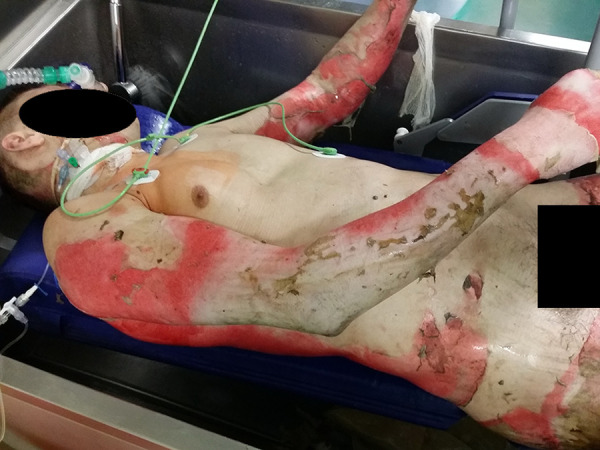
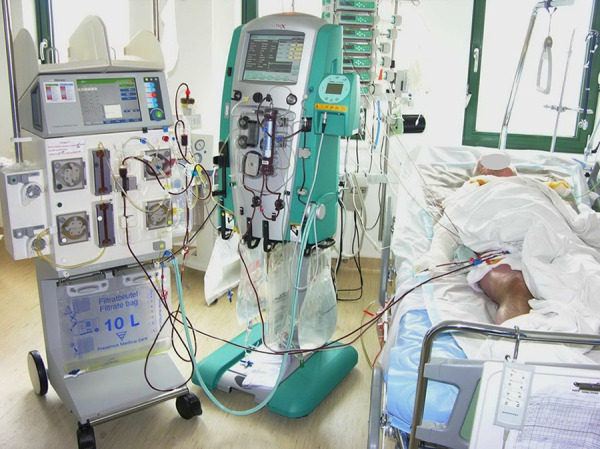
BACKGROUND Acute kidney injury (AKI) is a common issue in intensive care units and is a potentially lethal consequence of severe burns. In severely burned patients with non-renal indications, renal replacement treatment is frequently used. This study's aim was to compile a 10-year summary of continuous renal replacement therapy (CRRT) experience at a single burn center, including patient outcomes, effectiveness, and potential complications in the context of severe burns. MATERIAL AND METHODS This retrospective analysis included the clinical data from 723 burned patients. The data analysis of 300 patients with CRRT therapy included clinical data, laboratory tests, and CRRT parameters. The study group was split into 2 subgroups regarding onset of CRRT: early (up to 7 days after the trauma) and late. RESULTS Age, burn extent, length of stay, and inhalation injury all had an impact on survival. Early CRRT was linked to a greater probability of death (P<0.005). Upon admission to the burn center, patients with early CRRT exhibited a bigger burn area, higher Baux and SOFA scores, and were younger (P<0.05). Sepsis was diagnosed more frequently in the late CRRT group. CONCLUSIONS Our findings show that patients who require CRRT within the first 7 days following a burn injury have a poorer prognosis; however, this is not due to CRRT's effect, but rather to the trauma's severity. Future studies should explore long-term patient outcomes of CRRT among burn patients.
急性肾损伤(AKI)是重症监护病房的常见问题,也是严重烧伤的潜在致命后果。在有非肾脏指征的严重烧伤患者中,经常使用肾脏替代治疗。本研究的目的是在单烧中心汇总连续肾脏替代治疗(CRRT)10 年的经验,包括严重烧伤背景下患者的结局、疗效和潜在并发症。
本回顾性分析纳入了 723 例烧伤患者的临床数据。对 300 例接受 CRRT 治疗的患者进行了临床数据、实验室检查和 CRRT 参数的数据分析。研究组根据 CRRT 的开始时间分为 2 个亚组:早期(创伤后 7 天内)和晚期。
年龄、烧伤面积、住院时间和吸入性损伤均对生存有影响。早期 CRRT 与更高的死亡率相关(P<0.005)。在入住烧伤中心时,早期 CRRT 的患者烧伤面积更大,Baux 和 SOFA 评分更高,年龄更小(P<0.05)。晚期 CRRT 组更常诊断为脓毒症。
我们的研究结果表明,烧伤后 7 天内需要 CRRT 的患者预后较差;但这不是由于 CRRT 的作用,而是由于创伤的严重程度。未来的研究应该探讨烧伤患者接受 CRRT 的长期预后。