Balaji Lakshmi, Forbes Robin, Cairns Anita, Sampaio Hugo, Kornberg Andrew J, Sanders Lauren, Lamont Phillipa, Liang Christina, Jones Kristi J, Nowak Kristen, O'Gorman Cullen, Woodcock Ian, Briggs Nancy, Yiu Eppie M, Farrar Michelle A, Kariyawasam Didu
Department of Neurology, Sydney Children's Hospital Randwick, NSW, Australia.
Discipline of Paediatrics and Child Health, School of Clinical Medicine, UNSW Medicine and Health, University of New South Wales, Sydney, NSW, Australia.
Lancet Reg Health West Pac. 2024 Nov 6;53:101237. doi: 10.1016/j.lanwpc.2024.101237. eCollection 2024 Dec.
New paradigms of diagnosis and treatment have changed the neurodegenerative trajectory for individuals with spinal muscular atrophy (SMA). Registries are a critical tool to provide real-world data on treatment patterns, their effects and health care provision within this evolving paradigm of care. This study aimed to evaluate the phenotypic and genotypic landscape, treatment patterns and health impact of SMA in Australia through the national registry.
This cross-sectional study investigated demographic, clinical and genetic information, sequelae of weakness, treatment patterns and patient-reported outcomes amongst individuals with SMA enrolled in the Australian Neuromuscular Disease Registry (ANMDR) from 1st January 2020 to 30th April 2023. Descriptive statistics were used for analysis and Chi-Squared or Fisher's exact tests for associations.
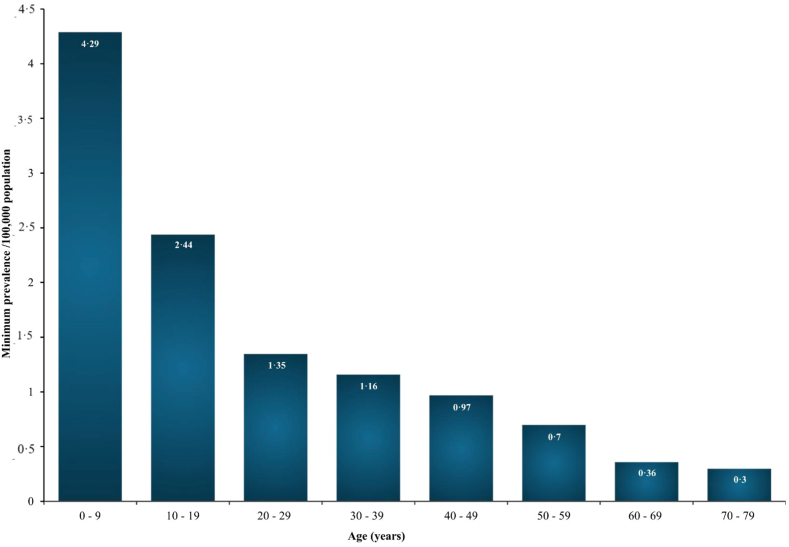
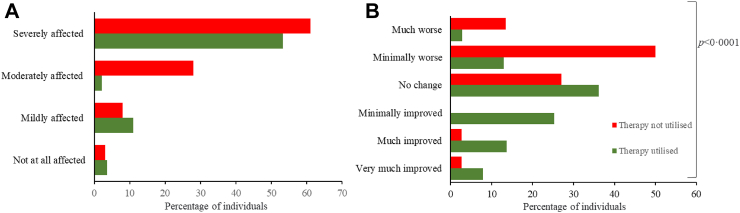
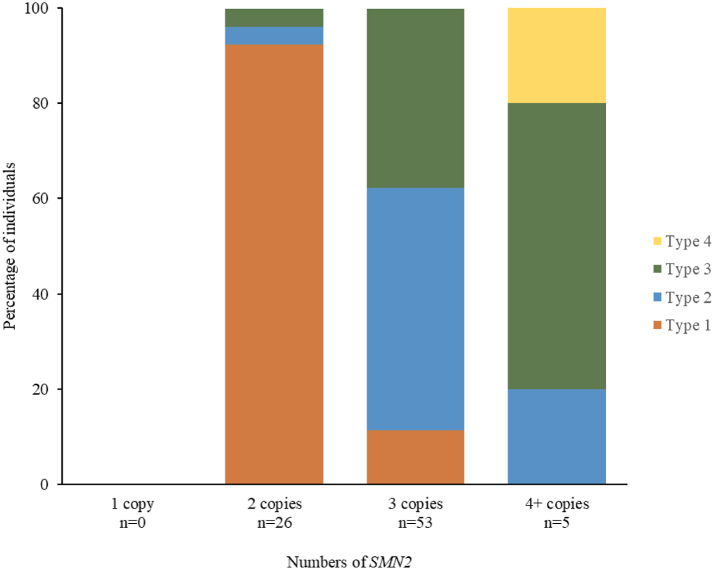
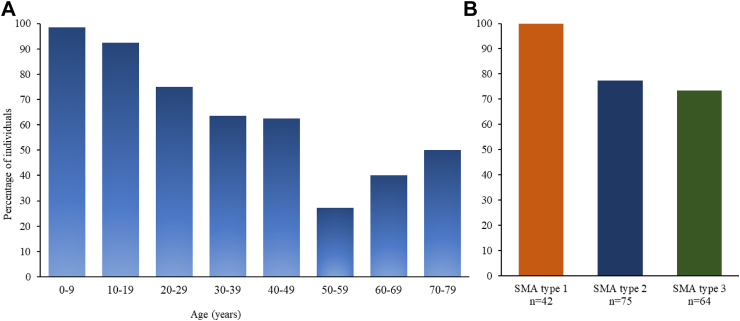
195 individuals with SMA enrolled into the ANMDR. 5/195 (2.6%) were deceased by censor date. Of (n = 190) individuals living with SMA, 104/190 (54.7%) were children. Minimum Australian prevalence was 0.73/100,000. copies were inversely associated with phenotype in those with homozygous deletions ()). Treatment was utilised in 154/190 (81%) of the population, with 65/137 (47.6%) of individuals perceiving improvements with therapeutic intervention on Patient/Parent Global Impression of Improvement scale (). Engagement with multidisciplinary care practitioners was significantly higher among children with SMA than adults (93% versus 12%, ).
Despite diagnostic and therapeutic advances, mortality and the multi-systemic health impact of SMA continue to be experienced within the Australian population. Healthcare provision must align with patient-centred outcomes, adapting to meeting their changing but ongoing care requirements. The study identified the considerable unmet need for multidisciplinary care, not only for adults with SMA but also for the emerging cohort of treated children, emphasising the imperative for comprehensive healthcare provision to address their evolving needs.
No funding was received for this study.
诊断和治疗的新范式改变了脊髓性肌萎缩症(SMA)患者的神经退行性病程。登记处是提供有关治疗模式、其效果以及在这种不断发展的护理范式下的医疗保健提供情况的真实世界数据的关键工具。本研究旨在通过国家登记处评估澳大利亚SMA的表型和基因型情况、治疗模式及对健康的影响。
这项横断面研究调查了2020年1月1日至2023年4月30日期间纳入澳大利亚神经肌肉疾病登记处(ANMDR)的SMA患者的人口统计学、临床和遗传信息、肌无力后遗症、治疗模式以及患者报告的结果。采用描述性统计进行分析,并使用卡方检验或费舍尔精确检验分析关联性。
195名SMA患者纳入了ANMDR。截至审查日期,5/195(2.6%)已死亡。在(n = 190)名存活的SMA患者中,104/190(54.7%)为儿童。澳大利亚的最低患病率为0.73/100,000。在纯合缺失()的患者中,拷贝数与表型呈负相关。154/190(81%)的患者接受了治疗,其中65/137(47.6%)的患者在患者/家长整体改善印象量表()上认为治疗干预有改善。SMA儿童与成人相比,参与多学科护理从业者的比例显著更高(93%对12%,)。
尽管在诊断和治疗方面取得了进展,但澳大利亚人群中仍存在SMA的死亡率和多系统健康影响。医疗保健提供必须与以患者为中心的结果保持一致,以适应满足他们不断变化但持续的护理需求。该研究确定了多学科护理存在相当大的未满足需求,不仅对于成年SMA患者,而且对于新出现的接受治疗的儿童群体也是如此,强调了提供全面医疗保健以满足他们不断变化需求的紧迫性。
本研究未获得资金。