Department of Pharmacy/Evidence-Based Pharmacy Center, West China Second University Hospital, Sichuan University, Chengdu, China.
Key Laboratory of Birth Defects and Related Diseases of Women and Children, Sichuan University, Ministry of Education, Chengdu, China.
BMC Med Educ. 2024 Nov 20;24(1):1334. doi: 10.1186/s12909-024-06313-1.
Interprofessional education (IPE) refers to a teaching and learning method in which students from two or more professions learn about, from, and with each other to enable effective collaboration and improve health outcomes. A systematic review was performed to investigate the current practice and the effectiveness of IPE in pharmacy education.
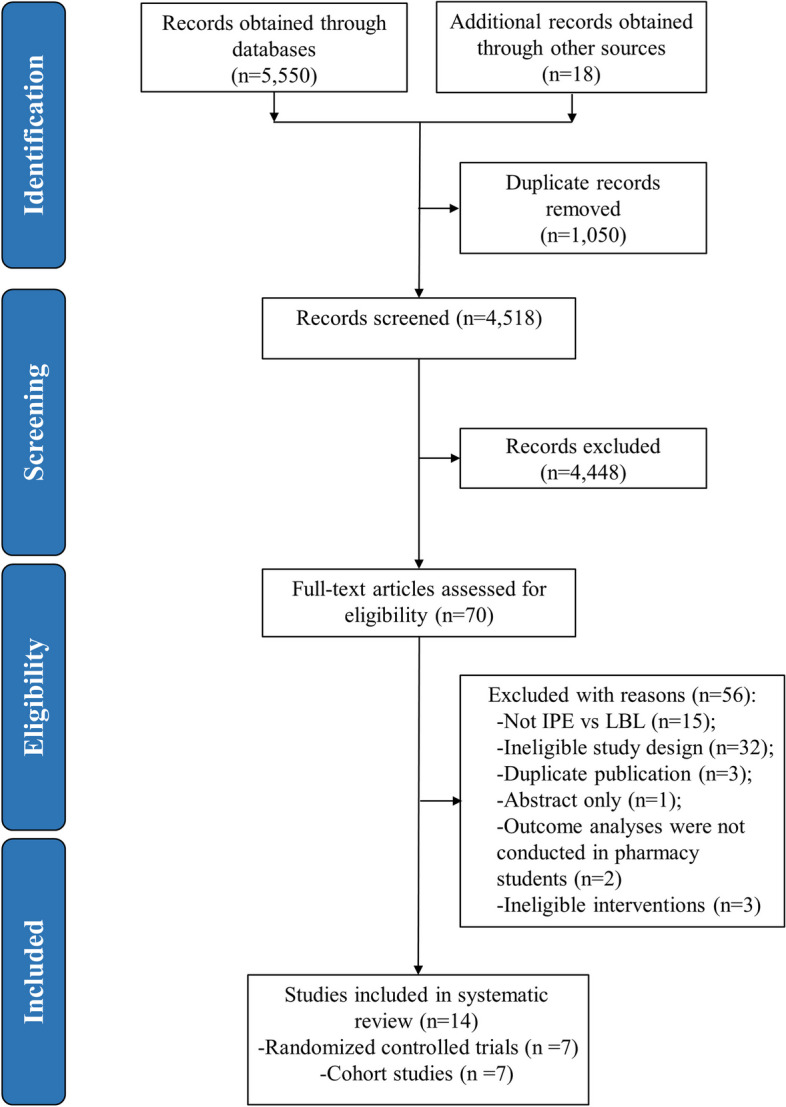
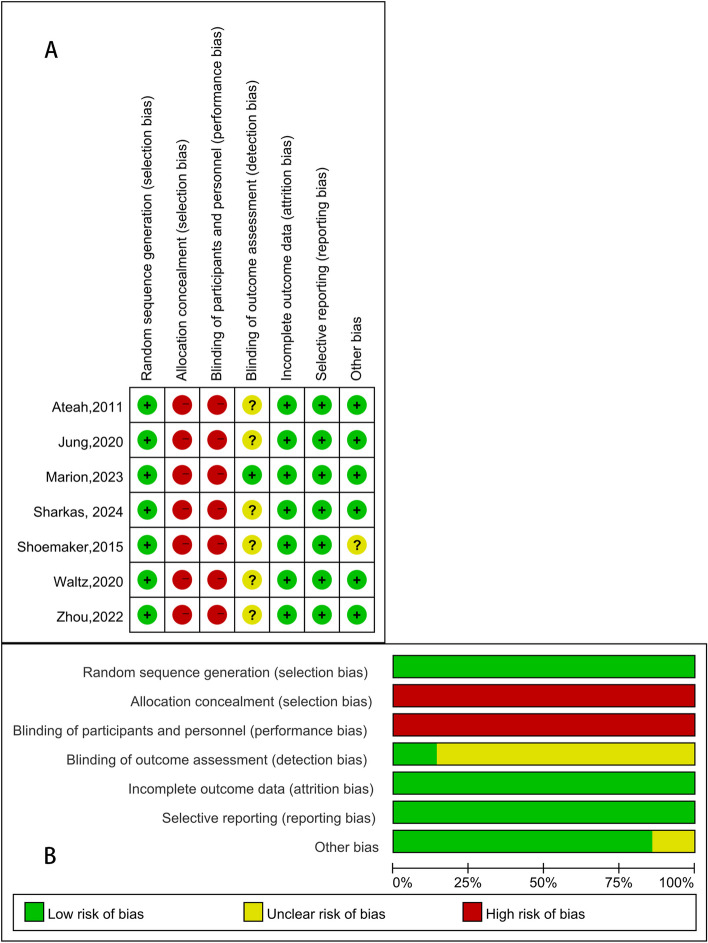
Databases including PubMed, Embase, Cochrane Library, Medline, China National Knowledge Infrastructure, VIP China Science and Technology Journal, and WanFang were searched from inception to September 20, 2024, using search terms such as interprofessional, interdisciplinary, multidisciplinary, IPE, pharmacy, and pharmaceutical education. Studies were screened and included if they were randomized controlled trials (RCTs) or cohort studies reporting the outcome differences between pharmacy students participating in IPE activities and those receiving lecture-based learning. Reporting quality was evaluated using the Cochrane Risk of Bias Assessment Tool 2 and the Newcastle Ottawa Scale. Detailed information including the studies' general information, research methods, and results were collected. Primary outcomes including pharmacy students' interprofessional competence, readiness for and attitudes towards IPE, class satisfaction, and professional knowledge were analyzed with meta-analysis or reported descriptively.
Seven RCTs and seven cohort studies were included in the systematic review. Eight studies reported that IPE demonstrated a positive impact on pharmacy students' interprofessional competence (p < 0.05). Three studies showed that IPE enhanced students' readiness for participating in interprofessional learning (p < 0.05). Four studies revealed that IPE significantly improved the attitude of pharmacy students towards IPE (p < 0.0001). The meta-analysis of the two cohort studies showed that IPE significantly improved the Attitudes Towards Health Care Teams (ATHCT) scale scores (SMD = 0.41, 95% CI = 0.22-0.60). Students who participated in IPE activities were generally satisfied with the course (average score > 4.0 out of 5.0). Apart from embedded in courses, some novel IPE programs were conducted, such as outpatient clinics operated by interprofessional students.
The study revealed that IPE was widely used in pharmacy education. IPE enhanced pharmacy students' interprofessional competence, class satisfaction, and their readiness for and attitudes towards interprofessional learning. The effect of IPE on professional knowledge remained controversial across studies.
跨专业教育(IPE)是指来自两个或多个专业的学生相互学习、相互教授,以实现有效协作并改善健康结果的教学方法。 进行了系统评价,以调查 IPE 在药学教育中的当前实践和效果。
从 2024 年 9 月 20 日起,使用“interprofessional”、“interdisciplinary”、“multidisciplinary”、“IPE”、“pharmacy”和“pharmaceutical education”等搜索词,在 PubMed、Embase、Cochrane 图书馆、Medline、中国知网、维普中国科技期刊和万方等数据库中进行搜索,以查找综述。纳入标准为:随机对照试验(RCT)或队列研究报告了参与 IPE 活动的药学专业学生与接受基于讲座的学习的学生之间的结果差异。使用 Cochrane 偏倚风险评估工具 2 和纽卡斯尔-渥太华量表评估报告质量。收集了包括研究一般信息、研究方法和结果在内的详细信息。使用荟萃分析或描述性报告分析主要结局,包括药学学生的跨专业能力、对 IPE 的准备情况和态度、班级满意度和专业知识。
系统评价共纳入 7 项 RCT 和 7 项队列研究。8 项研究报告 IPE 对药学学生的跨专业能力有积极影响(p < 0.05)。3 项研究表明 IPE 增强了学生参与跨专业学习的准备情况(p < 0.05)。4 项研究表明 IPE 显著改善了药学学生对 IPE 的态度(p < 0.0001)。两项队列研究的荟萃分析显示,IPE 显著提高了对医疗保健团队的态度(ATHCT)量表评分(SMD = 0.41,95%CI = 0.22-0.60)。参加 IPE 活动的学生对课程总体满意度较高(平均评分> 5.0 分中的 4.0 分)。除了嵌入课程之外,还开展了一些新的 IPE 计划,例如由跨专业学生运营的门诊诊所。
本研究表明,IPE 在药学教育中得到了广泛应用。IPE 提高了药学学生的跨专业能力、班级满意度以及对跨专业学习的准备情况和态度。IPE 对专业知识的影响在研究之间存在争议。