Vaccines Medical, Sanofi, Tokyo, Japan.
Faculty of Infectious and Tropical Diseases, London School of Hygiene and Tropical Medicine, London, UK.
Influenza Other Respir Viruses. 2024 Nov;18(11):e70045. doi: 10.1111/irv.70045.
Respiratory syncytial virus (RSV) and influenza virus are major viral etiologies of pediatric lower respiratory tract infection, but comparative data on inpatient burden are lacking.
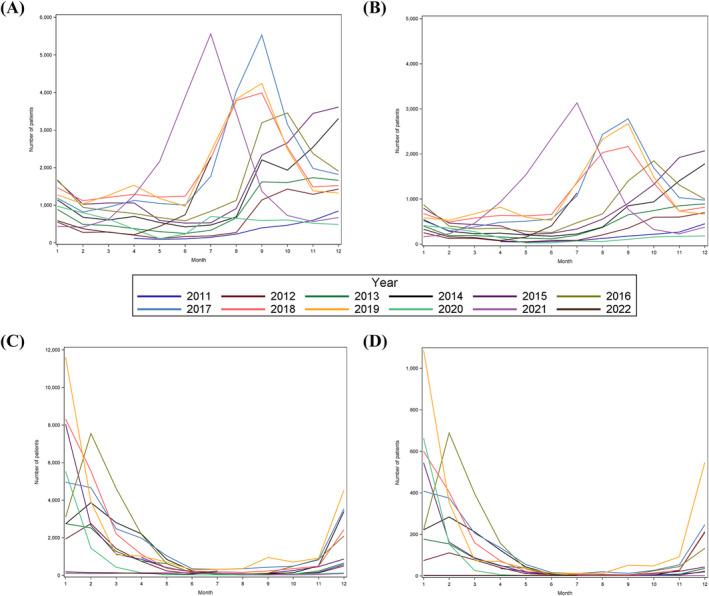
Using a large-scale health claims database in Japan, we identified patients under 5 years of age with a confirmed RSV or influenza diagnosis as an outpatient or inpatient between 2011 and 2022. Hospitalization rate, inpatient characteristics, various in-hospital outcomes/complications, and healthcare resource utilization were described.
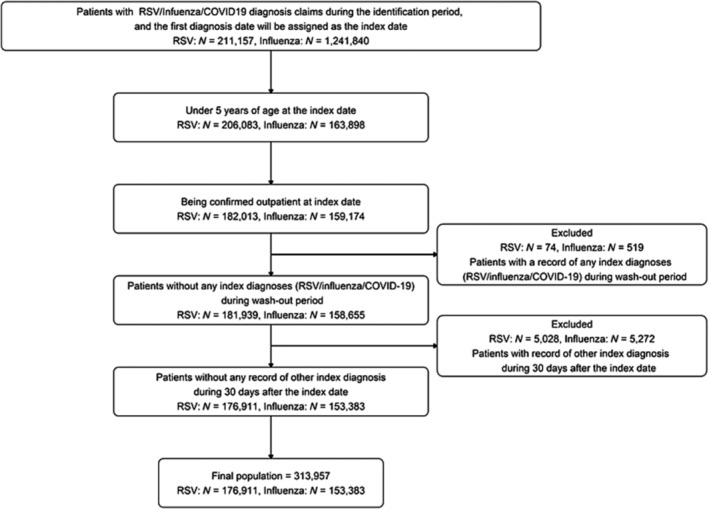
A total of 176,911 RSV-confirmed outpatients, 153,383 influenza-confirmed outpatients, 90,413 RSV-confirmed hospitalizations, and 11,186 influenza-confirmed hospitalizations were identified. Among outpatients, 24.7% of RSV infection and 2.8% of influenza cases required hospitalization within 1 week. There was no co-morbidities/prematurity for 95.0% of RSV hospitalizations and 96.5% of influenza hospitalizations. Proportions of in-hospital outcomes/complications were (RSV infection vs. influenza): oxygen use 47.6% vs. 14.8%, mechanical ventilation 2.1% vs. 0.7%, pneumonia 33.6% vs. 12.8%, otitis media 7.7% vs. 2.3%, febrile seizure 1.5% vs. 34.4%, encephalitis/encephalopathy 0.1% vs. 0.5%, myocarditis < 0.1% vs. 0.6%, antibiotics prescription 48.0% vs. 24.4%. The mean inpatient stay was 6.1 vs. 4.3 days at direct medical costs of 435,744 vs. 315,809 JPY/patient. These trends held true in age-stratified data. In-hospital death occurred in 31 RSV infection and 6 influenza cases.
Although both infections resulted in substantial burden, RSV infection led to more frequent hospitalizations, worse in-hospital outcomes, longer inpatient stays, higher medical costs, and more frequent antibiotics prescription compared to influenza. Most RSV hospitalizations occurred among healthy term children, emphasizing the need for prevention measures in all children.
呼吸道合胞病毒(RSV)和流感病毒是小儿下呼吸道感染的主要病毒病因,但关于住院负担的比较数据尚缺乏。
利用日本一个大型健康索赔数据库,我们确定了 2011 年至 2022 年期间,5 岁以下经确认为 RSV 或流感门诊或住院患者。描述了住院率、住院患者特征、各种住院结局/并发症和医疗资源利用情况。
共确定了 176911 例 RSV 确诊门诊患者、153383 例流感确诊门诊患者、90413 例 RSV 确诊住院患者和 11186 例流感确诊住院患者。在门诊患者中,24.7%的 RSV 感染和 2.8%的流感病例在 1 周内需要住院治疗。95.0%的 RSV 住院患者和 96.5%的流感住院患者没有合并症/早产。住院结局/并发症的比例为(RSV 感染与流感):吸氧 47.6%与 14.8%,机械通气 2.1%与 0.7%,肺炎 33.6%与 12.8%,中耳炎 7.7%与 2.3%,热性惊厥 1.5%与 34.4%,脑炎/脑病 0.1%与 0.5%,心肌炎 <0.1%与 0.6%,抗生素处方 48.0%与 24.4%。直接医疗费用分别为 435744 日元和 315809 日元/例,住院时间分别为 6.1 天和 4.3 天。在按年龄分层的数据中也存在这些趋势。31 例 RSV 感染和 6 例流感患者住院期间死亡。
尽管这两种感染都造成了很大的负担,但与流感相比,RSV 感染导致更频繁的住院、更差的住院结局、更长的住院时间、更高的医疗费用和更频繁的抗生素处方。大多数 RSV 住院患者是健康足月儿童,这强调了所有儿童都需要采取预防措施。