Vaccine Medical Affairs, Pfizer Japan Inc, Tokyo, Japan.
Health & Value, Pfizer Japan Inc, Tokyo, Japan.
Pediatr Int. 2022 Jan;64(1):e14957. doi: 10.1111/ped.14957. Epub 2021 Dec 17.
Respiratory syncytial virus (RSV) is a major cause of hospitalization for bronchiolitis and pneumonia in infancy. In Japan, limited data are publicly available on RSV epidemiology and clinical characteristics among infants.
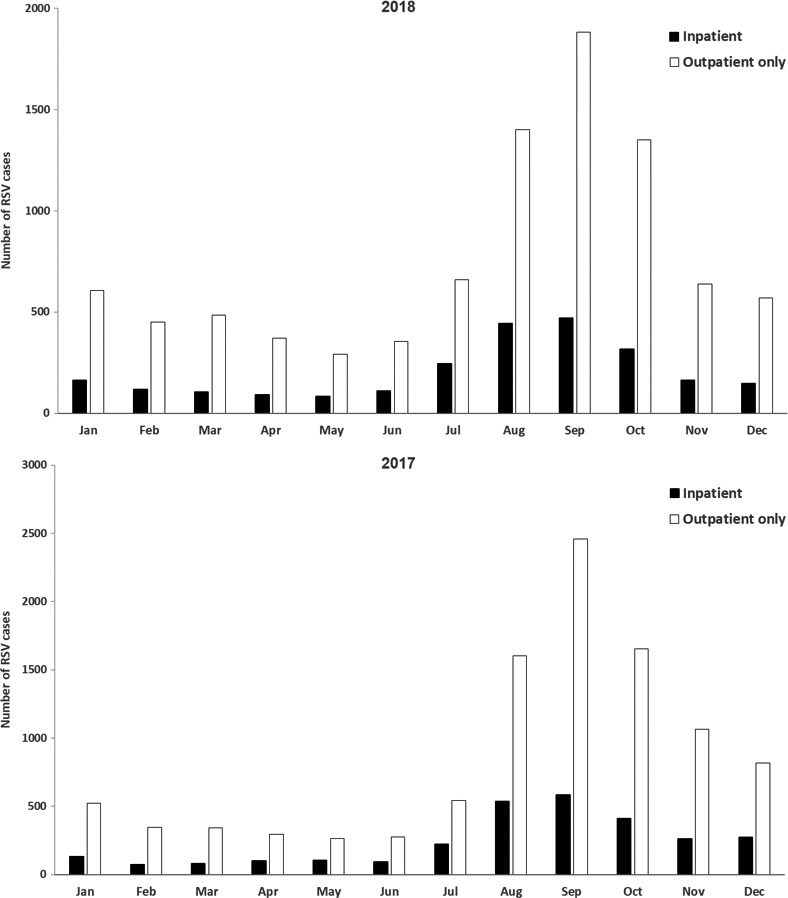
This retrospective study described RSV incidence, seasonality, patient characteristics, resource use, and clinical outcomes among Japanese children <2 years from January 2017 through December 2018. The RSV cases were identified using the Japanese Medical Data Center database.
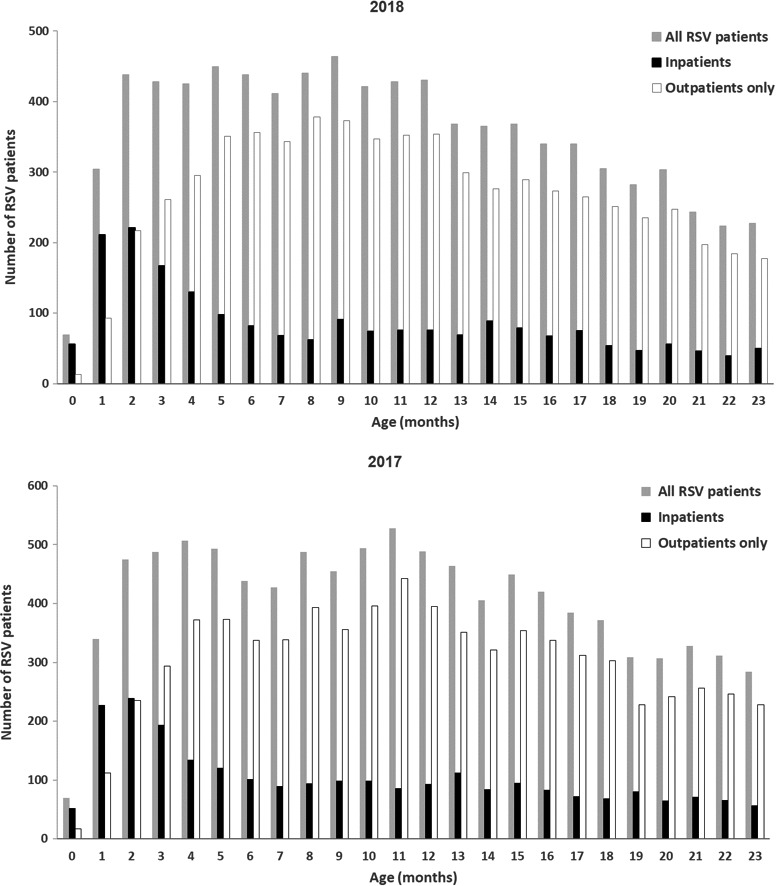
In the database, 9,711 and 8,509 RSV patients <2 years were identified in 2017 and 2018, respectively. Of these, 25% required hospitalization. Ninety percent of hospitalized patients did not have a known RSV risk factor. Nineteen percent of hospitalized patients experienced dehydration, and 12% had acute respiratory failure. Hospitalization lasted 1 week on average and 7% required some type of mechanical ventilation. The peak of hospitalizations occurred at 2 months. The incidence of RSV hospitalization in children <2 years was 23.2 per 1,000 person-years, which increased to 35.4 per 1,000 for infants <6 months. This age group accounted for 40% of all RSV-associated hospitalizations among children <2 years.
Roughly one-fourth of all RSV patients <2 years were hospitalized. Ninety percent of these did not have an underlying risk condition. This underscores that RSV can cause serious disease among all young children. Three to four out of every 100 Japanese children <6 months were hospitalized for RSV, and this age group accounted for ~40% of all RSV-associated hospitalizations. Novel and broad-based RSV prevention strategies, especially those targeting young infants, are needed.
呼吸道合胞病毒(RSV)是婴儿毛细支气管炎和肺炎住院的主要原因。在日本,有关 RSV 流行病学和婴儿临床特征的公开数据有限。
本回顾性研究描述了 2017 年 1 月至 2018 年 12 月期间,日本 <2 岁儿童 RSV 的发病率、季节性、患者特征、资源利用和临床结局。RSV 病例通过日本医疗数据中心数据库确定。
在该数据库中,2017 年和 2018 年分别确定了 <2 岁的 9711 例和 8509 例 RSV 患者。其中,25%需要住院治疗。90%的住院患者没有已知的 RSV 危险因素。19%的住院患者出现脱水,12%的患者出现急性呼吸衰竭。住院时间平均为 1 周,7%的患者需要某种类型的机械通气。住院高峰期出现在 2 个月。<2 岁儿童 RSV 住院的发病率为每 1000 人年 23.2 例,6 个月以下婴儿增至每 1000 人年 35.4 例。该年龄组占所有<2 岁儿童 RSV 相关住院的 40%。
大约四分之一的<2 岁 RSV 患者需要住院治疗。其中 90%的患者没有潜在的风险状况。这表明 RSV 可导致所有幼儿发生严重疾病。每 100 名<6 个月的日本儿童中就有 3-4 名因 RSV 住院,该年龄组占所有 RSV 相关住院的~40%。需要制定新的、广泛的 RSV 预防策略,特别是针对小婴儿的策略。