Research Group Genetics, Reproduction and Development, Faculty of Medicine and Pharmacy, Vrije Universiteit Brussel, 1090, Brussels, Belgium.
Liver Cell Biology Research Group, Faculty of Medicine and Pharmacy, Vrije Universiteit Brussel, 1090, Brussels, Belgium.
Cell Death Dis. 2024 Nov 21;15(11):852. doi: 10.1038/s41419-024-07236-x.
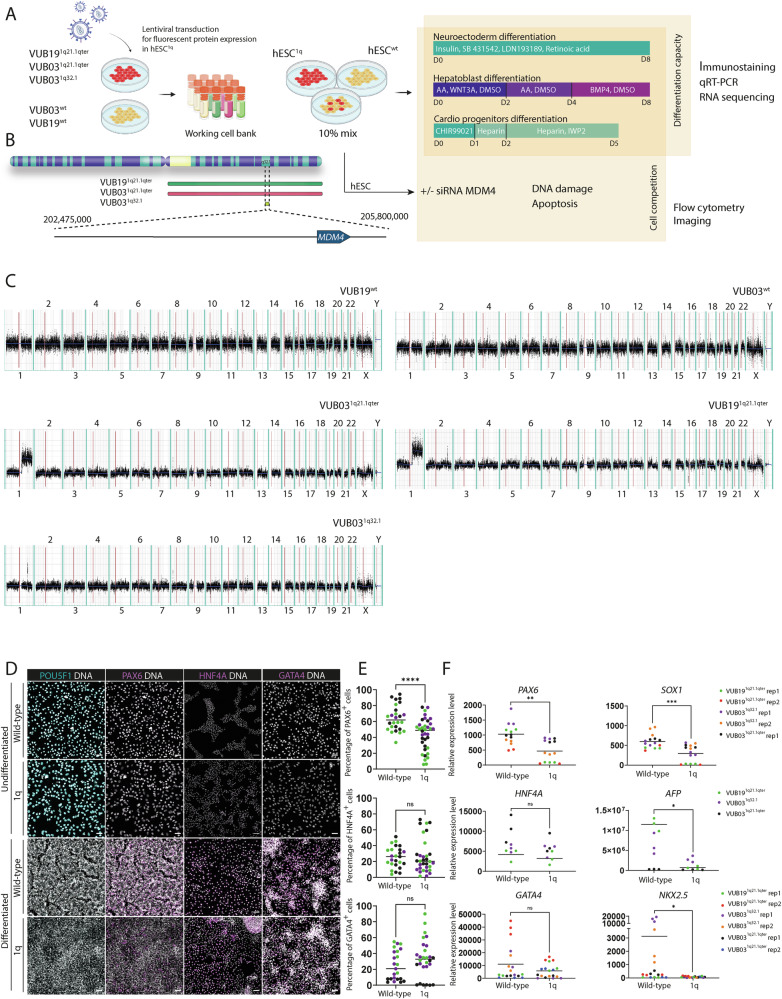
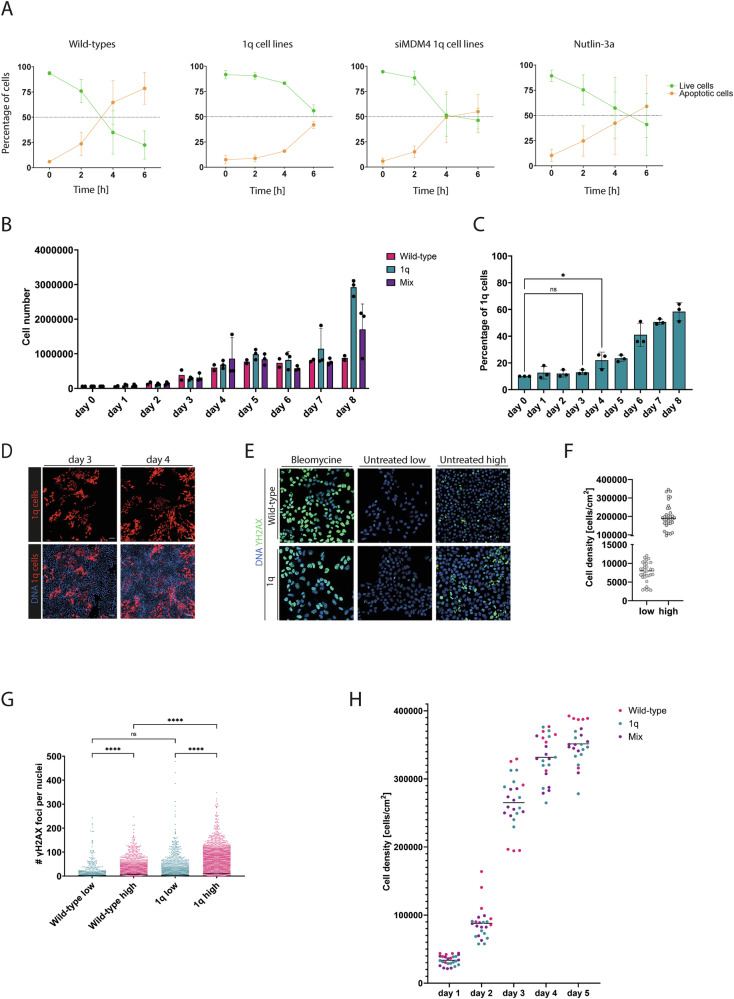
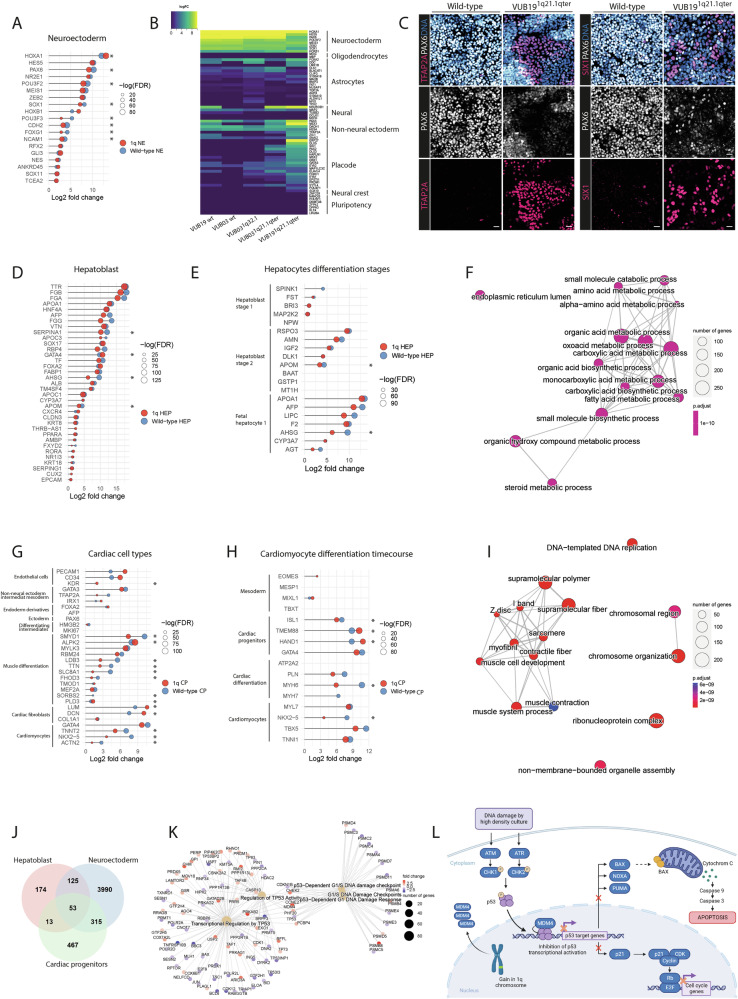
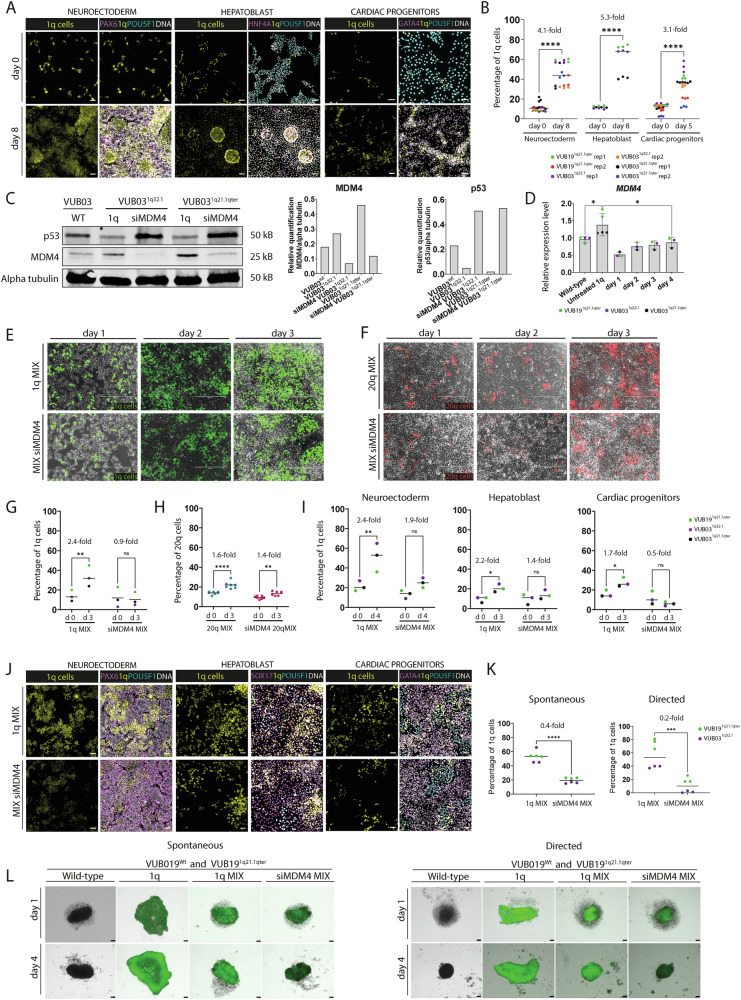
Gain of 1q is a highly recurrent chromosomal abnormality in human pluripotent stem cells. In this work, we show that gains of 1q impact the differentiation capacity to derivates of the three germ layers, leading to mis-specification to cranial placode and non-neural ectoderm during neuroectoderm differentiation. Also, we found a weaker expression of lineage-specific markers in hepatoblasts and cardiac progenitors. Competition assays show that the cells retain their selective advantage during differentiation, which is mediated by a higher expression of MDM4, a gene located in the common region of gain. MDM4 drives the winner phenotype of the mutant cells in both the undifferentiated and differentiating state by reducing the cells' sensitivity to DNA damage through decreased p53-mediated apoptosis. Finally, we found that cell density in culture plays a key role in promoting the competitive advantage of the cells by increasing DNA damage.
1q 增益是人类多能干细胞中高度重现的染色体异常。在这项工作中,我们表明 1q 的增益会影响向三个胚层衍生物的分化能力,导致神经外胚层分化过程中颅嵴基板和非神经外胚层的错误特化。此外,我们还发现肝母细胞和心脏祖细胞中谱系特异性标记物的表达较弱。竞争实验表明,在分化过程中,这些细胞保留了它们的选择优势,这是由位于增益的共同区域的 MDM4 基因的高表达介导的。MDM4 通过降低 p53 介导的凋亡来减少细胞对 DNA 损伤的敏感性,从而在未分化和分化状态下驱动突变细胞的胜利者表型。最后,我们发现培养中的细胞密度通过增加 DNA 损伤在促进细胞竞争优势方面起着关键作用。