
中相微乳液体系的构建及其在低渗透多孔介质中驱替残余油的微观机理
Construction of middle-phase microemulsion system and its micro-mechanism on displacing residual oil in low-permeability porous media.
作者信息
Wu Tianjiang, Wang Teng, Hu Yingxue, Chen Jiajun, Su Junwei
机构信息
School of Human Settlements and Civil Engineering, Xi'an Jiaotong University, Xi'an, China.
Oil and Gas Technology Research Insititute of Changqing Oilfield, China National Petroleum Corporation, Xi'an, China.
出版信息
Front Chem. 2024 Nov 7;12:1465706. doi: 10.3389/fchem.2024.1465706. eCollection 2024.
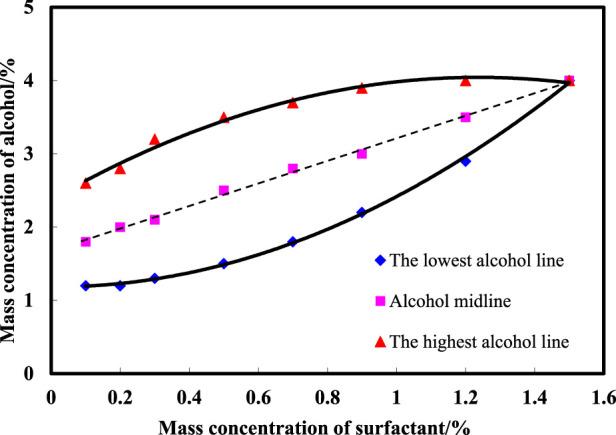
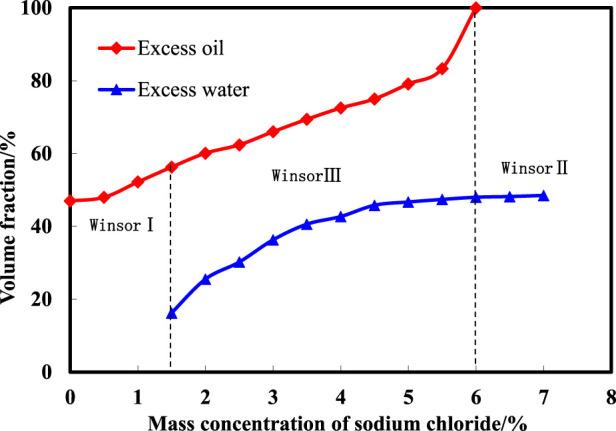
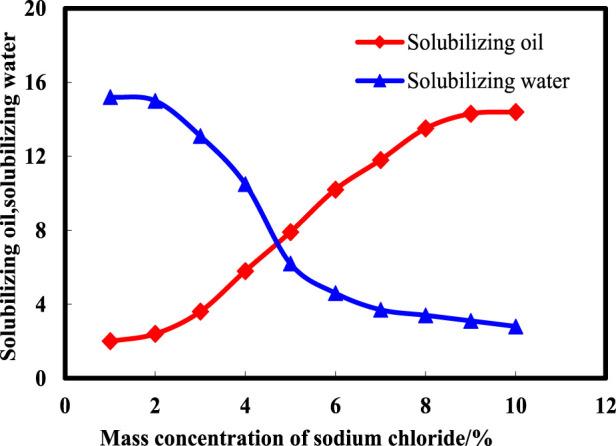
The application of medium-phase microemulsion in enhancing oil recovery technology represents a significant area of research, particularly for improving production in low-permeability reservoirs. The oil recovery can be increased to 80%~90%. In order to further improve the recovery rate of low-permeability reservoirs in the late stage of water flooding, a medium-phase microemulsion flooding system was constructed in this paper. The micro-displacement mechanism of the medium-phase microemulsion flooding system was clarified by experimental methods such as phase change and micro-remaining oil distribution. The ability of enhancing oil recovery and the mechanism of increasing oil production were discussed, which provided a basis for establishing a new method of enhancing oil recovery. This study utilizes a mixed surfactant system composed of sodium dodecyl benzene sulfonate and coconut oil fatty acid lipopolyoxyethylene betaine at a mass ratio of 1:3, with n-butanol serving as the cosurfactant. The fish phase diagram was instrumental in determining the critical concentration range for alcohol (1.3%-3.7%) necessary for the formation of middle-phase microemulsions, along with a corresponding surfactant mass concentration of 0.3%-0.7%. Key salinity thresholds for middle-phase formation and disappearance were identified at 1.5% and 6.0%, respectively. Optimal solubilization effects were observed at approximately 4.8% NaCl mass concentration, which effectively reduced interfacial tension to 10 mN/m. Under specific kinetic conditions, formation of middle-phase microemulsions occurs as surfactants interact with crude oil within reservoir pores. In comparison to traditional water flooding, middle-phase microemulsions enhance viscosity and create an oil wall at the forefront of displacement. This mechanism facilitates the aggregation and movement of residual oil, which is crucial for enhancing crude oil recovery. Moreover, middle-phase microemulsions exhibit strong solubilization capabilities, making them particularly effective for mobilizing oil in blind-end and unswept areas. The ultra-low interfacial tension achieved between the microemulsion and crude oil promotes the elongation and fragmentation of pore-trapped oil into smaller droplets, ultimately aiding in their displacement and recovery via micro-pore outlets. This unique interaction underscores the potential of middle-phase microemulsion flooding to optimize oil recovery processes, especially in challenging reservoir environments such as those encountered in the Changqing Oilfield formations.
中相微乳液在提高采收率技术中的应用是一个重要的研究领域,特别是对于提高低渗透油藏的产量而言。采收率可提高到80%至90%。为了进一步提高水驱后期低渗透油藏的采收率,本文构建了一种中相微乳液驱油体系。通过相变和微观剩余油分布等实验方法,阐明了中相微乳液驱油体系的微观驱替机理。探讨了提高采收率的能力和增产机理,为建立新的提高采收率方法提供了依据。本研究采用质量比为1:3的十二烷基苯磺酸钠和椰油脂肪酸脂聚氧乙烯甜菜碱组成的混合表面活性剂体系,正丁醇作为助表面活性剂。相图有助于确定形成中相微乳液所需的醇的临界浓度范围(1.3% - 3.7%),以及相应的表面活性剂质量浓度为0.3% - 0.7%。确定了中相形成和消失的关键盐度阈值分别为1.5%和6.0%。在NaCl质量浓度约为4.8%时观察到最佳增溶效果,有效降低界面张力至10 mN/m。在特定动力学条件下,随着表面活性剂与油藏孔隙内原油相互作用,会形成中相微乳液。与传统水驱相比,中相微乳液增加了黏度,并在驱替前沿形成油墙。这种机理促进了残余油的聚集和运移,这对提高原油采收率至关重要。此外,中相微乳液具有很强的增溶能力,使其在驱替盲端和未波及区域的原油方面特别有效。微乳液与原油之间实现的超低界面张力促进了孔隙中捕获的油伸长并破碎成更小的液滴,最终有助于通过微孔出口将其驱替和采出。这种独特的相互作用突出了中相微乳液驱油在优化采油过程中的潜力,特别是在长庆油田地层等具有挑战性的油藏环境中。





 Zotero 插件