Alcaino Constanza, Reimann Frank, Gribble Fiona M
Institute of Metabolic Science Metabolic Research Laboratories, University of Cambridge, Addenbrooke's Hospital, Cambridge, UK.
J Physiol. 2024 Nov 22. doi: 10.1113/JP286293.
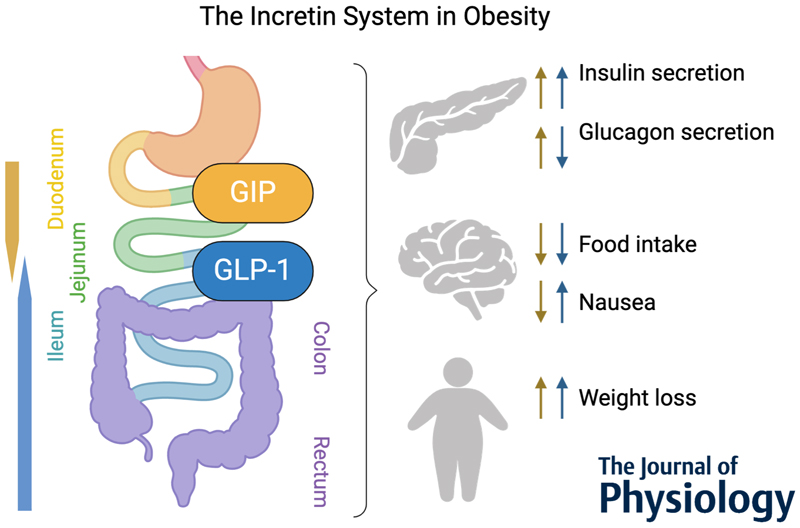
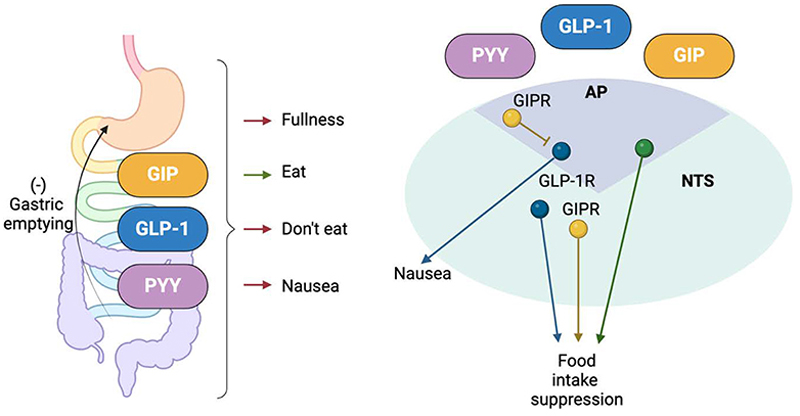
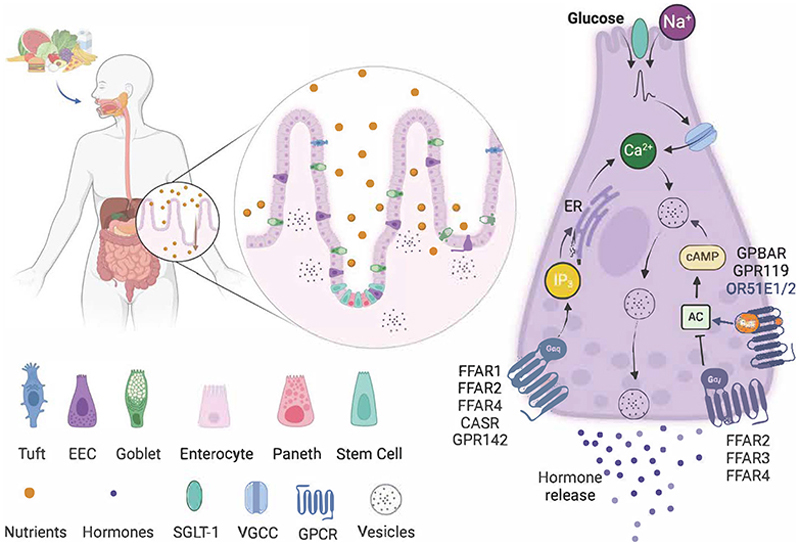
The incretin hormones glucagon-like peptide-1 (GLP-1) and glucose-dependent insulinotropic polypeptide (GIP) play critical roles in co-ordinating postprandial metabolism, including modulation of insulin secretion and food intake. They are secreted from enteroendocrine cells in the intestinal epithelium following food ingestion, and act at multiple target sites including pancreatic islets and the brain. With the recent development of agonists targeting GLP-1 and GIP receptors for the treatment of type 2 diabetes and obesity, and the ongoing development of new incretin-based drugs with improved efficacy, there is great interest in understanding the physiology and pharmacology of these hormones.
肠促胰岛素激素胰高血糖素样肽-1(GLP-1)和葡萄糖依赖性促胰岛素多肽(GIP)在协调餐后代谢中发挥关键作用,包括调节胰岛素分泌和食物摄入。它们在食物摄入后从肠道上皮的肠内分泌细胞分泌,并作用于多个靶位点,包括胰岛和大脑。随着近期针对GLP-1和GIP受体的激动剂用于治疗2型糖尿病和肥胖症的开发,以及正在研发的疗效更佳的新型肠促胰岛素类药物,人们对了解这些激素的生理学和药理学产生了浓厚兴趣。