Department of Ecosustainable Marine Biotechnology, Stazione Zoologica Anton Dohrn, Giardini del Molosiglio, Naples, Italy.
Department of Chemical, Biological, Pharmaceutical and Environmental Sciences, University of Messina, Messina, Italy.
Microb Biotechnol. 2024 Nov;17(11):e70011. doi: 10.1111/1751-7915.70011.
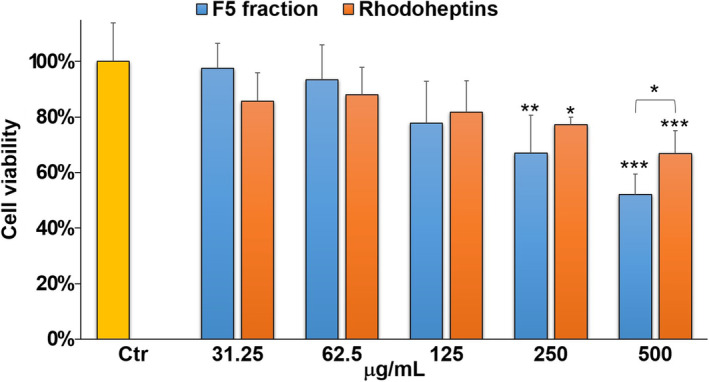
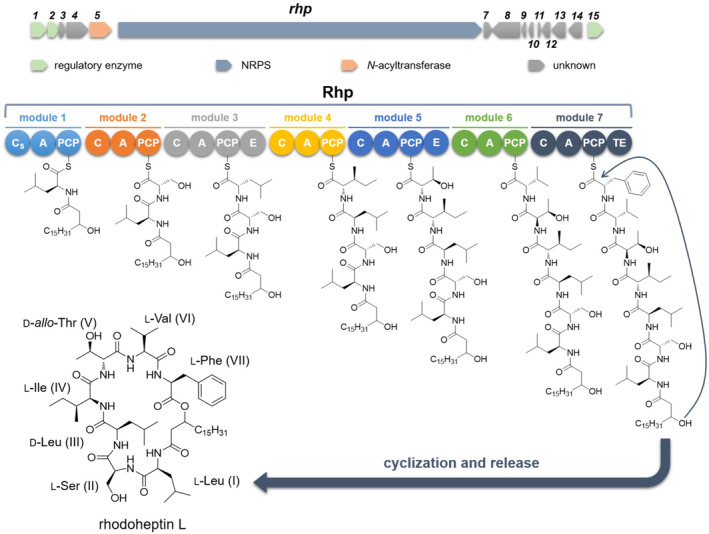
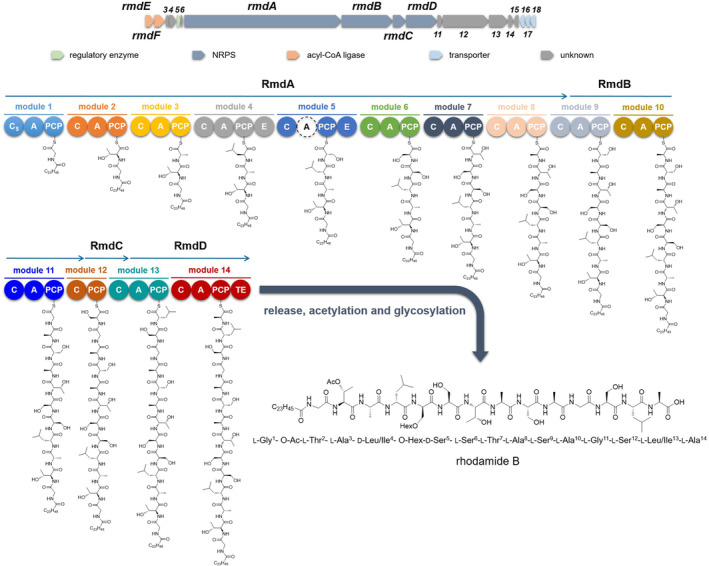
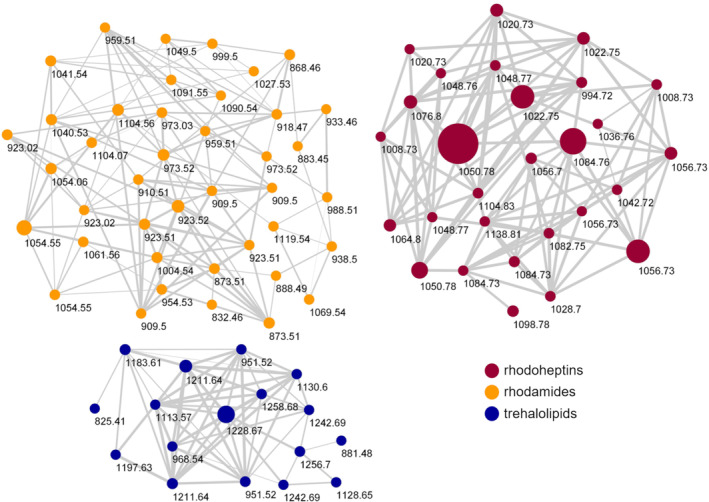
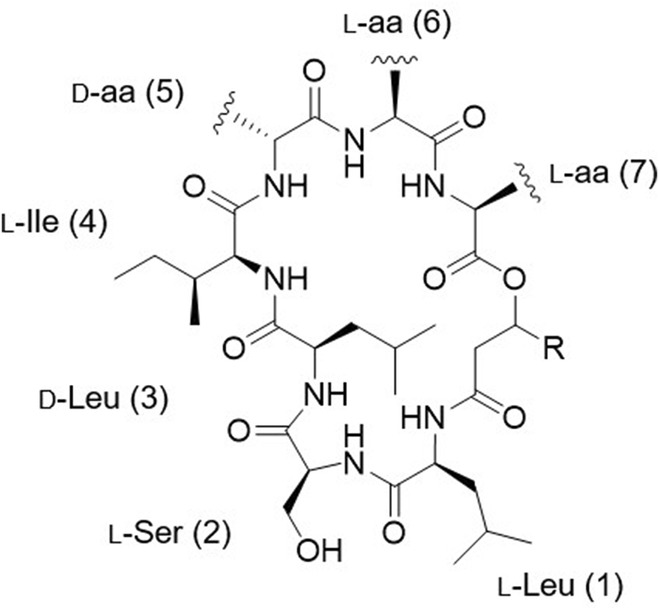
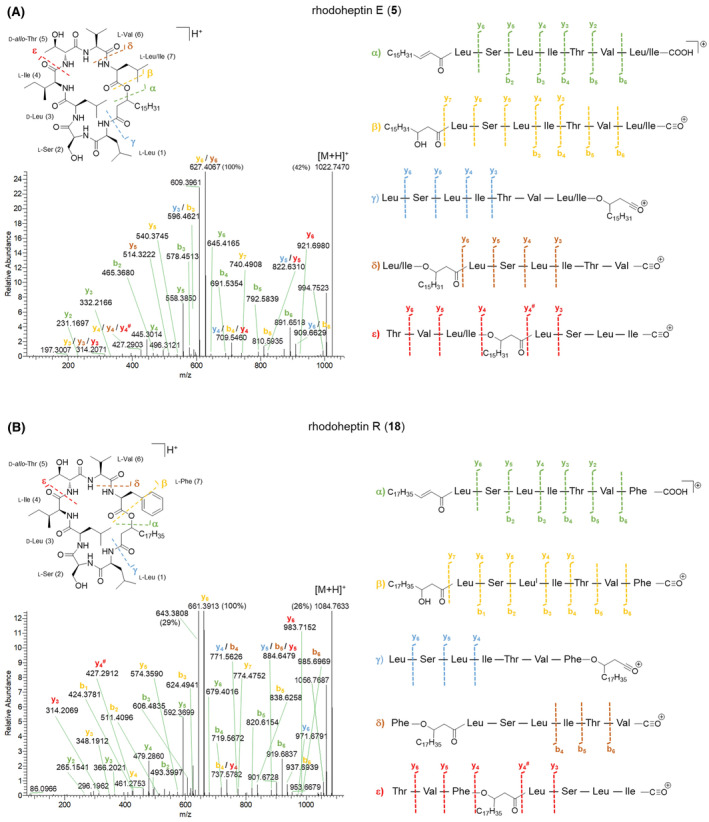
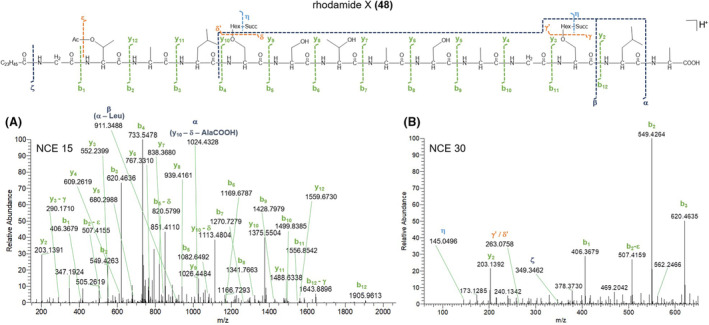
Microbial biosurfactants have garnered significant interest from industry due to their lower toxicity, biodegradability, activity at lower concentrations and higher resistance compared to synthetic surfactants. The deep-sea Rhodococcus sp. I2R has been identified as a producer of glycolipid biosurfactants, specifically succinoyl trehalolipids, which exhibit antiviral activity. However, genome mining of this bacterium has revealed a still unexplored repertoire of biosurfactants. The microbial genome was found to host five non-ribosomal peptide synthetase (NRPS) gene clusters containing starter condensation domains that direct lipopeptide biosynthesis. Genomics and mass spectrometry (MS)-based metabolomics enabled the linking of two NRPS gene clusters to the corresponding lipopeptide families, leading to the identification of 20 new cyclolipopeptides, designated as rhodoheptins, and 33 new glycolipopeptides, designated as rhodamides. An integrated in silico gene cluster and high-resolution MS/MS data analysis allowed us to elucidate the planar structure, inference of stereochemistry and reconstruction of the biosynthesis of rhodoheptins and rhodamides. Rhodoheptins are cyclic heptapeptides where the N-terminus is bonded to a β-hydroxy fatty acid forming a macrolactone ring with the C-terminal amino acid residue. Rhodamides are linear 14-mer glycolipopeptides with a serine- and alanine-rich peptide backbone, featuring a distinctive pattern of acetylation, glycosylation and succinylation. These molecules exhibited biosurfactant activity in the oil-spreading assay and showed moderate antiproliferative effects against human A375 melanoma cells.
微生物生物表面活性剂因其毒性较低、可生物降解、在较低浓度下具有活性以及比合成表面活性剂更高的抗性,而引起了工业界的极大兴趣。深海节杆菌 I2R 已被鉴定为糖脂生物表面活性剂(特别是琥珀酰海藻糖脂)的生产者,具有抗病毒活性。然而,对这种细菌的基因组挖掘揭示了其生物表面活性剂仍未被探索的 repertoire。该微生物基因组中含有五个非核糖体肽合成酶(NRPS)基因簇,这些基因簇含有起始缩合域,可指导脂肽的生物合成。基因组学和基于质谱(MS)的代谢组学使两个 NRPS 基因簇与相应的脂肽家族相连接,从而鉴定出 20 种新的环脂肽,命名为 rhodoheptins,以及 33 种新的糖脂肽,命名为 rhodamides。综合的计算机基因簇和高分辨率 MS/MS 数据分析使我们能够阐明 rhodoheptins 和 rhodamides 的平面结构、立体化学推断和生物合成重建。Rhodoheptins 是环状七肽,其 N 末端与 β-羟基脂肪酸键合,形成具有 C 末端氨基酸残基的大环内酯环。Rhodamides 是线性 14 mer 糖脂肽,具有富含丝氨酸和丙氨酸的肽骨架,具有独特的乙酰化、糖基化和琥珀酰化模式。这些分子在油扩散测定中表现出生物表面活性剂活性,并对人 A375 黑色素瘤细胞表现出中等的抗增殖作用。