Baik Jong-Chan, Choi Youn-Kyung, Cho Yonghun, Baek Yunju, Kim Sung-Hun, Kim Seong-Sik, Park Soo-Byung, Kim Ki Beom, Kim Yong-Il
Department of Orthodontics, Dental Research Institute, Pusan National University Dental Hospital, Yangsan, Korea.
Department of Orthodontics, Biomedical Research Institute, Pusan National University Hospital, Busan, Korea.
Korean J Orthod. 2024 Nov 25;54(6):359-373. doi: 10.4041/kjod24.016. Epub 2024 Jun 28.
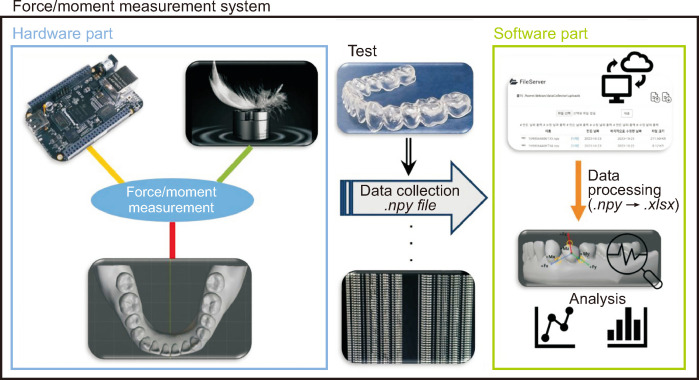
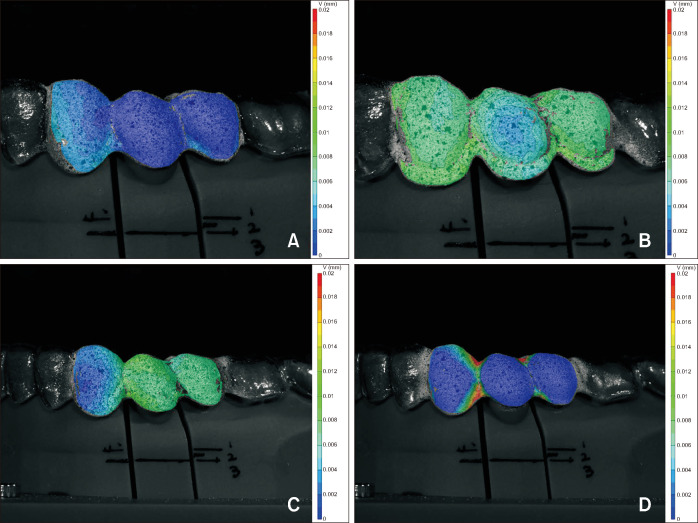
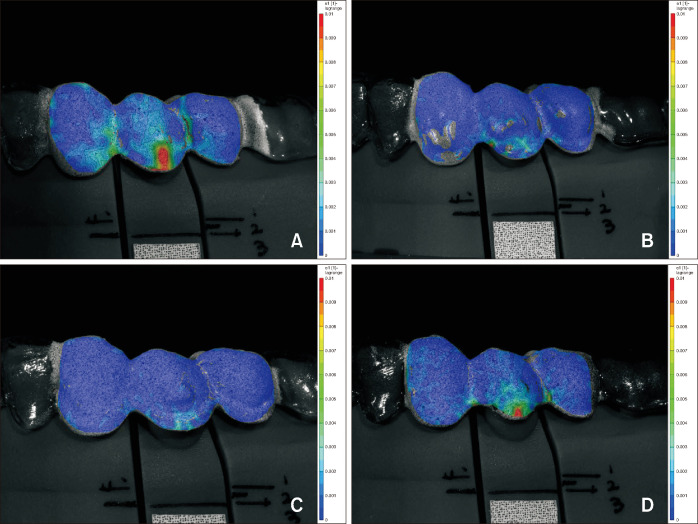
This study aimed to investigate the effect of three-dimensional (3D) printed clear aligners (CA) with different designs on the extrusion of mandibular premolars using a force/moment measurement system and digital image correlation (DIC).
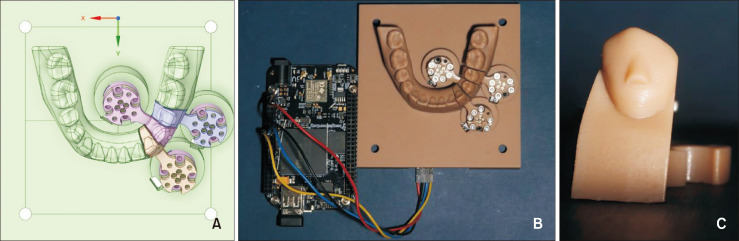
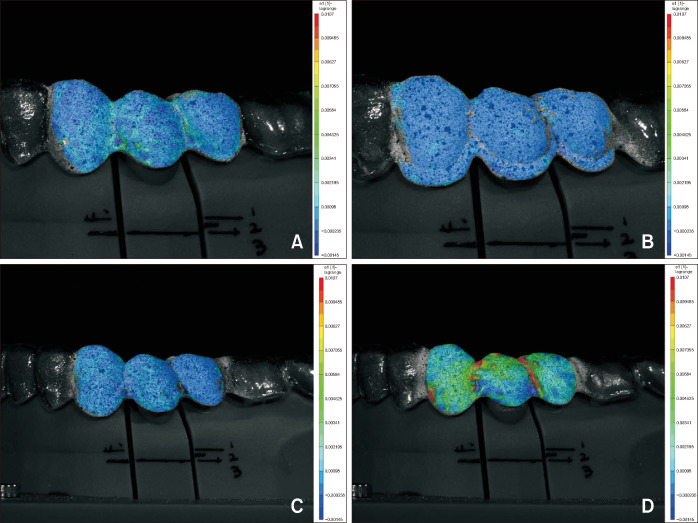
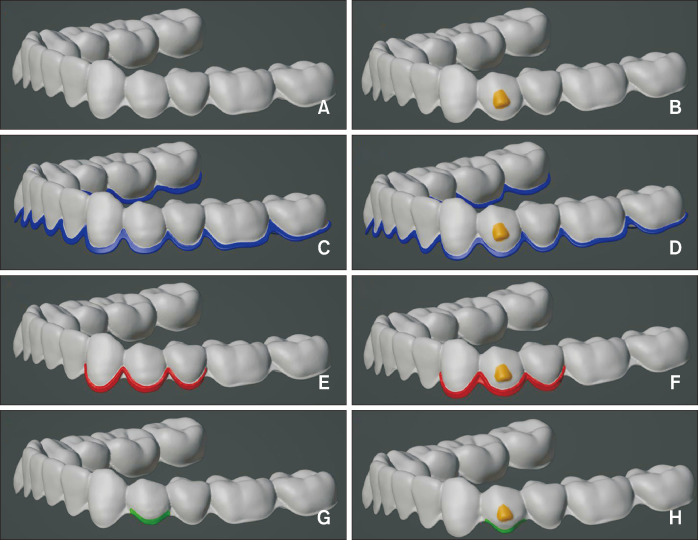
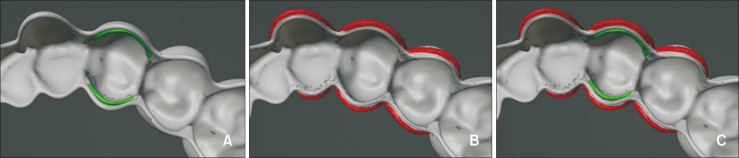
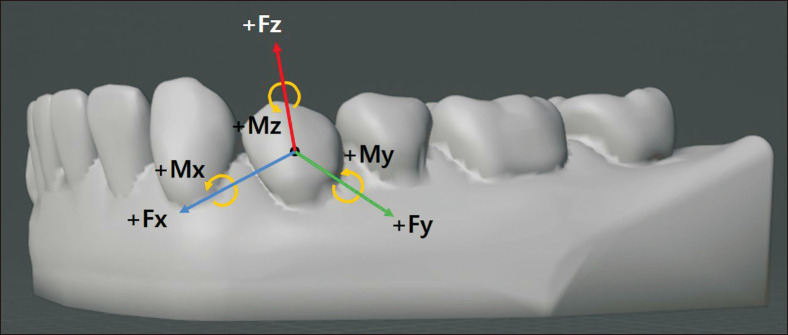
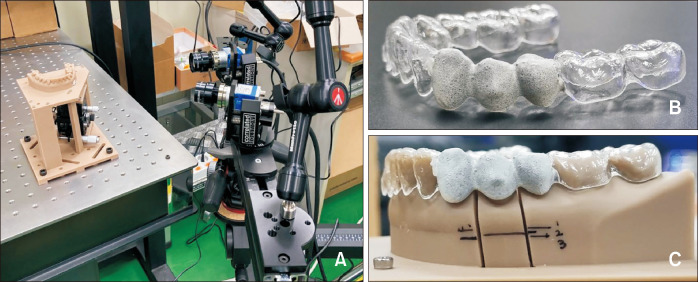
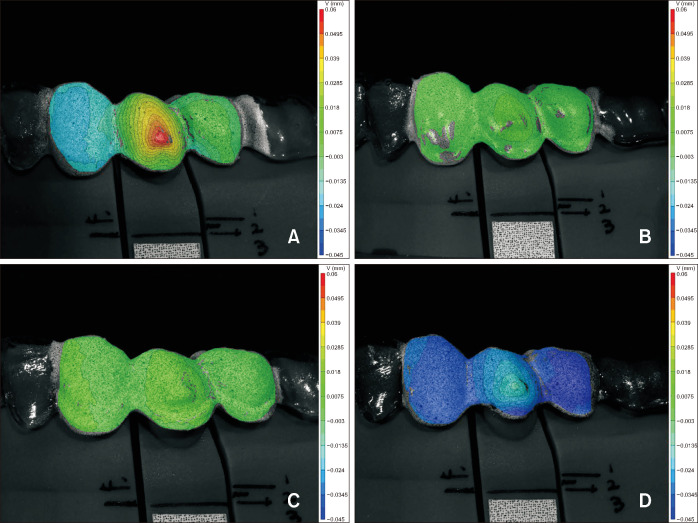
The forces and moments applied to the mandibular canines, first and second premolars were measured using a multi-axis force/moment transducer when an extrusion of 0.5 mm was planned, assuming the mandibular first premolars were intruded by 1 mm. In addition, displacement and strain changes in the CA were analyzed using the DIC method. CA designs were categorized based on the presence of first premolar attachment and subdivided into equigingival margins, 1-mm extended margins, equi-margins with 1-mm thickness and height, and equi-margins with 1-mm reduced buccolingual width. The CA was printed directly at a thickness of 0.5 mm, and the experiments were conducted at 37°C.
The results showed that attachment played an important role in the extrusion of first premolars in both the force/moment measurement system and the DIC method. Intrusion was observed without attachment, even though extrusion was planned. CA designs apply greater force to the cervical region by extending the margin or reducing the buccolingual width, thereby improving extrusion efficiency.
Force and moment changes in direct 3D printed CA are complex and difficult to predict; however, modifying aligner designs, such as extending the margin or reducing buccolingual width, and using appropriate attachments could minimize unwanted tooth movement, optimize planned treatment, and increase treatment predictability.
本研究旨在使用力/力矩测量系统和数字图像相关技术(DIC),研究不同设计的三维(3D)打印透明矫治器(CA)对下颌前磨牙牙根外推的影响。
当计划将下颌第一前磨牙压低1mm、同时将下颌尖牙、第一前磨牙和第二前磨牙牙根外推0.5mm时,使用多轴力/力矩传感器测量施加在下颌尖牙、第一前磨牙和第二前磨牙上的力和力矩。此外,使用DIC方法分析CA中的位移和应变变化。根据第一前磨牙附件的有无对CA设计进行分类,并细分为等龈缘、1mm延伸龈缘、厚度和高度均为1mm的等边缘以及颊舌宽度减小1mm的等边缘。CA直接打印成0.5mm的厚度,并在37°C下进行实验。
结果表明,在力/力矩测量系统和DIC方法中,附件在下颌第一前磨牙牙根外推中均起着重要作用。即使计划进行牙根外推,但在没有附件的情况下仍观察到牙齿压低。CA设计通过延伸边缘或减小颊舌宽度,对颈部区域施加更大的力,从而提高牙根外推效率。
直接3D打印CA中的力和力矩变化复杂且难以预测;然而,修改矫治器设计,如延伸边缘或减小颊舌宽度,并使用合适的附件,可以减少不必要的牙齿移动,优化治疗计划,并提高治疗的可预测性。