Tseng Wan-Ling, Lin Cheng-Wei, Wang Yi-Chi, Hsu Huang-Hsiung, Chiu Kuan-Ming, Wu Yueh-Shyuan, Hsieh Yi-Huan, Chen Ying-Ting
Ocean Center, National Taiwan University, Taipei, Taiwan.
Research Center for Environmental Changes, Academia Sinica, Taipei, Taiwan.
Heliyon. 2024 Nov 5;10(21):e40125. doi: 10.1016/j.heliyon.2024.e40125. eCollection 2024 Nov 15.
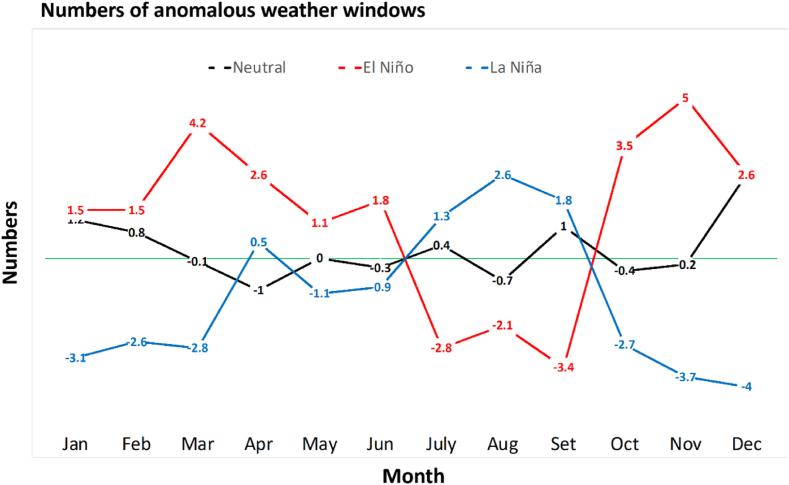
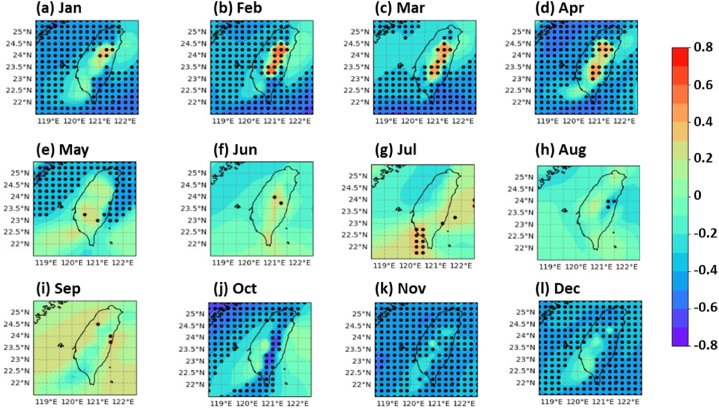
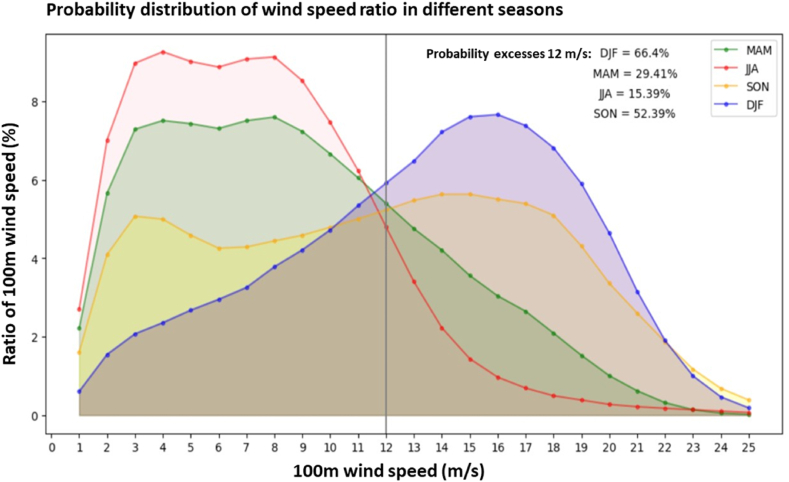
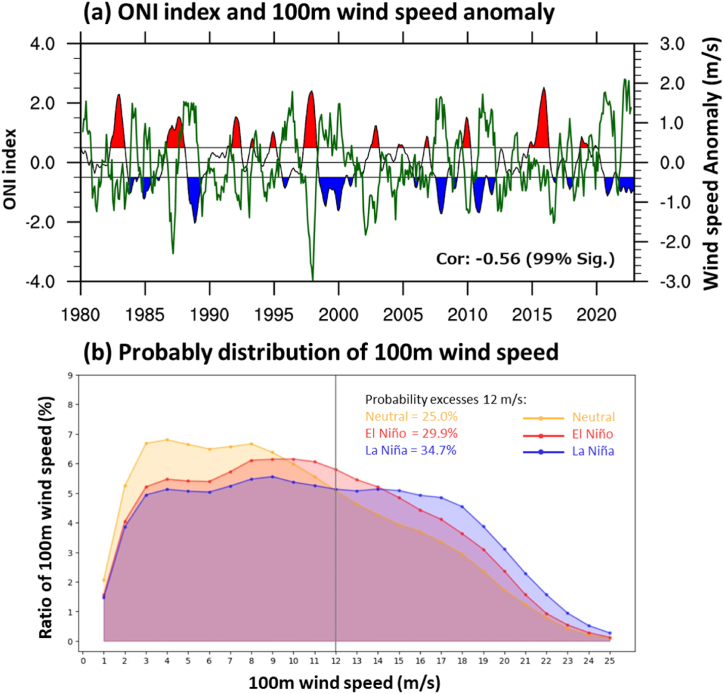
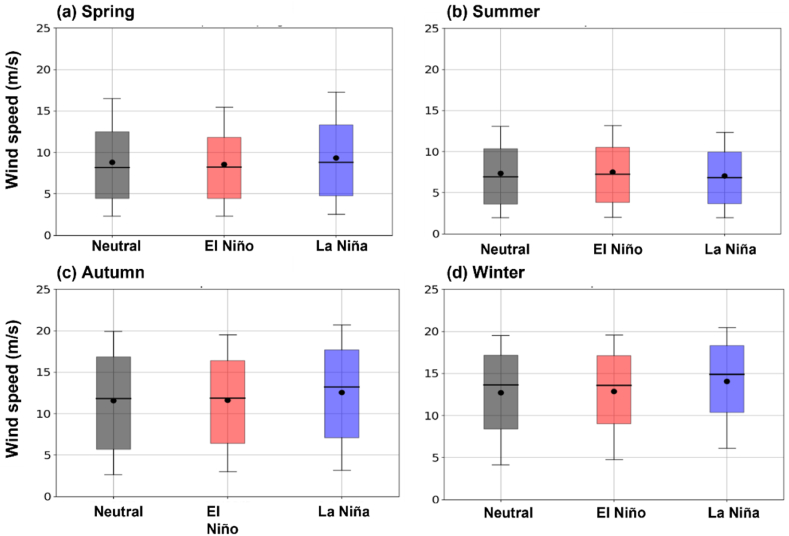
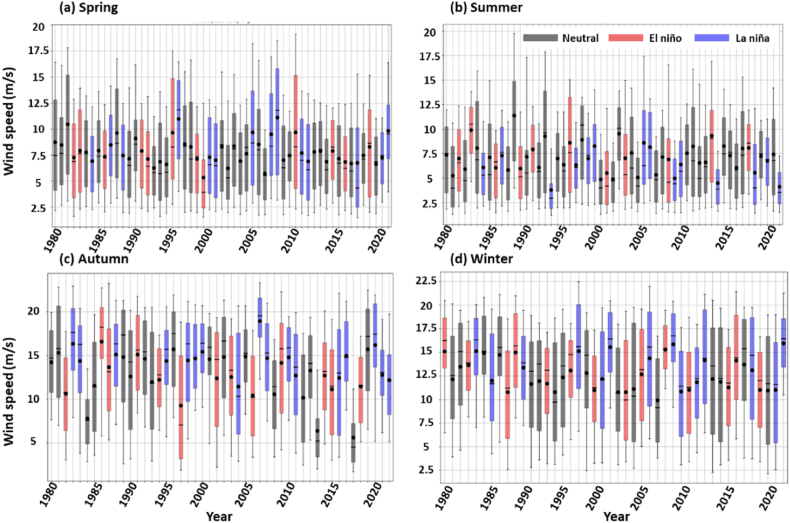
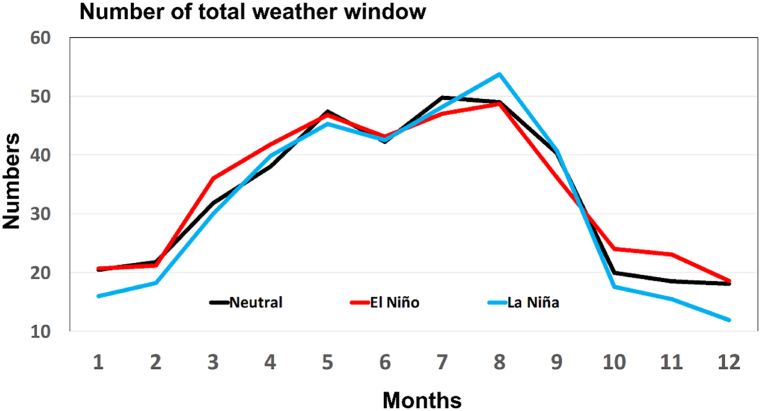
The transition to renewable energy sources, such as offshore wind farms, is essential in mitigating climate change. Taiwan has set ambitious targets to harness wind energy from the Taiwan Strait, but offshore wind farm installations are highly dependent on weather conditions, particularly wind speeds. This study examines the relationship between the El Niño-Southern Oscillation (ENSO) and offshore wind farm installation by assessing weather windows-periods with wind speeds below 12 m per second at a height of 100 m for at least 12 h. Our analysis shows that during La Niña years, the number of feasible weather windows decreases by up to 40 %, particularly between October and June, compared to neutral and El Niño years. This decrease can be as high as fourfold in December, significantly impacting installation schedules. Seasonal variations are also notable, with wind speeds exceeding 12 m s in winter 66.4 % of the time, compared to 29.4 % in spring, making spring and summer the most favorable periods for installation. However, even during these favorable seasons, La Niña years can bring higher wind speeds, necessitating careful planning. These results underscore the importance of integrating ENSO forecasts into project planning to avoid installation delays and optimize installation timelines. By leveraging seasonal and interannual climate variability predictions, decision-makers can improve the resilience of offshore wind farm projects and ensure efficient energy transition strategies.
向可再生能源(如海上风电场)的转型对于缓解气候变化至关重要。台湾已设定了雄心勃勃的目标,要利用台湾海峡的风能,但海上风电场的安装高度依赖天气条件,尤其是风速。本研究通过评估天气窗口(即100米高度处风速低于每秒12米且持续至少12小时的时间段)来考察厄尔尼诺-南方涛动(ENSO)与海上风电场安装之间的关系。我们的分析表明,与中性年份和厄尔尼诺年份相比,在拉尼娜年份,可行天气窗口的数量减少了多达40%,尤其是在10月至6月期间。在12月,这种减少幅度可能高达四倍,对安装计划产生重大影响。季节变化也很显著,冬季风速超过每秒12米的时间占66.4%,而春季为29.4%,这使得春季和夏季成为最适合安装的时期。然而,即使在这些有利季节,拉尼娜年份也可能带来更高的风速,因此需要精心规划。这些结果强调了将ENSO预测纳入项目规划以避免安装延误和优化安装时间表的重要性。通过利用季节性和年际气候变化预测,决策者可以提高海上风电场项目的适应能力,并确保有效的能源转型战略。