Snider Eric J, Vega Saul J, Nessen I Amy, Hernandez Torres Sofia I, Salazar Sophia, Berard David, Salinas Jose
Organ Support and Automation Technologies Group, U.S. Army Institute of Surgical Research, San Antonio, TX, United States.
Front Bioeng Biotechnol. 2024 Nov 8;12:1420330. doi: 10.3389/fbioe.2024.1420330. eCollection 2024.
Hemorrhage remains the leading cause of preventable death on the battlefield. The most effective means to increase survivability is early hemorrhage control and fluid resuscitation. Unfortunately, fluid resuscitation requires constant adjustments to ensure casualty is properly managed, which is often not feasible in the pre-hospital setting. In this study, we showed how an adaptive closed-loop controller for hemorrhage resuscitation can be used to automate hemodynamic management using a swine hemorrhagic shock injury model.
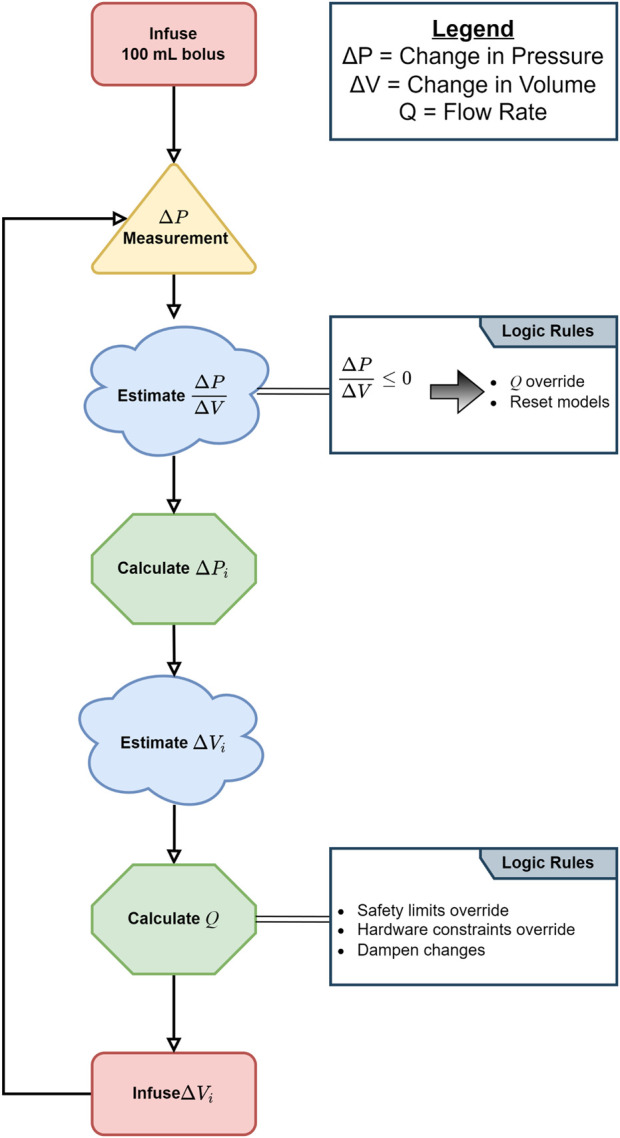
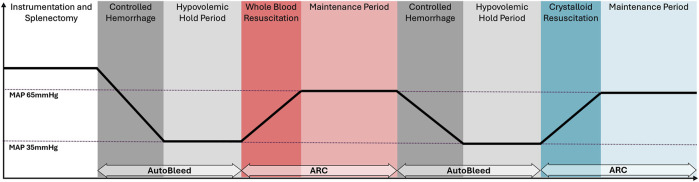
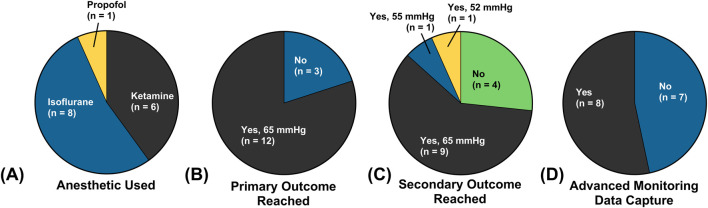
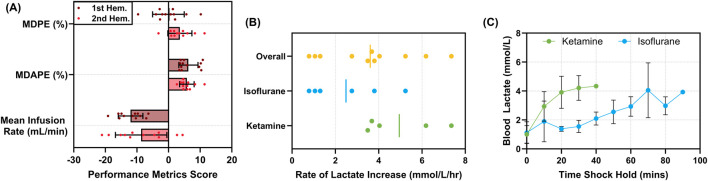
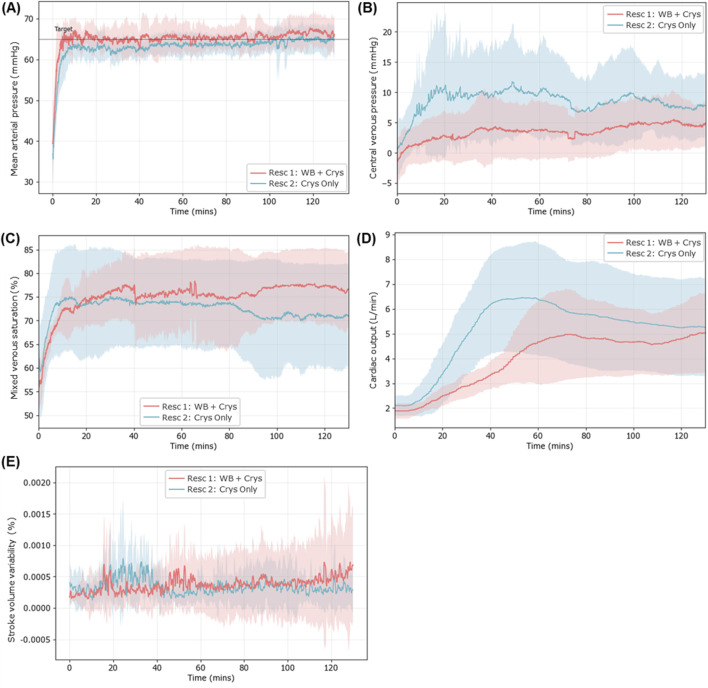
The adaptive resuscitation controller (ARC) was previously developed to track pressure-volume responsiveness in real time and adjust its infusion rate to reach the target mean arterial pressure (MAP). Swine while maintained under a surgical plane of anesthesia and analgesia underwent a splenectomy, followed by two hemorrhage and resuscitation events. For the first resuscitation event, hemorrhage was induced to reduce the MAP to 35 mmHg until arterial lactate reached 4 mmol/L. The ARC system then infused whole blood (WB) to reach the target MAP and maintained the subject using crystalloids for 120 min. For the second resuscitation event, the subjects were hemorrhaged again but resuscitated using only crystalloid infusion to reach the target MAP and 120-min maintenance.
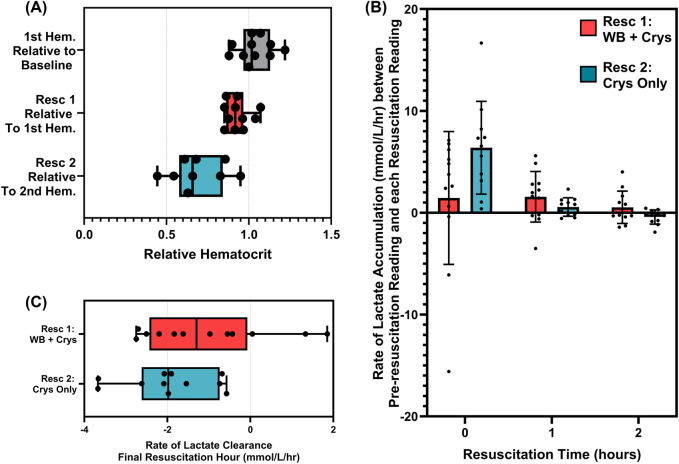
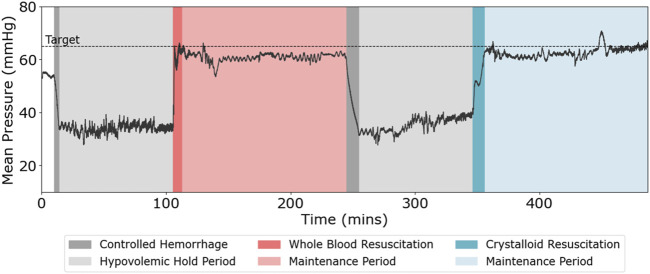
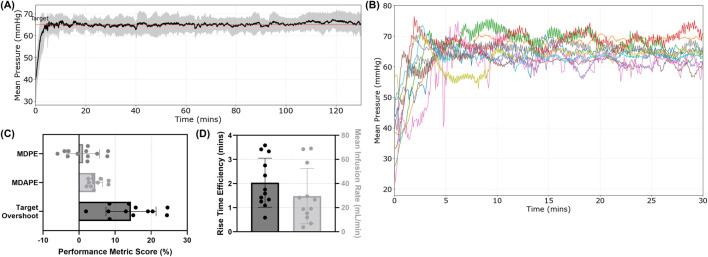
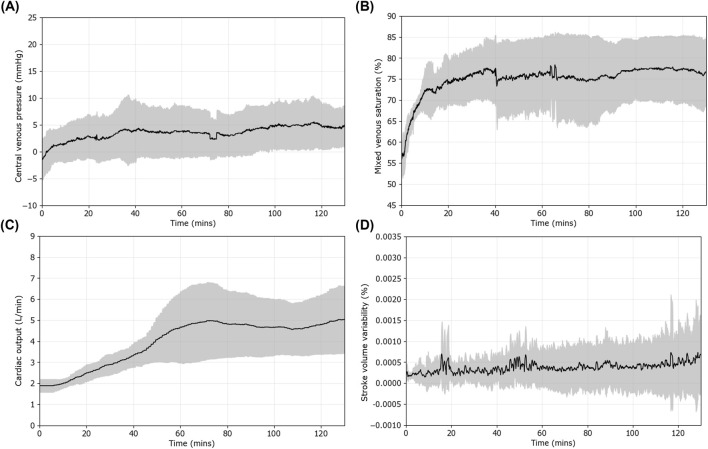
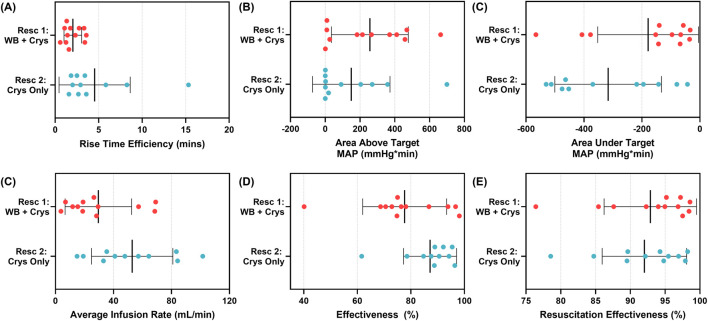
The ARC was effective at WB resuscitation, reaching the target MAP in 2.0 ± 1.0 min. The median performance error was 1.1% ± 4.6%, and target overshoot was 14.4% ± 7.0% of the target MAP. The ARC maintained all animals throughout the 120 min maintenance period. For the second crystalloid-based resuscitation, ARC required a longer time to reach the target MAP, at an average rise time of 4.3 ± 4.0 min. However, target overshoot was reduced to 8.4% ± 7.3% of the target MAP. Much higher flow rates were required to maintain the target MAP during the second resuscitation event than during the first resuscitation event.
The ARC was able to rapidly reach and maintain the target MAP effectively. However, this sometimes required large volumes of fluid as the ARC's only goal was to reach the target MAP. Further clinical insight is needed regarding the preferred aggression level to achieve the target MAP. In conclusion, the ARC was successful in its programmed objective of reaching and maintaining the target MAP for extended periods of time , a critical next step toward improving hemorrhage treatment in the pre-hospital environment.
出血仍然是战场上可预防死亡的主要原因。提高生存率的最有效方法是早期出血控制和液体复苏。不幸的是,液体复苏需要不断调整以确保伤员得到妥善管理,这在院前环境中往往不可行。在本研究中,我们展示了一种用于出血复苏的自适应闭环控制器如何通过猪失血性休克损伤模型用于自动血流动力学管理。
自适应复苏控制器(ARC)先前已被开发出来,用于实时跟踪压力-容量反应性并调整其输注速率以达到目标平均动脉压(MAP)。猪在手术麻醉和镇痛平面下接受脾切除术,随后经历两次出血和复苏事件。对于第一次复苏事件,诱导出血使MAP降至35 mmHg,直到动脉乳酸达到4 mmol/L。然后ARC系统输注全血(WB)以达到目标MAP,并使用晶体液维持受试者120分钟。对于第二次复苏事件,再次对受试者进行出血,但仅使用晶体液输注进行复苏以达到目标MAP并维持120分钟。
ARC在WB复苏方面有效,在2.0±1.0分钟内达到目标MAP。中位性能误差为1.1%±4.6%,目标超调为目标MAP的14.4%±7.0%。ARC在整个120分钟的维持期内维持了所有动物。对于第二次基于晶体液的复苏,ARC达到目标MAP所需时间更长,平均上升时间为4.3±4.0分钟。然而,目标超调降至目标MAP的8.4%±7.3%。与第一次复苏事件相比,第二次复苏事件期间维持目标MAP需要更高的流速。
ARC能够有效且迅速地达到并维持目标MAP。然而,这有时需要大量液体,因为ARC的唯一目标是达到目标MAP。关于实现目标MAP的首选激进程度,还需要进一步的临床见解。总之,ARC成功实现了其设定目标,即长时间达到并维持目标MAP,这是朝着改善院前环境中出血治疗迈出的关键下一步。