Peng Tao
Department of Endoscopy, The First Affiliated Hospital of Hebei North University, Zhangjiakou, 075000, China.
Discov Oncol. 2024 Nov 25;15(1):707. doi: 10.1007/s12672-024-01591-z.
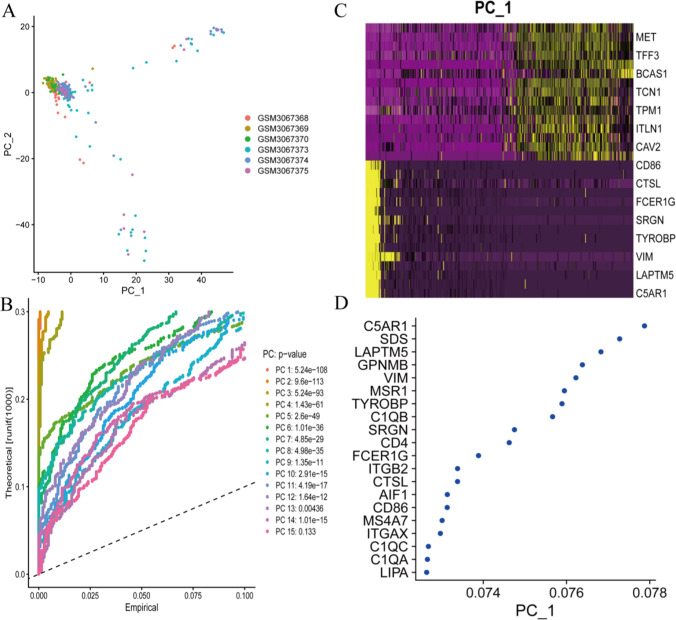
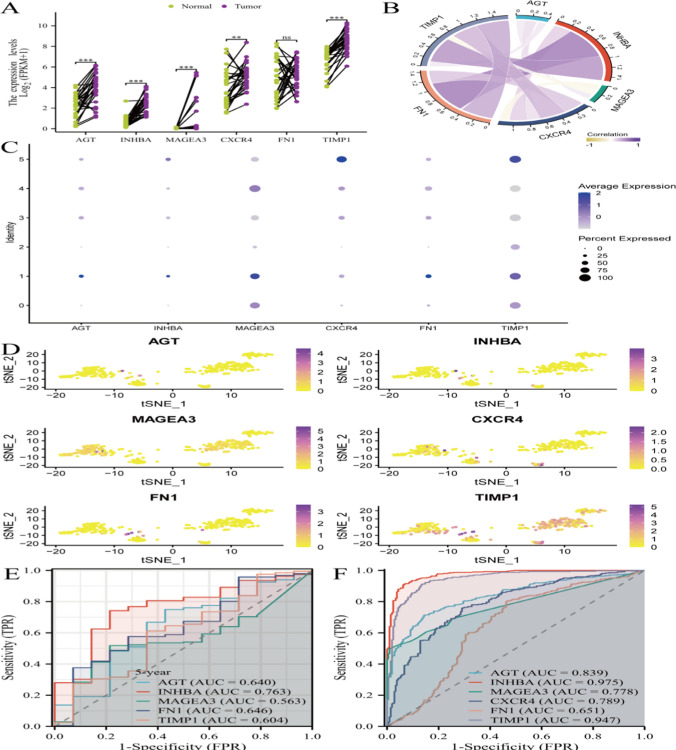
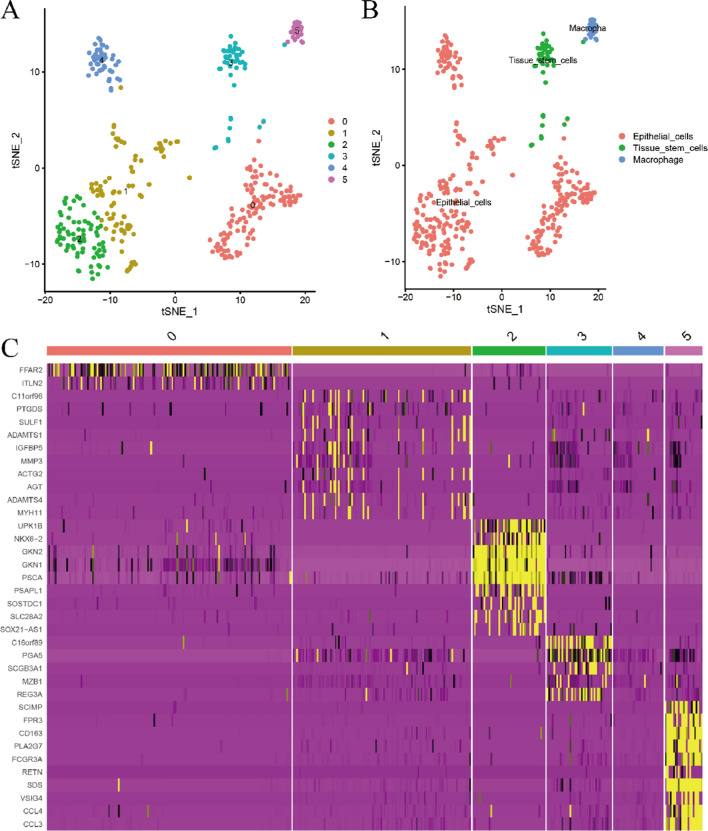
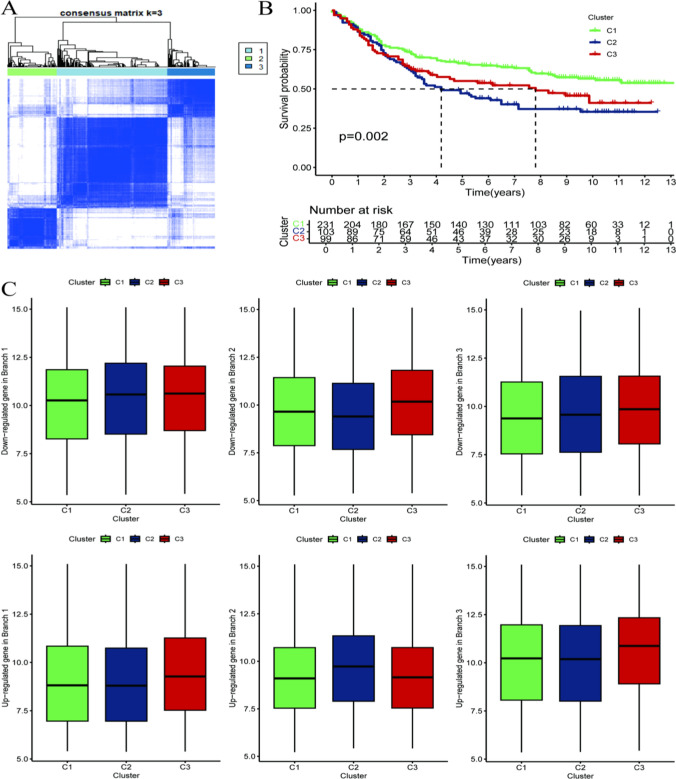
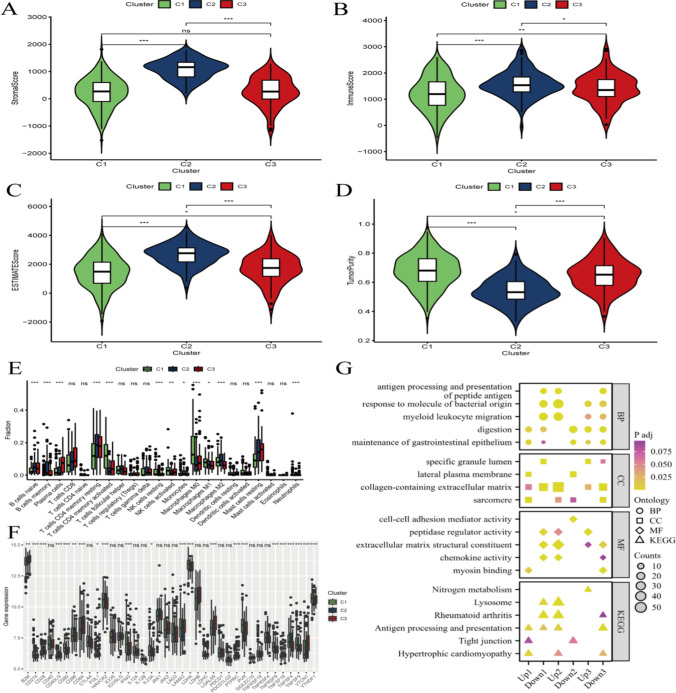
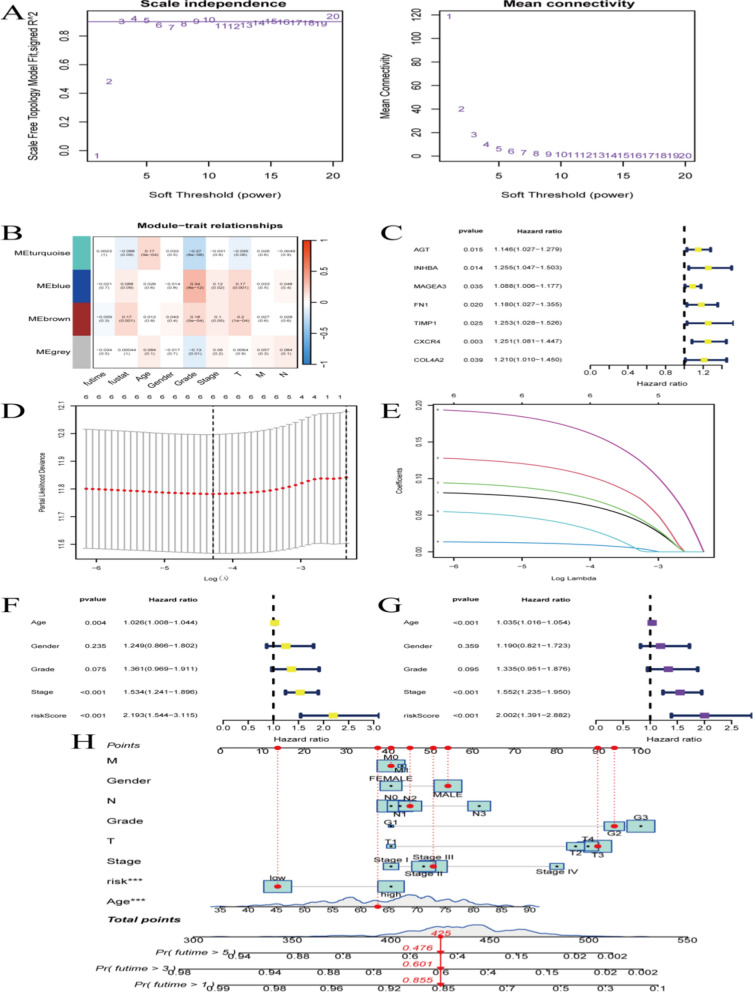
Gastric cancer (GC) is a common malignant tumor worldwide, characterized by complex biological processes. The distribution of various cell types and gene expression profiles in the GC microenvironment remains unclear. This study uses single-cell RNA sequencing to explore gene expression patterns and identify differentially expressed genes in GC samples, offering new insights into cellular diversity and potential molecular mechanisms. We conducted temporal and clustering analyses with single-cell sequencing, followed by Gene Ontology (GO) and Kyoto Encyclopedia of Genes and Genomes (KEGG) analyses to clarify their functions. Using machine learning, we identified relevant genes to create highly accurate prediction models. Additionally, ssGSEA analysis provided detailed insights into the immunosuppressive tumor microenvironment, revealing complex gene expression interactions and diverse immune infiltrates in cancer. Correlation analysis highlighted TIMP1 as having significant prognostic value across different immune cell subtypes. Single-cell RNA sequencing revealed the cellular landscape and gene expression profiles of the GC microenvironment, offering crucial data on how cell heterogeneity is regulated in relation to the tumor microenvironment. Moreover, new insights into the expression levels of AGT, INHBA, and TIMP1 showed distinct sex-biased gene functions within the tumor microenvironment. These findings enhance our understanding of the molecular mechanisms associated with gastric cancer development and may lay the groundwork for identifying novel therapeutic targets and diagnostic strategies.
胃癌(GC)是全球常见的恶性肿瘤,具有复杂的生物学过程。胃癌微环境中各种细胞类型的分布和基因表达谱仍不清楚。本研究使用单细胞RNA测序来探索基因表达模式,并识别胃癌样本中差异表达的基因,为细胞多样性和潜在分子机制提供了新的见解。我们对单细胞测序进行了时间和聚类分析,随后进行基因本体论(GO)和京都基因与基因组百科全书(KEGG)分析以阐明其功能。使用机器学习,我们识别出相关基因以创建高度准确的预测模型。此外,单样本基因集富集分析(ssGSEA)为免疫抑制性肿瘤微环境提供了详细的见解,揭示了癌症中复杂的基因表达相互作用和多样的免疫浸润。相关性分析强调组织金属蛋白酶抑制剂1(TIMP1)在不同免疫细胞亚型中具有显著的预后价值。单细胞RNA测序揭示了胃癌微环境的细胞图谱和基因表达谱,提供了关于肿瘤微环境中细胞异质性如何被调控的关键数据。此外,对血管紧张素原(AGT)、抑制素βA(INHBA)和TIMP1表达水平的新见解显示肿瘤微环境中存在明显的性别偏向性基因功能。这些发现增强了我们对与胃癌发展相关分子机制的理解,并可能为识别新的治疗靶点和诊断策略奠定基础。