Chen Yang, Zhang Mingchao, Jia Ruoyu, Qian Bin, Jing Chenyang, Zeng Caihong, Zhu Dihan, Liu Zhihong, Zen Ke, Li Limin
State Key Laboratory of Natural Medicines, Jiangsu Key Laboratory of Druggability of Biopharmaceuticals, School of Life Science and Technology, China Pharmaceutical University, Nanjing, Jiangsu, 211198, China.
National Clinical Research Center of Kidney Diseases, Jinling Hospital, Nanjing, 210002, China.
Redox Biol. 2024 Dec;78:103439. doi: 10.1016/j.redox.2024.103439. Epub 2024 Nov 20.
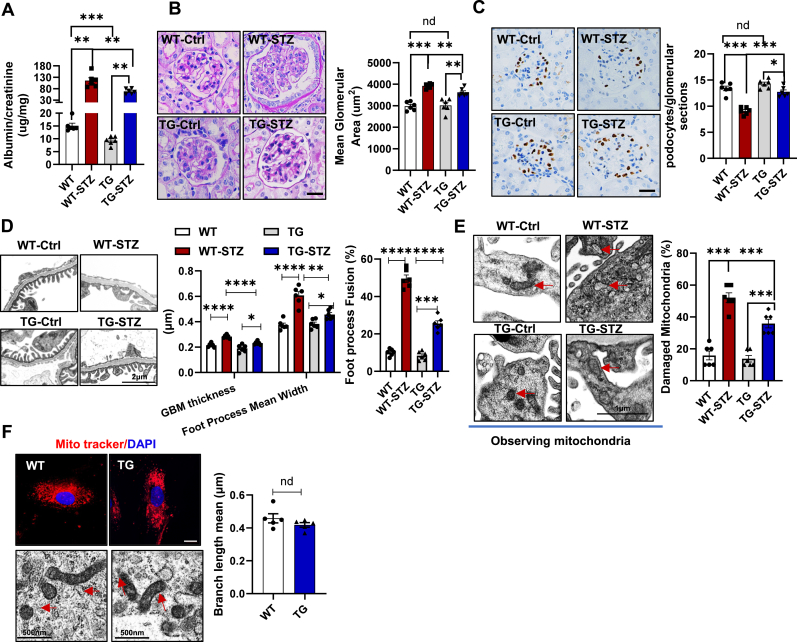
Podocyte injury is a critical event in the pathogenesis of diabetic nephropathy (DN). Hyperglycemia, oxidative stress, inflammation, and other factors contribute to podocyte damage in DN. In this study, we demonstrate that signaling regulatory protein alpha (SIRPα) plays a pivotal role in regulating the metabolic and immune homeostasis of podocytes. Deletion of SIRPα in podocytes exacerbates, while transgenic overexpression of SIRPα alleviates, podocyte injury in experimental DN mice. Mechanistically, SIRPα downregulation promotes pyruvate kinase M2 (PKM2) phosphorylation, initiating a positive feedback loop that involves PKM2 nuclear translocation, NF-κB activation, and oxidative stress, ultimately impairing aerobic glycolysis. Consistent with this mechanism, shikonin ameliorates podocyte injury by reducing PKM2 nuclear translocation, preventing oxidative stress and NF-κB activation, thereby restoring aerobic glycolysis.
足细胞损伤是糖尿病肾病(DN)发病机制中的关键事件。高血糖、氧化应激、炎症及其他因素导致DN中的足细胞损伤。在本研究中,我们证明信号调节蛋白α(SIRPα)在调节足细胞的代谢和免疫稳态中起关键作用。足细胞中SIRPα的缺失会加剧实验性DN小鼠的足细胞损伤,而SIRPα的转基因过表达则可减轻这种损伤。从机制上讲,SIRPα下调会促进丙酮酸激酶M2(PKM2)磷酸化,启动一个涉及PKM2核转位、NF-κB激活和氧化应激的正反馈回路,最终损害有氧糖酵解。与此机制一致,紫草素通过减少PKM2核转位、预防氧化应激和NF-κB激活来改善足细胞损伤,从而恢复有氧糖酵解。