Graduate School of Beijing University of Chinese Medicine, Beijing, 100029, China.
Department of Pain Medicine, China-Japan Friendship Hospital, 100029, Beijing, China.
J Headache Pain. 2024 Nov 25;25(1):206. doi: 10.1186/s10194-024-01913-0.
Triptans selectively agoniste 5-Hydroxytryptamine(5-HT) receptors and are widely used in the treatment of migraine. Nevertheless, there is a dearth of comprehensive real-world clinical research on the safety of triptans. In light of the growing prevalence of migraine, it is imperative to gain a deeper understanding of the true extent of adverse events (AEs) associated with triptans in the clinical management of migraine.
A database query of AEs reported to the U.S. Food and Drug Administration (FDA) Adverse Event Reporting System (FAERS) database for triptans was performed using the online platform Open Vigil 2.1. The query spanned the period from 1 January 2018 to 31 December 2023 and extracted all AEs for 'sumatriptan', 'zolmitriptan', 'rizatriptan', and 'naratriptan' from the 15-49 years old population and retrospective quantitative analyses. A proportional reporting ratio (PRR), reporting odds ratio (ROR), and Bayesian Confidence Propagation Neural Network (BCPNN) methodology were utilized to contrast AEs across the four triptans.
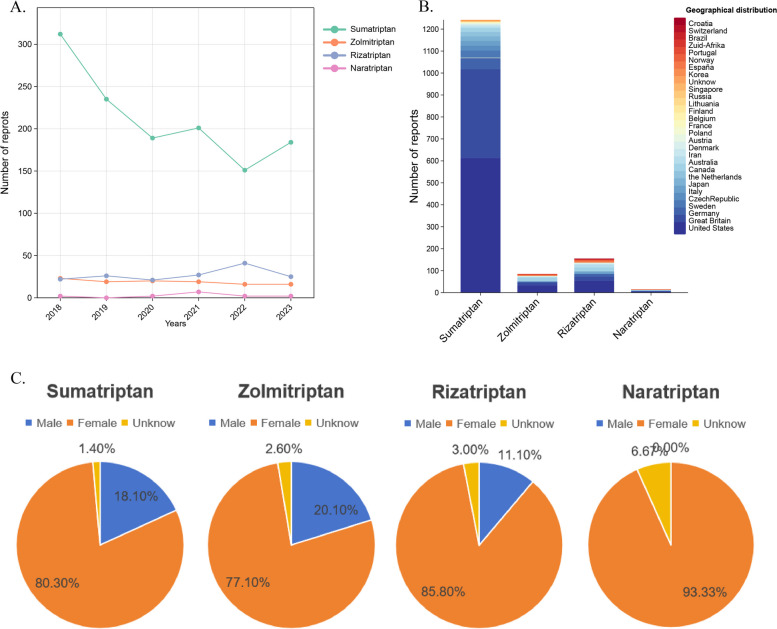
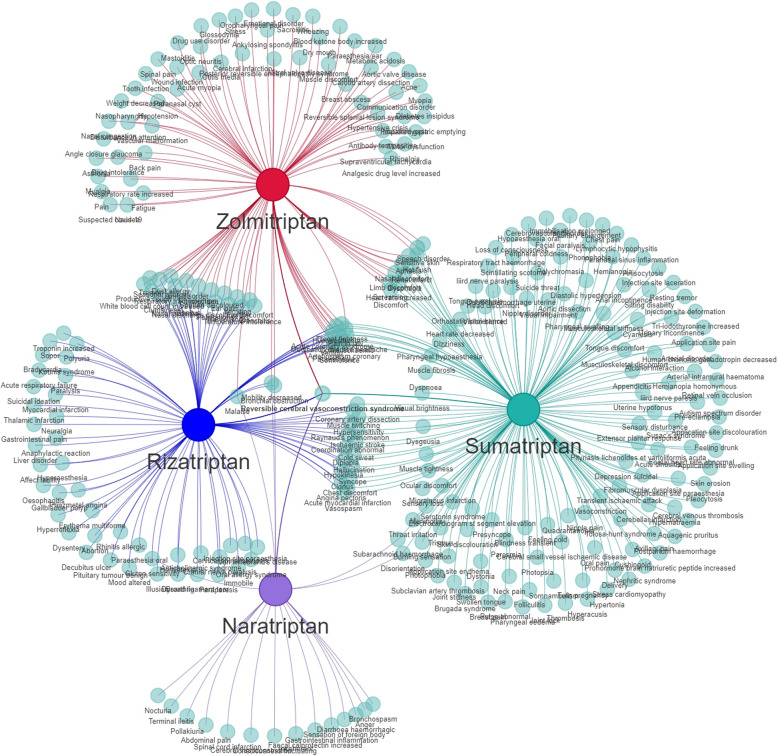
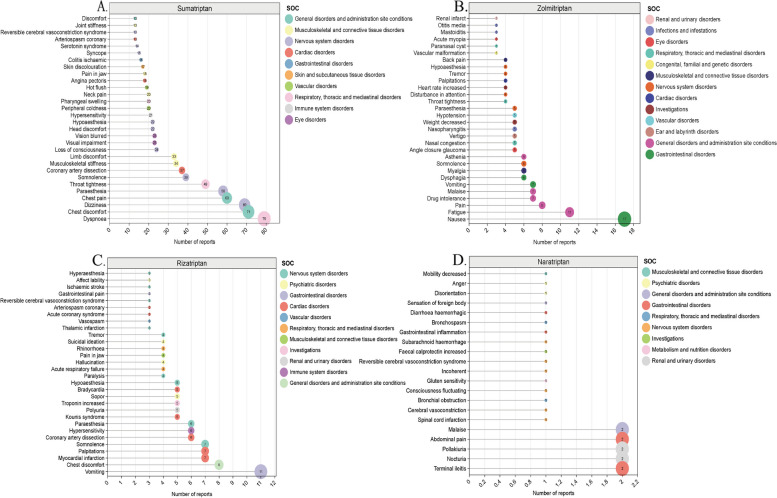
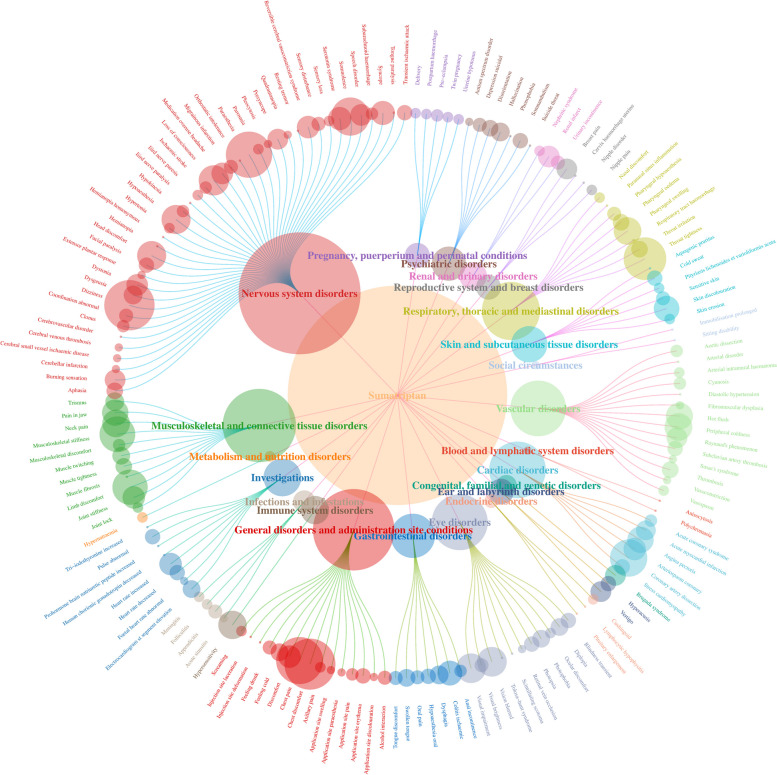
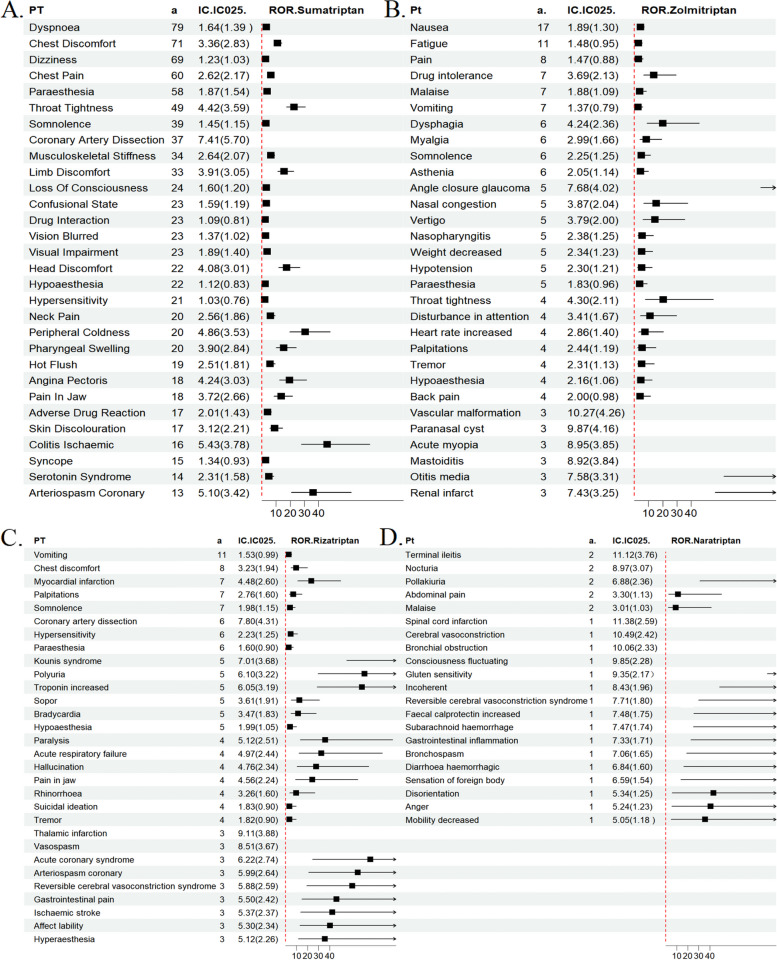
A total of 1.272 AEs reports for sumatriptan, 114 for zolmitriptan, 162 for rizatriptan, and 15 for naratriptan were identified. The ratio of females to males was approximately three times higher in all cases, with the highest number of reports originating from the Americas. A review of the FAERS database revealed that nervous system disorders were the primary SOC category for four drugs, with all four drugs exhibiting the AE indicative of reversible cerebral vasoconstriction syndrome, also classified as Nervous system disorders. The most frequently reported AE signal for sumatriptan was dyspnea, which is classified as respiratory, thoracic and mediastinal disorders. The most frequently reported AEs signals for the remaining three drugs were nausea, vomiting and terminal ileitis, all of which are classified as gastrointestinal disorders.
Analyses have demonstrated that AEs are present in a range of systems, including cardiac, nervous, gastrointestinal, and musculoskeletal disorders. It should be noted, however, that the incidence and signal intensity of these AEs vary depending on the specific drug in question. In clinical practice, the selection of an appropriate drug and the monitoring of AEs should be tailored to the individual patient's and specific characteristics.
曲普坦类药物选择性激动 5-羟色胺(5-HT)受体,广泛用于偏头痛的治疗。然而,关于曲普坦类药物安全性的综合真实世界临床研究却很少。鉴于偏头痛的患病率不断上升,深入了解偏头痛临床管理中与曲普坦类相关的不良事件(AE)的真实程度至关重要。
使用在线平台 Open Vigil 2.1 对美国食品和药物管理局(FDA)不良事件报告系统(FAERS)数据库中报告的曲普坦类药物相关 AE 进行数据库查询。该查询时间跨度为 2018 年 1 月 1 日至 2023 年 12 月 31 日,提取了 15-49 岁人群中“舒马曲坦”、“佐米曲坦”、“利扎曲坦”和“那拉曲坦”的所有 AE,并进行回顾性定量分析。采用比例报告比值(PRR)、报告比值比(ROR)和贝叶斯置信传播神经网络(BCPNN)方法对比了四种曲普坦类药物的 AE。
共确定了 1272 例舒马曲坦、114 例佐米曲坦、162 例利扎曲坦和 15 例那拉曲坦的 AE 报告。在所有情况下,女性与男性的比例约为三倍,报告数量最多的是来自美洲。对 FAERS 数据库的审查显示,神经系统疾病是四种药物的主要 SOC 类别,所有四种药物都表现出可逆性脑动脉收缩综合征的 AE,也被归类为神经系统疾病。舒马曲坦最常报告的 AE 信号是呼吸困难,属于呼吸、胸部和纵隔疾病。其余三种药物最常报告的 AE 信号是恶心、呕吐和回肠末端炎,都属于胃肠道疾病。
分析表明,AE 存在于包括心脏、神经、胃肠道和肌肉骨骼在内的多个系统中。然而,需要注意的是,这些 AE 的发生率和信号强度因具体药物而异。在临床实践中,应根据个体患者和具体特征选择合适的药物,并监测 AE。