Department of Counseling, Special Education and Educational Psychology, University of Texas at El Paso, El Paso, TX, USA.
Department of Internal Medicine, Texas Tech University Health Sciences Center El Paso, El Paso, TX, USA.
BMC Med Educ. 2024 Nov 26;24(1):1364. doi: 10.1186/s12909-024-06353-7.
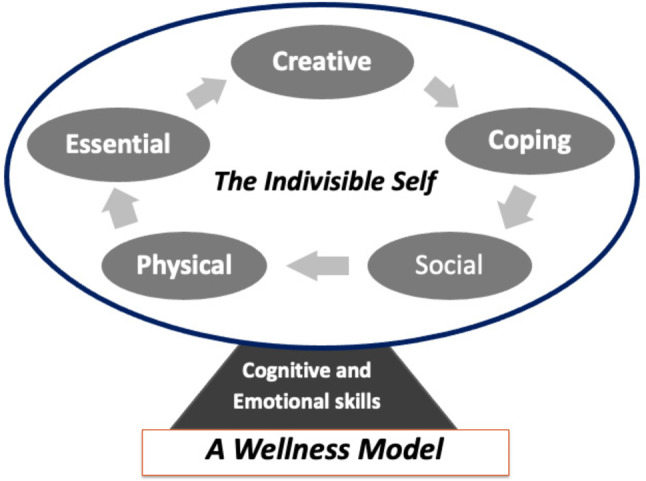
The COVID-19 pandemic has served as a catalyst for recognizing the challenging environments in which healthcare workers operate, underscoring the urgent need to enhance their wellness to better support themselves and others. The implementation of a culture of wellness within the context of healthcare education, with a particular emphasis on individual-level strategies, allows for the realization of its intrinsic value and significance as a foundation for broader organizational strategies. This approach facilitates the establishment of a sustainable culture of wellness that benefits both current and subsequent generations of healthcare professionals.
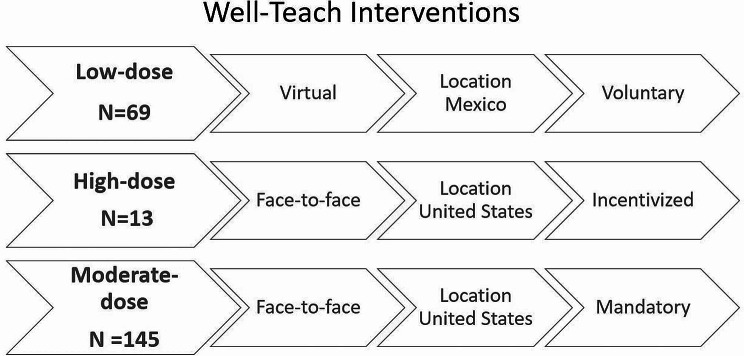
We implemented our wellness program using a pragmatic pre-post study design for different settings. Our wellness intervention program was tested in three ways by creating combinations of different intensities (high, moderate, or low), delivery methods (face-to-face vs. virtual), different motivations (incentive, mandatory, or volunteer participation), and different timings (during medical programs or before entering into healthcare programs) among medical and nursing students. The effects of the wellness program were measured on quality of life, emotional intelligence, and efficacy scores among healthcare students. Statistical methods included repeated measures analysis of variance and paired t-tests.
A total of 224 students (13 in high, 145 in moderate, and 66 in low-dose interventions) participated in our study program. Most scores were significantly improved except for a few factors in the high-dose face-to-face Well-Teach intervention cohort. Among quality of life components, the average psychological scores were markedly increased after high (13.2 vs. 14.7, p = .018), moderate (13.9 vs. 14.8, p < .001), and low (12.8 vs. 13.4, p < .001) intensity intervention cohorts. The moderate and low intensity of wellness intervention cohorts had the highest impact on the total emotional intelligence scores (mean difference = 3.021, 95%CI:0.553-5.488, p = .008) and (mean difference = 5.197, 95%CI:3.057-7.337, p = < 0.001), respectively. The low-dose healthcare intervention program yielded improvements in all components of all scores to a greater extent than moderate-dose or high-dose with face-to-face intervention programs.
This study demonstrates that our multifaceted Well-Teach model can be used to improve the quality of life, emotional intelligence, and self-efficacy of healthcare students. Low- or moderate-intensity intervention programs integrated into the curriculum may be more practical in health sciences education to sustain and promote lifelong wellness practices as solid steps toward attaining a "culture of wellness". Our model should be considered to be beneficial, sustainable, cost-effective, comprehensive, and effective for current and future generations of healthcare providers.
COVID-19 大流行促使人们认识到医护人员工作环境的挑战性,强调迫切需要增强他们的健康水平,以更好地支持自己和他人。在医疗保健教育中实施健康文化,特别强调个人层面的策略,可以实现其内在价值和意义,作为更广泛的组织策略的基础。这种方法有助于建立一种可持续的健康文化,使当前和未来几代医疗保健专业人员受益。
我们使用实用的前后研究设计在不同环境中实施我们的健康计划。我们的健康干预计划通过以下三种方式进行测试:创建不同强度(高、中、低)、不同交付方式(面对面与虚拟)、不同动机(激励、强制或自愿参与)和不同时间(在医疗项目期间或进入医疗项目之前)的组合,针对医学生和护理学生。健康计划对医学生的生活质量、情绪智力和效能评分的影响进行了测量。统计方法包括重复测量方差分析和配对 t 检验。
共有 224 名学生(高剂量组 13 人,中剂量组 145 人,低剂量组 66 人)参加了我们的研究计划。大多数分数都有显著提高,除了高剂量面对面 Well-Teach 干预组的几个因素外。在生活质量组成部分中,高(13.2 对 14.7,p=0.018)、中(13.9 对 14.8,p<0.001)和低(12.8 对 13.4,p<0.001)强度干预组的平均心理评分明显提高。中强度和低强度的健康干预组对总情绪智力评分的影响最大(平均差异=3.021,95%CI:0.553-5.488,p=0.008)和(平均差异=5.197,95%CI:3.057-7.337,p=0.001),分别。低剂量医疗干预计划在更大程度上改善了所有分数的所有组成部分,而中剂量或高剂量的面对面干预计划则有所改善。
本研究表明,我们的多方面 Well-Teach 模式可用于提高医学生的生活质量、情绪智力和自我效能感。整合到课程中的低强度或中强度干预计划可能在健康科学教育中更实用,以维持和促进终身健康实践,作为实现“健康文化”的坚实步骤。我们的模式应被认为是有益的、可持续的、具有成本效益的、全面的和有效的,适用于当前和未来几代医疗保健提供者。