Mapelli Massimo, Salvioni Elisabetta, Mattavelli Irene, Banfi Cristina, Ghilardi Stefania, Greco Arianna, Biondi Maria Luisa, Rovai Sara, Mancini Elisabetta, Harari Sergio, Agostoni Piergiuseppe
Centro Cardiologico Monzino, IRCCS, Milan, Italy.
Department of Clinical Sciences and Community Health, University of Milan, Milan, Italy.
ERJ Open Res. 2024 Nov 25;10(6). doi: 10.1183/23120541.00301-2024. eCollection 2024 Nov.
The COVID-19 pandemic has led to significant concern due to its impact on human health, particularly through pneumonia-induced lung damage. Surfactant proteins A and D (SP-A and SP-D) are implicated in COVID-19 lung damage, but the role of surfactant protein B (SP-B) remains unclear.
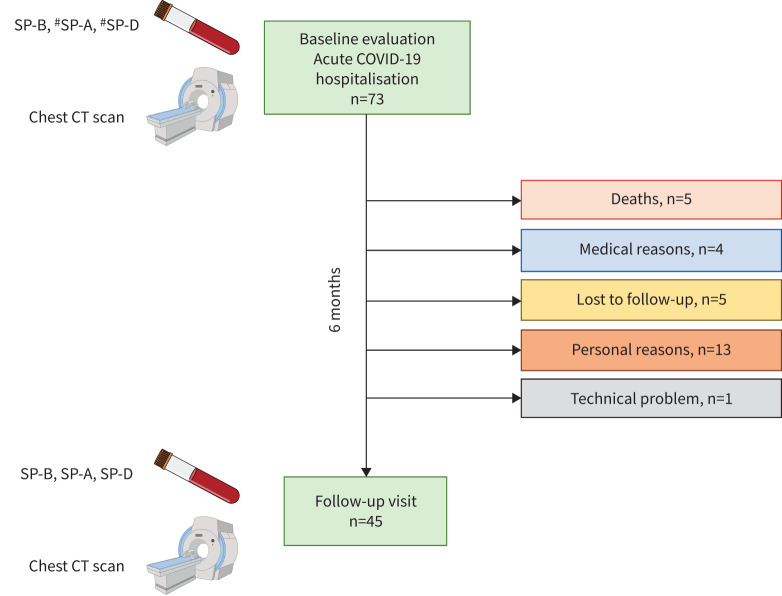
We conducted a single-centre, prospective observational study involving 73 hospitalised COVID-19 pneumonia patients. SP-B levels were measured within 48 h of admission, alongside SP-A and SP-D in a subset. Clinical data were collected, and follow-up visits were conducted after 6 months.
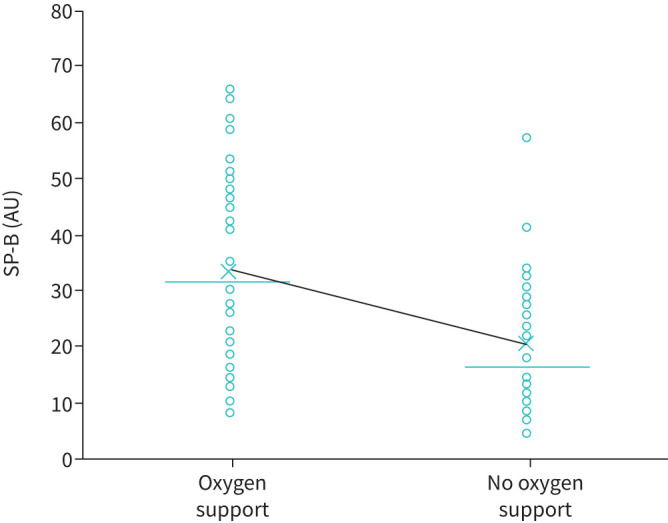
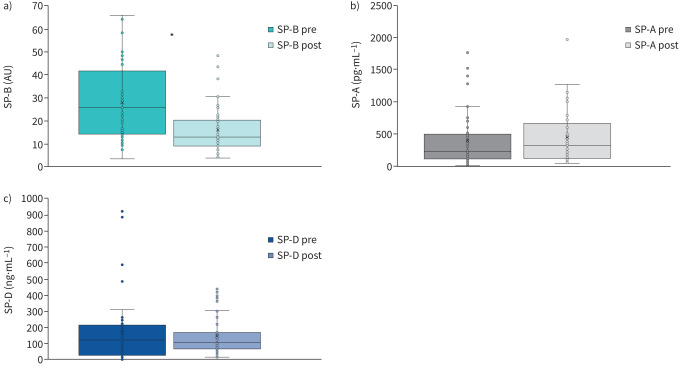
At hospitalisation, circulating immature SP-B levels measured in 73 patients (median 26.31 arbitrary units (AU) (interquartile range 14.27-41.31)) correlated significantly with lung involvement (r=0.447, p<0.001) and oxygen support requirement (p=0.005). SP-B levels did not predict mechanical ventilation or intensive care unit admission. SP-B decreased significantly (p<0.001) from 25.53 AU (14.36-41.46) at the acute hospitalisation to 12.73 AU (9.12-20.23) at the 6-month follow-up, whereas SP-A and SP-D did not change significantly. Immature SP-B (but not SP-A and SP-D) was confirmed to be significantly associated with the need for oxygen support (n=26, 58%) during the hospitalisation (p<0.05).
Immature SP-B emerges as a potential biomarker for COVID-19 pneumonia severity and prognosis. Its dynamic changes suggest utility in monitoring disease progression and long-term outcomes, despite limitations in predicting hard end-points. Larger studies are needed to validate these findings and understand the underlying mechanisms of surfactant protein dysregulation in COVID-19 pathogenesis.
新型冠状病毒肺炎(COVID-19)大流行因其对人类健康的影响,尤其是通过肺炎导致的肺损伤,引起了广泛关注。表面活性蛋白A和D(SP-A和SP-D)与COVID-19肺损伤有关,但表面活性蛋白B(SP-B)的作用仍不清楚。
我们进行了一项单中心前瞻性观察性研究,纳入73例住院的COVID-19肺炎患者。在入院后48小时内测量SP-B水平,同时在一个亚组中测量SP-A和SP-D水平。收集临床数据,并在6个月后进行随访。
住院时,73例患者的循环未成熟SP-B水平(中位数26.31任意单位(AU)(四分位间距14.27 - 41.31))与肺部受累程度(r = 0.447,p < 0.001)和氧气支持需求(p = 0.005)显著相关。SP-B水平不能预测机械通气或重症监护病房入院情况。SP-B从急性住院时的25.53 AU(14.36 - 41.46)显著下降(p < 0.001)至6个月随访时的12.73 AU(9.12 - 20.23),而SP-A和SP-D没有显著变化。未成熟SP-B(而非SP-A和SP-D)被证实与住院期间氧气支持需求(n = 26,58%)显著相关(p < 0.05)。
未成熟SP-B成为COVID-19肺炎严重程度和预后的潜在生物标志物。其动态变化表明,尽管在预测硬性终点方面存在局限性,但在监测疾病进展和长期结局方面具有实用性。需要更大规模的研究来验证这些发现,并了解COVID-19发病机制中表面活性蛋白失调的潜在机制。