Université Paris Cité, Institut de Recherche Saint-Louis, INSERM U1160, Paris, France.
OPALE Carnot Institute, The Organization for Partnerships in Leukemia, Hôpital Saint-Louis, Paris, France.
Front Immunol. 2024 Nov 11;15:1468823. doi: 10.3389/fimmu.2024.1468823. eCollection 2024.
WHIM (Warts, Hypogammaglobulinemia, Infections, and Myelokathexis) syndrome is an ultra-rare, combined primary immunodeficiency and chronic neutropenic disorder characterized by a range of clinical presentations, including peripheral neutropenia, lymphopenia, and recurrent infections. WHIM syndrome is most often caused by gain-of-function mutations in the gene encoding C-X-C chemokine receptor 4 (CXCR4). As such, inhibition of CXCR4 with XOLREMDI (mavorixafor), an orally bioavailable CXCR4 antagonist, demonstrated clinically meaningful increases in absolute neutrophil and lymphocyte counts and concomitant reduction in infections in patients with WHIM syndrome, resulting in its recent U.S. Food and Drug Administration approval. The impact of CXCR4 antagonism on other aspects of the pathobiology in WHIM syndrome, such as lymphopoiesis and leukocyte trafficking between primary and secondary lymphoid organs, is less understood.
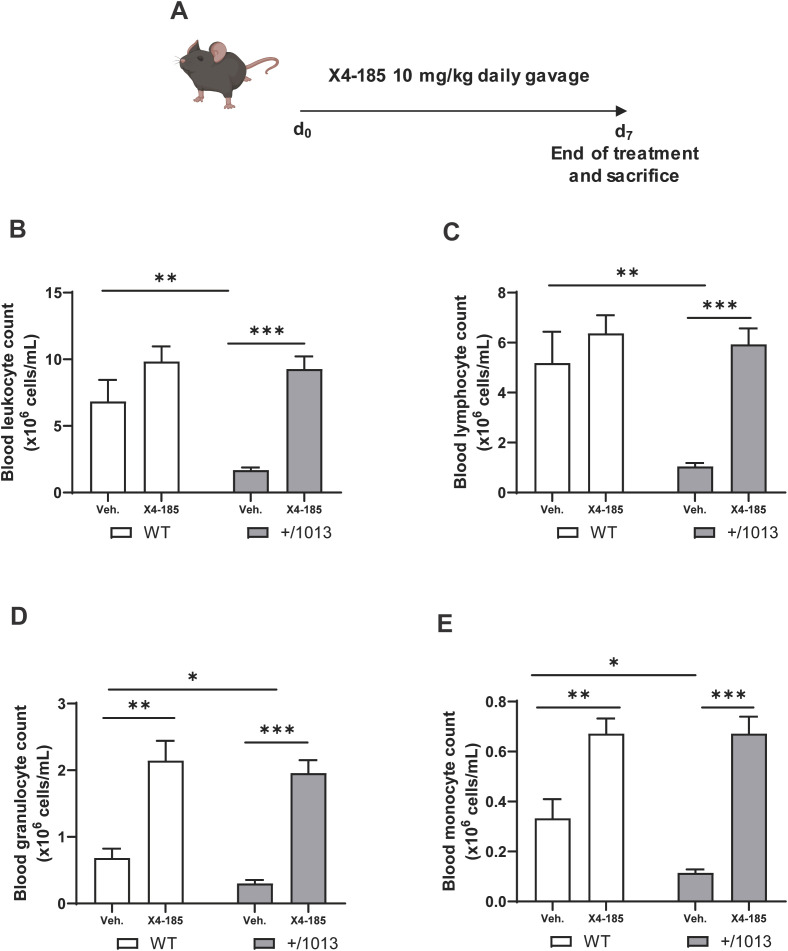
In the current study, the effects of CXCR4 antagonism on leukocyte trafficking and distribution in primary and secondary lymphoid organs were investigated in a mouse model of WHIM syndrome carrying the heterozygous mutation. and wild-type mice received the orally bioavailable CXCR4 antagonist X4-185. Blood, spleen and bone marrow samples were collected for numeration, flow cytometry, and functional studies.
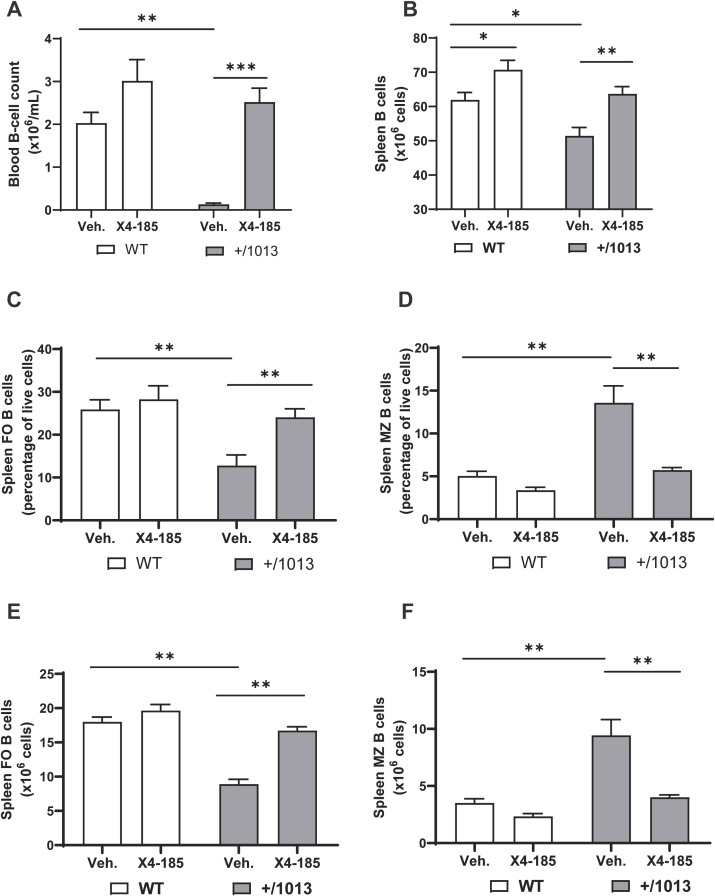
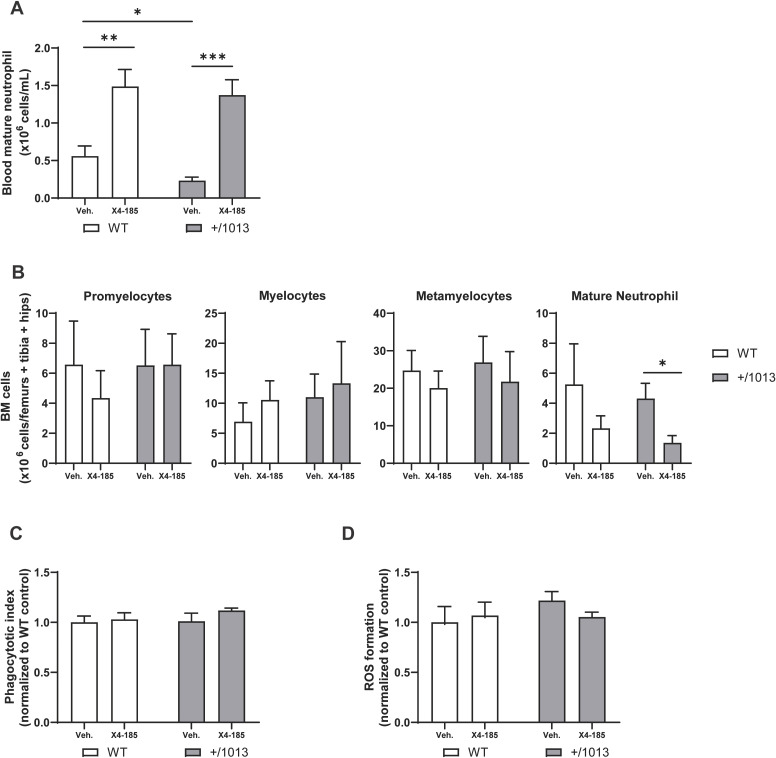
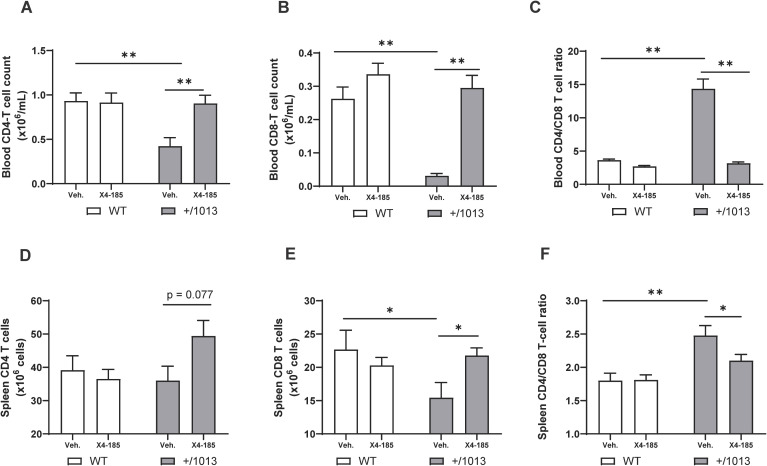
mice exhibited profound peripheral blood leukopenia as seen in patients with WHIM syndrome. CXCR4 antagonism corrected circulating leukopenia and mobilized functional neutrophils without disrupting granulopoiesis in the bone marrow of mice. Furthermore, displayed aberrant splenic T and B-cell counts and frequency. Treatment with X4-185 normalized splenic T-cell abnormalities, correcting the reduced CD8 T-cell numbers, restoring the CD4/CD8 T-cell ratio, and ameliorating peripheral blood T-cell lymphopenia. In addition, CXCR4 antagonism was able to correct the abnormal frequencies and numbers of splenic marginal zone and follicular B cells in mice, and ultimately normalize B-cell lymphopenia in the peripheral circulation.
Our study provides comprehensive evidence that oral dosing with a CXCR4 antagonist can effectively correct WHIM-associated neutrophil and lymphocyte abnormalities in a mouse model of WHIM syndrome. These findings extend our understanding of how targeting the dysregulated CXCR4 signaling pathway can ameliorate the pathogenesis of WHIM syndrome.
WHIM(疣、低丙种球蛋白血症、感染和髓样细胞阻滞)综合征是一种极其罕见的联合原发性免疫缺陷和慢性中性粒细胞减少症疾病,其特征是多种临床表现,包括外周中性粒细胞减少、淋巴细胞减少和反复感染。WHIM 综合征最常由编码 C-X-C 趋化因子受体 4(CXCR4)的基因突变引起。因此,用口服生物可利用的 CXCR4 拮抗剂 XOLREMDI(mavorixafor)抑制 CXCR4,可使 WHIM 综合征患者的绝对中性粒细胞和淋巴细胞计数有临床意义的增加,并伴有感染减少,最近获得美国食品和药物管理局的批准。CXCR4 拮抗作用对 WHIM 综合征发病机制的其他方面(如淋巴生成和白细胞在初级和次级淋巴器官之间的迁移)的影响了解较少。
在本研究中,在携带杂合突变的 WHIM 综合征小鼠模型中研究了 CXCR4 拮抗作用对初级和次级淋巴器官中白细胞迁移和分布的影响。 和野生型小鼠接受口服生物可利用的 CXCR4 拮抗剂 X4-185。采集血液、脾脏和骨髓样本进行计数、流式细胞术和功能研究。
小鼠表现出与 WHIM 综合征患者相似的外周血白细胞减少症。CXCR4 拮抗作用纠正了循环白细胞减少症,并在 小鼠的骨髓中动员功能性中性粒细胞而不破坏粒细胞生成。此外, 显示脾脏 T 和 B 细胞计数和频率异常。用 X4-185 治疗可使脾脏 T 细胞异常正常化,纠正减少的 CD8 T 细胞数量,恢复 CD4/CD8 T 细胞比值,并改善外周血 T 细胞减少症。此外,CXCR4 拮抗作用能够纠正 小鼠脾脏边缘区和滤泡 B 细胞的异常频率和数量,并最终使外周循环中的 B 细胞减少症正常化。
本研究提供了全面的证据,表明口服 CXCR4 拮抗剂可有效纠正 WHIM 综合征小鼠模型中的中性粒细胞和淋巴细胞异常。这些发现扩展了我们对靶向失调的 CXCR4 信号通路如何改善 WHIM 综合征发病机制的理解。