Department of Pharmacy, School of Medicine, Shanghai University, Shanghai, 200444, People's Republic of China.
Athinoula A. Martinos Center for Biomedical Imaging, Department of Radiology, Massachusetts General Hospital, Harvard Medical School, Charlestown, MA, 02129, USA.
Drug Des Devel Ther. 2024 Nov 20;18:5307-5322. doi: 10.2147/DDDT.S482894. eCollection 2024.
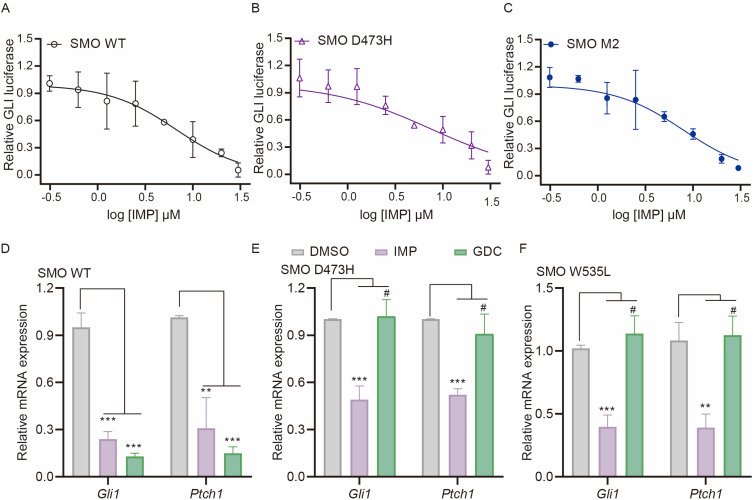
Hyperactive Hedgehog (Hh) signaling initiates and drives the progression of various tumors. Despite the clinical success of Hh inhibitors targeting Smoothened (SMO), drug resistance, often stemming from SMO mutations, remains a formidable obstacle in cancer therapy. Here, we investigated the potential of imperatorin (IMP), a Chinese herbal medicine, to overcome drug resistance and revealed the potential mechanisms.
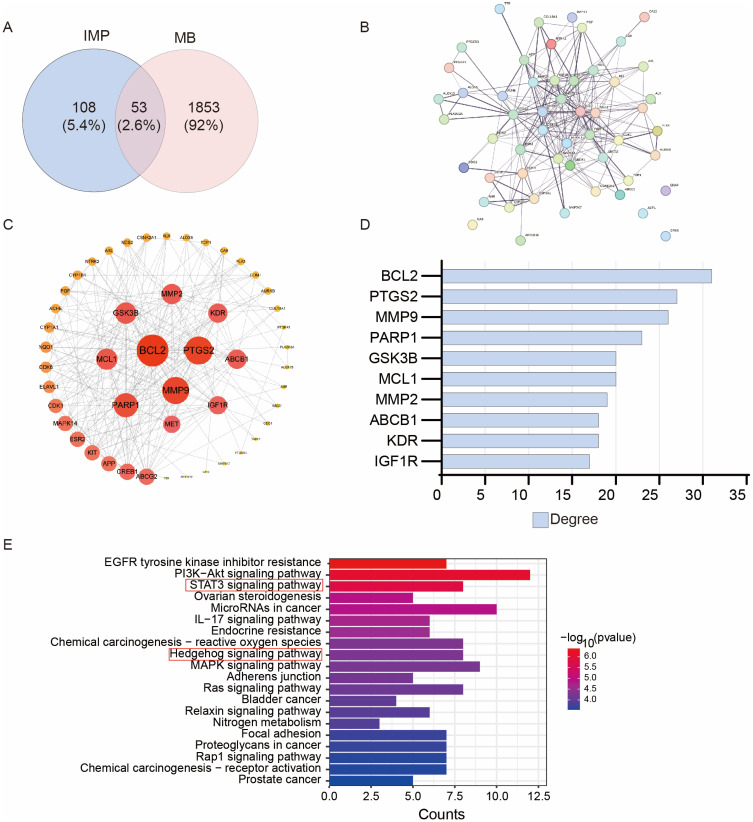
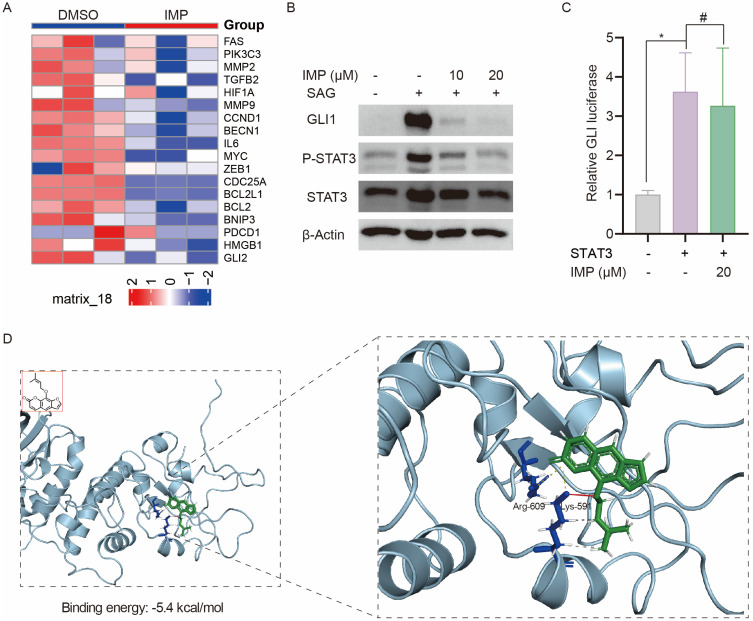
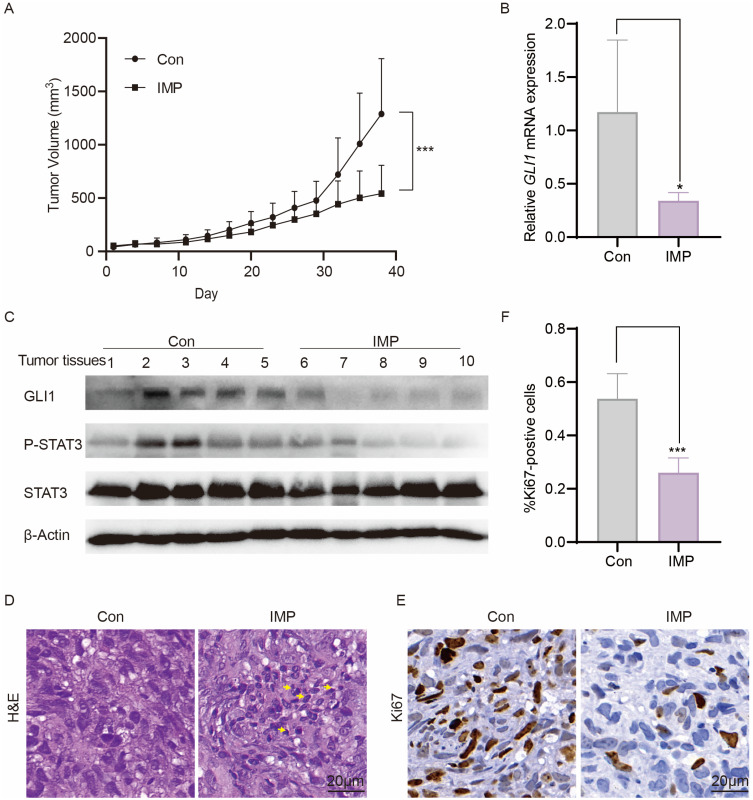
The effect of IMP on Hh signaling pathway was evaluated via Quantitative reverse transcription-polymerase chain reaction, Dual-luciferase reporter assay and Western blot. Meanwhile, we tested its ani-proliferative potential on Hh-driven tumor cells. Loss/gain-of-function, network pharmacology analysis, RNA-sequence analysis and molecular docking were performed to investigate the potential mechanisms of IMP-mediated functions. Furthermore, we established a subcutaneous Hh-driven medulloblastoma xenograft model using the DAOY cell line and examined the in vivo therapeutic efficacy of IMP.
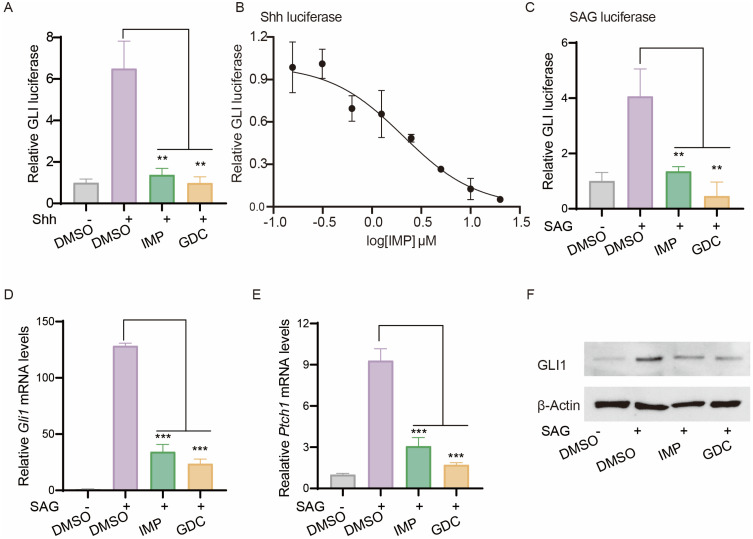
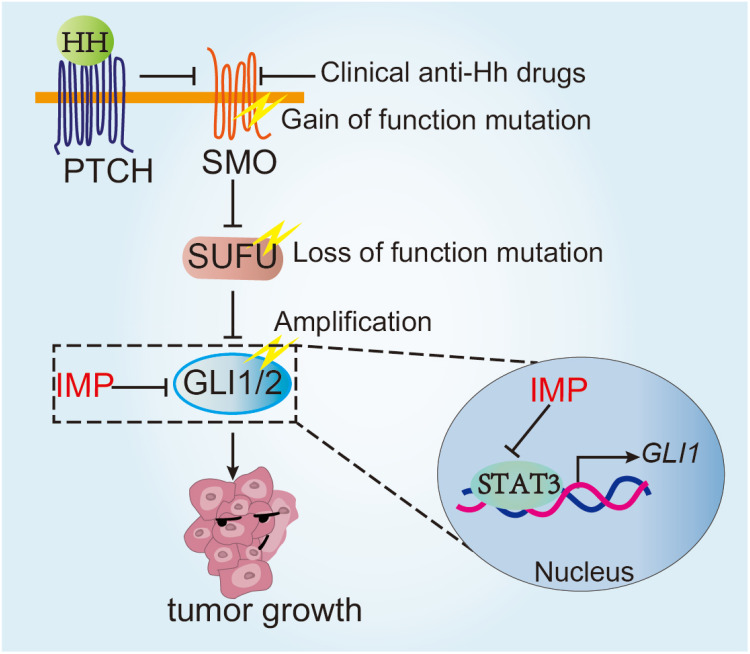
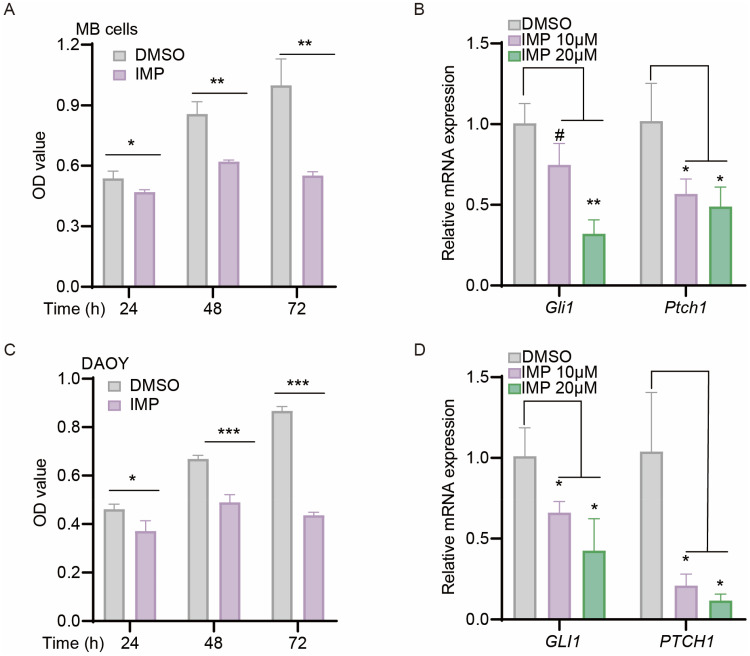
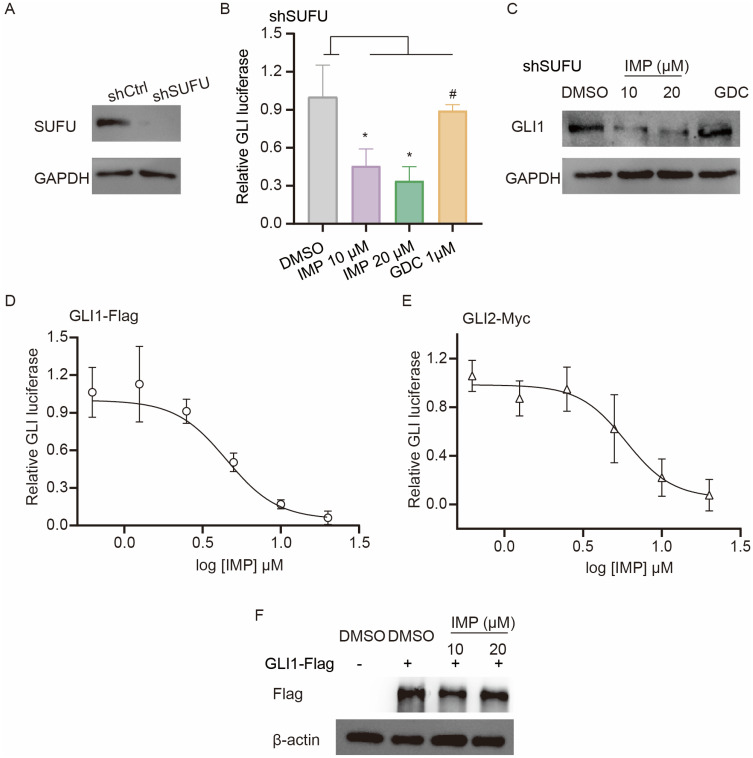
We identified IMP as a novel Hh inhibitor capable of overcoming drug-resistance caused by SMO mutants by inhibiting downstream transcription factor GLI1. IMP suppressed the proliferation of Hh-dependent cancer cells along with Hh activity inhibition. Mechanistically, IMP attenuated the phosphorylation of signal transducer and activator of transcription 3 (STAT3) and its interaction with GLI1 promoter, consequently blocking GLI1 transcription and the target gene expressions. Molecular docking analysis revealed the favorable binding affinity between IMP and STAT3. Importantly, IMP application effectively inhibited the growth of medulloblastoma in vivo, accompanied by the downregulation of GLI1 and phosphorylated STAT3.
Our findings revealed IMP as an innovative approach to combat the drug resistance of SMO inhibitors in Hh-driven tumors, highlighting the crucial role of STAT3 as a transcriptional regulator in Hh signaling.
过度活跃的 Hedgehog(Hh)信号启动并驱动各种肿瘤的进展。尽管针对 Smoothened(SMO)的 Hh 抑制剂在临床上取得了成功,但耐药性仍然是癌症治疗中的一个巨大障碍,这种耐药性通常源于 SMO 突变。在这里,我们研究了一种中药白芷素(IMP)克服耐药性的潜力,并揭示了其潜在的机制。
通过定量逆转录聚合酶链反应、双荧光素酶报告基因检测和 Western blot 评估 IMP 对 Hh 信号通路的影响。同时,我们测试了它对 Hh 驱动的肿瘤细胞的抗增殖潜力。进行了失活/功能获得、网络药理学分析、RNA 测序分析和分子对接,以研究 IMP 介导功能的潜在机制。此外,我们使用 DAOY 细胞系建立了皮下 Hh 驱动的髓母细胞瘤异种移植模型,并检查了 IMP 的体内治疗效果。
我们确定 IMP 是一种新型的 Hh 抑制剂,能够通过抑制下游转录因子 GLI1 来克服 SMO 突变体引起的耐药性。IMP 抑制 Hh 依赖性癌细胞的增殖以及 Hh 活性抑制。在机制上,IMP 减弱了信号转导和转录激活因子 3(STAT3)的磷酸化及其与 GLI1 启动子的相互作用,从而阻断 GLI1 转录和靶基因表达。分子对接分析显示 IMP 与 STAT3 具有良好的结合亲和力。重要的是,IMP 的应用有效地抑制了体内髓母细胞瘤的生长,同时下调了 GLI1 和磷酸化 STAT3。
我们的研究结果揭示了 IMP 是一种对抗 Hh 驱动肿瘤中 SMO 抑制剂耐药性的创新方法,突出了 STAT3 作为 Hh 信号转导中关键转录调节剂的作用。