Vent Trevor L, Barufaldi Bruno, Acciavatti Raymond J, Maidment Andrew D A
Department of Radiology, University of Pennsylvania, Philadelphia, United States.
Proc SPIE Int Soc Opt Eng. 2020 May;11513. doi: 10.1117/12.2561098. Epub 2020 May 22.
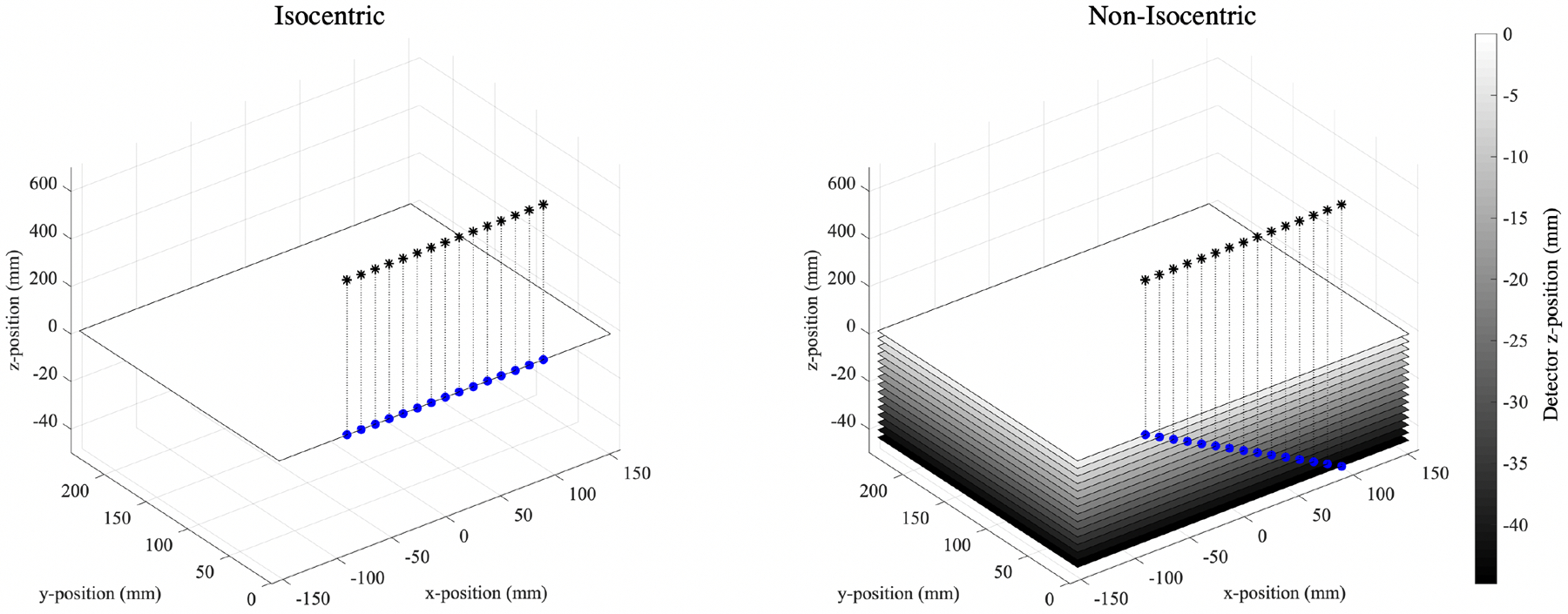
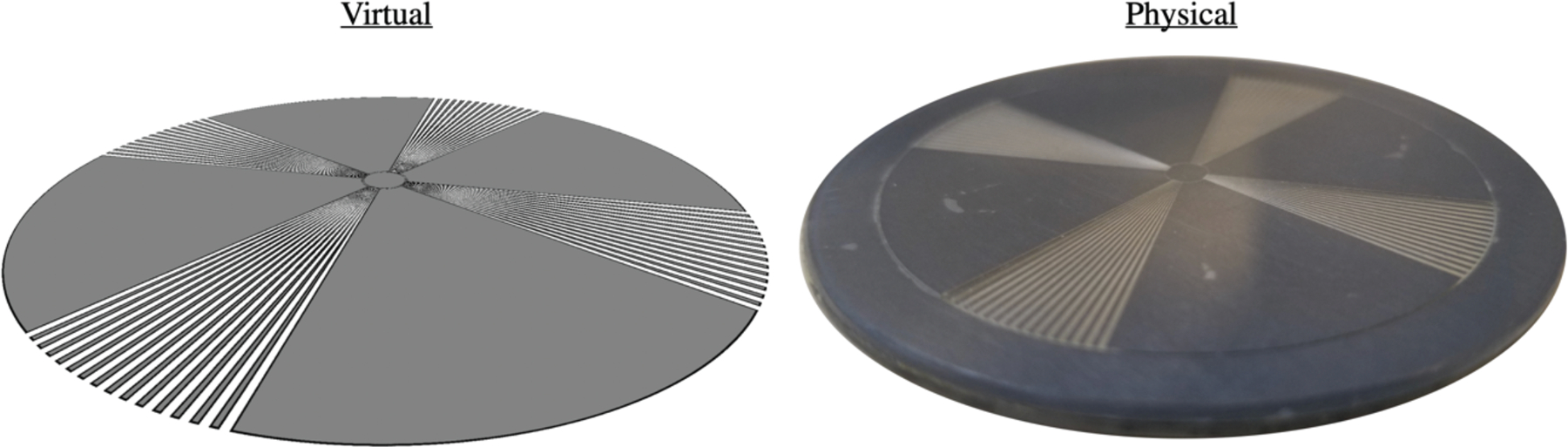
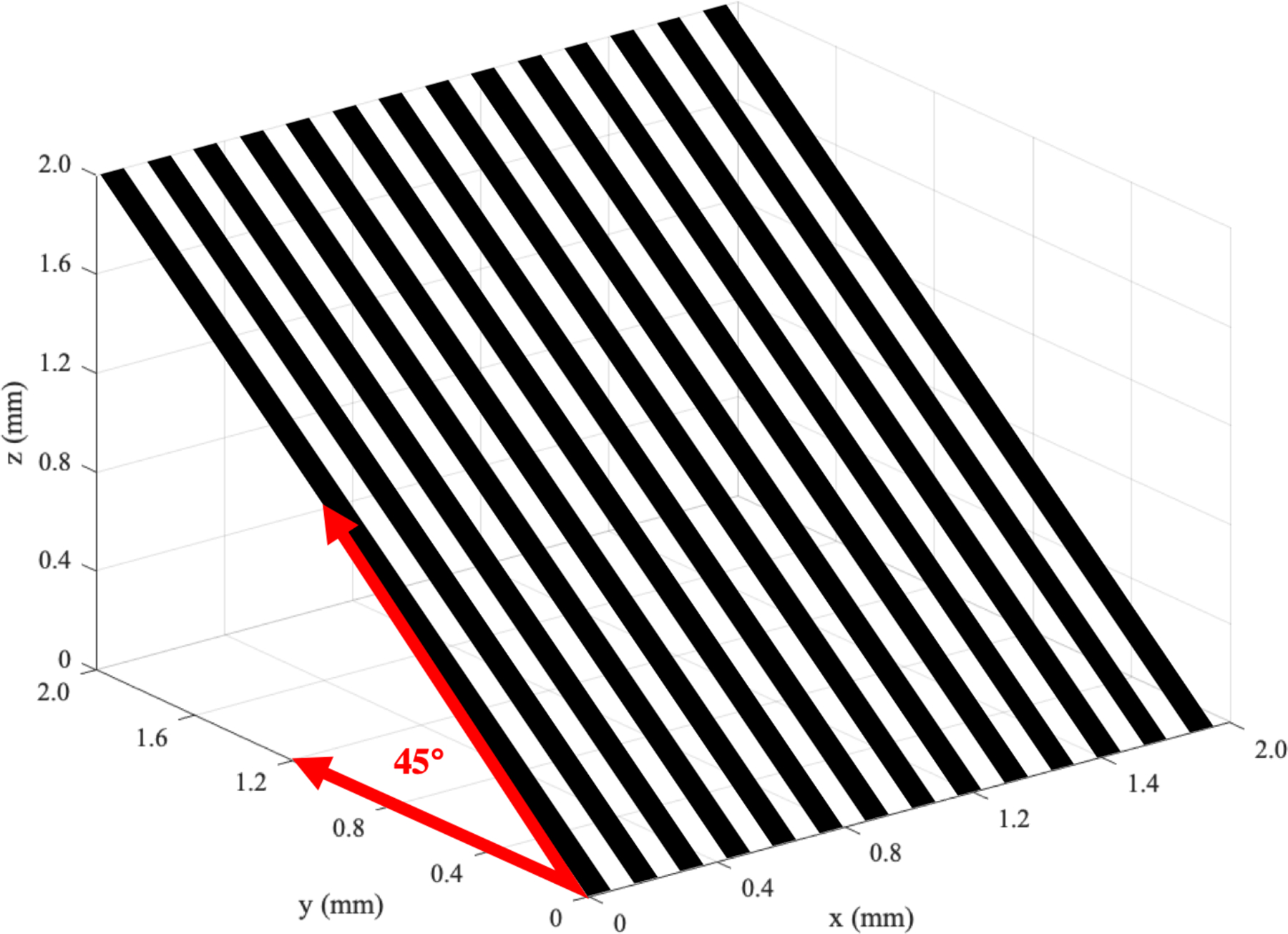
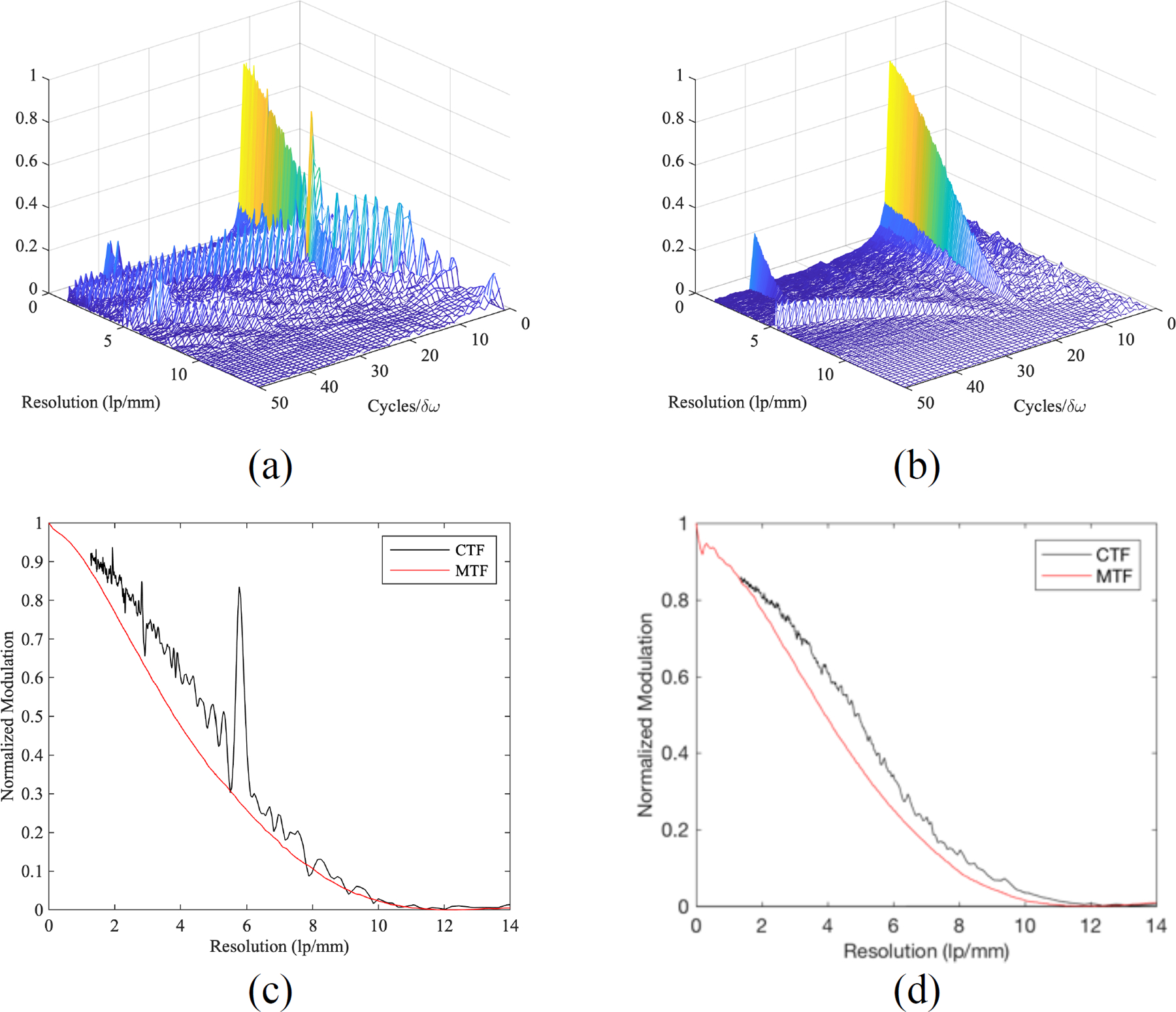
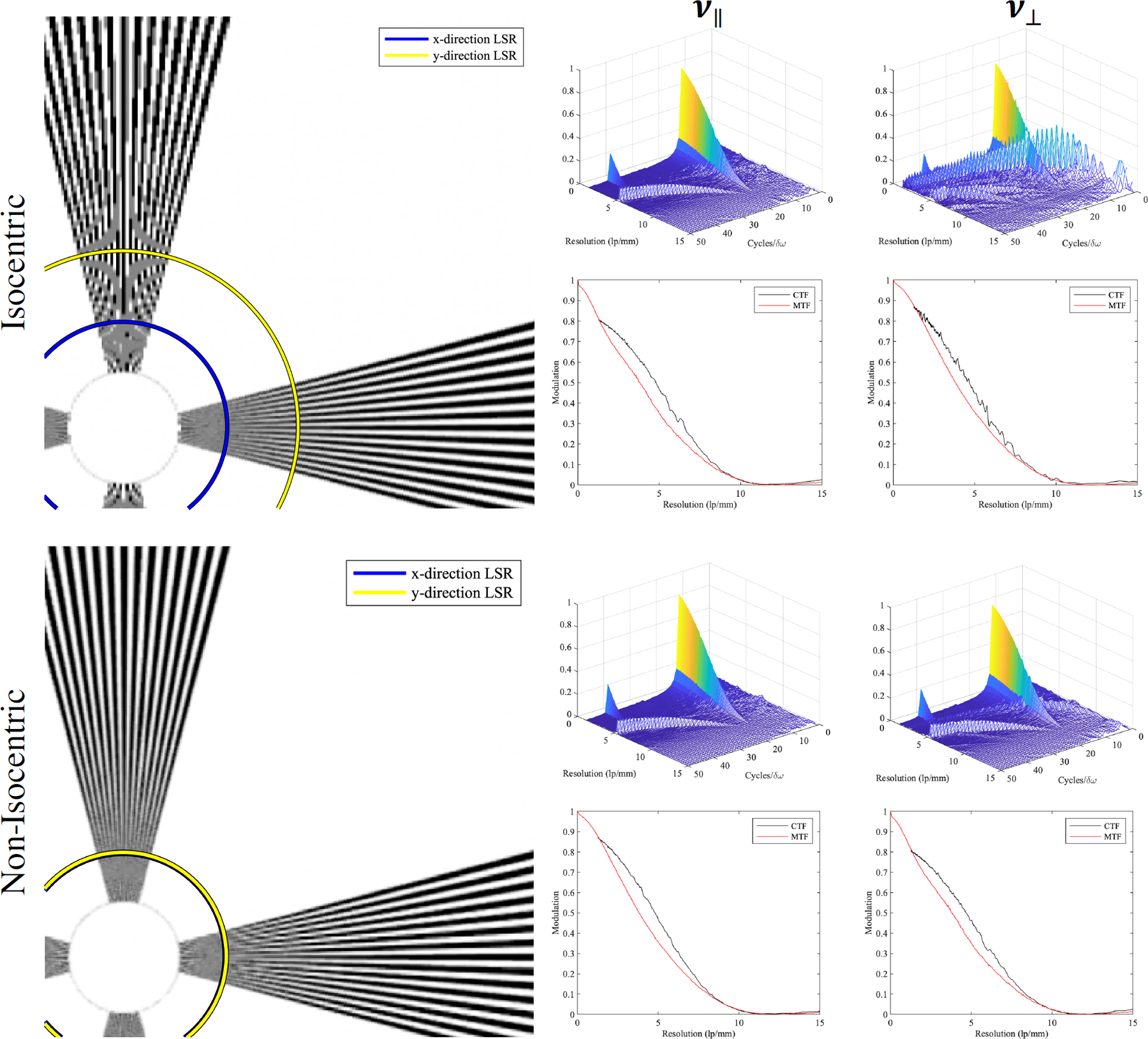
Digital breast tomosynthesis (DBT) systems utilize an isocentric acquisition geometry which introduces imaging artifacts that are deleterious to image reconstructions. The next-generation tomosynthesis (NGT) prototype was designed to incorporate various x-ray source and detector motions for the purpose of investigating alternative acquisition geometries for DBT. Non-isocentric acquisition geometries, acquisitions that vary the image magnification between projection images, are capable of ameliorating aliasing and other artifacts that are intrinsic to conventional DBT. We used virtual clinical trials (VCTs) to develop custom acquisition geometries for the NGT prototype. A high-resolution (5μm voxel size) star pattern test object was simulated to compare the high-frequency performance of isocentric with non-isocentric image reconstructions. A tilted bar pattern test object was also simulated to compare multiplanar reconstructions (MPR) of isocentric and non-isocentric acquisition geometries. Two source- and detector-motion paths were simulated to obtain super-sampled image reconstructions of the test objects. An aliasing-sensitive metric was used to evaluate spatial resolution performance for two orthogonal frequency orientations. Pairwise comparisons were made for the two frequency orientations between the isocentric and non-isocentric acquisition geometries. Non-isocentric acquisition geometries show an improvement over isocentric acquisition geometries. The greatest improvement was 75.2% for frequencies aligned perpendicular to x-ray source motion, which is the direction of frequencies for which DBT is prone to aliasing. Both frequency orientations exhibit super resolution for non-isocentric geometries. MPR of the tilted bar pattern show z- dependent degeneracies for the isocentric acquisition only, whereas MPR of the non-isocentric acquisition entirely exhibits super resolution.
数字乳腺断层合成(DBT)系统采用等中心采集几何结构,这会引入对图像重建有害的成像伪影。下一代断层合成(NGT)原型旨在纳入各种X射线源和探测器运动,以研究DBT的替代采集几何结构。非等中心采集几何结构,即投影图像之间图像放大率不同的采集方式,能够改善传统DBT固有的混叠和其他伪影。我们使用虚拟临床试验(VCT)为NGT原型开发定制采集几何结构。模拟了一个高分辨率(体素大小为5μm)的星型图案测试物体,以比较等中心和非等中心图像重建的高频性能。还模拟了一个倾斜条形图案测试物体,以比较等中心和非等中心采集几何结构的多平面重建(MPR)。模拟了两条源和探测器运动路径,以获得测试物体的超采样图像重建。使用一种对混叠敏感的指标来评估两个正交频率方向的空间分辨率性能。对等中心和非等中心采集几何结构的两个频率方向进行了成对比较。非等中心采集几何结构比等中心采集几何结构有改进。对于垂直于X射线源运动方向排列的频率,最大改进为75.2%,这是DBT容易出现混叠的频率方向。两个频率方向在非等中心几何结构中均表现出超分辨率。倾斜条形图案的MPR仅对等中心采集显示出与z相关的退化,而非等中心采集的MPR完全表现出超分辨率。