Duke University School of Medicine, Durham, NC 27710, USA.
Duke Cancer Network, Durham, NC 27707, USA.
Curr Oncol. 2024 Nov 16;31(11):7244-7257. doi: 10.3390/curroncol31110534.
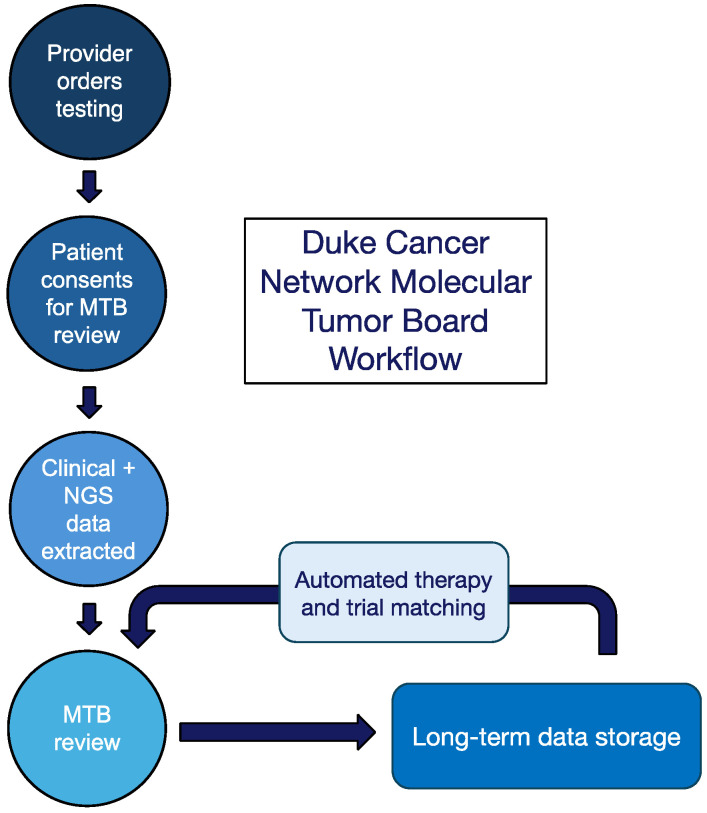
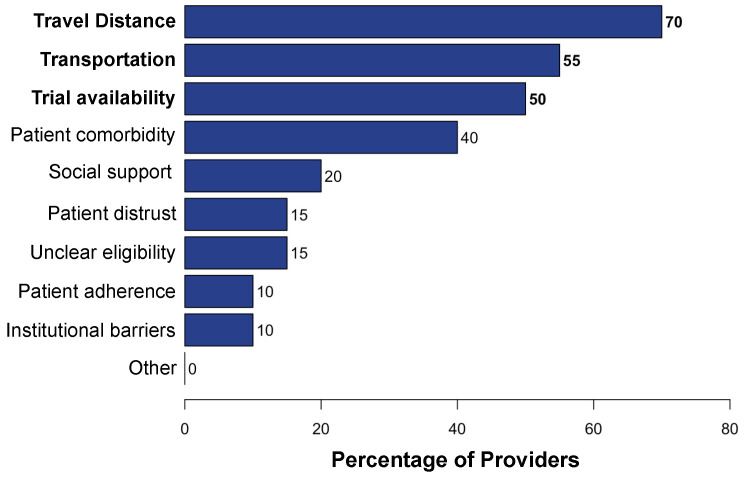
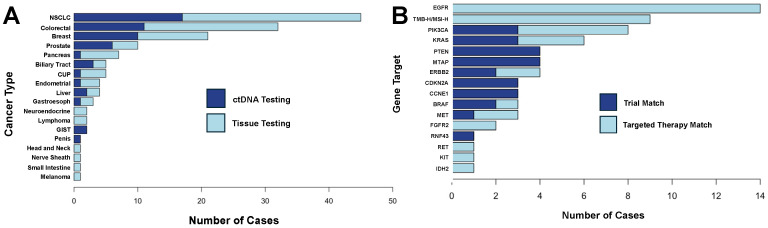
Targeting tumor-specific molecular alterations has shown significant clinical benefit. Molecular tumor boards (MTBs) connect cancer patients with personalized treatments and clinical trials. However, rural cancer centers often have limited access to MTB expertise. We established an academic-community partnership expanding our academic MTB to affiliated rural community cancer centers. We developed a centralized molecular registry of tumors (MRT) to aggregate the comprehensive genomic profiling (CGP) results and facilitate multidisciplinary MTB review. Of the 151 patients included, 87 (58%) had actionable genomic biomarkers, 42 (28%) were eligible for a targeted off-label therapy, and 27 (18%) were matched to a clinical trial. Of those with a clinical trial match, only 1 of 27 (3%) was enrolled in the identified trial. One year into implementation, community oncology providers were anonymously surveyed on persistent barriers to precision treatment utilization. The primary barriers to clinical trial enrollment were the distance to the trial center (70%), lack of transportation (55%), and lack of local trials (50%). This study offers a framework to improve access to molecular expertise, but significant barriers to the equitable use of CGP and trial enrollment persist.
靶向肿瘤特异性分子改变已显示出显著的临床获益。分子肿瘤委员会(MTB)将癌症患者与个性化治疗和临床试验联系起来。然而,农村癌症中心通常难以获得 MTB 专业知识。我们建立了学术-社区伙伴关系,将我们的学术 MTB 扩展到附属的农村社区癌症中心。我们开发了一个集中的肿瘤分子登记处(MRT),以汇总全面的基因组分析(CGP)结果,并促进多学科 MTB 审查。在纳入的 151 名患者中,87 名(58%)有可操作的基因组生物标志物,42 名(28%)有资格接受靶向标签外治疗,27 名(18%)与临床试验相匹配。在有临床试验匹配的患者中,只有 27 名患者中的 1 名(3%)入组了确定的试验。在实施一年后,对社区肿瘤学提供者进行了关于精准治疗使用持续障碍的匿名调查。临床试验入组的主要障碍是试验中心的距离(70%)、缺乏交通工具(55%)和缺乏本地试验(50%)。本研究提供了一个改善分子专业知识获取的框架,但 CGP 和试验入组的公平使用仍然存在重大障碍。