Mazhar Noaman, Islam Munshi Sajidul, Raza Muhammad Zohaib, Mahin S M Khaled Hossain, Islam Mohammed Riazul, Chowdhury Muhammad E H, Al-Ali Abdulla, Agouni Abdelali, Yalcin Huseyin C
Biomedical Research Center, Qatar University, Doha 2713, Qatar.
Department of Electrical Engineering, Qatar University, Doha 2713, Qatar.
Bioengineering (Basel). 2024 Nov 5;11(11):1116. doi: 10.3390/bioengineering11111116.
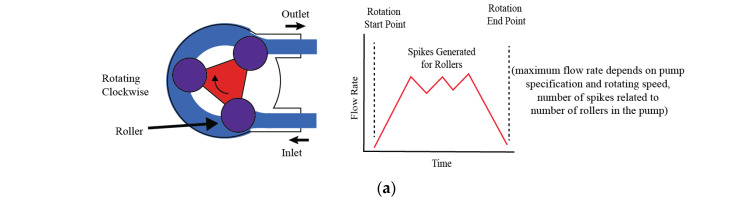
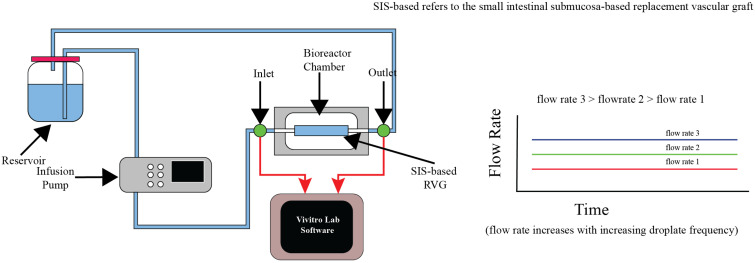
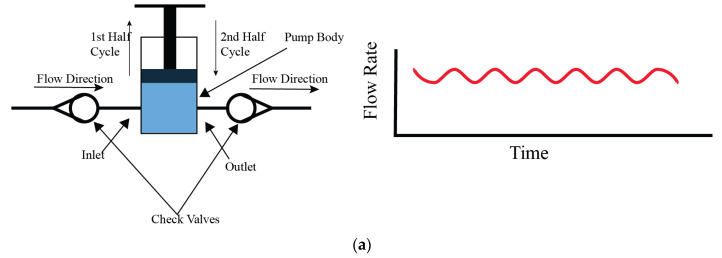
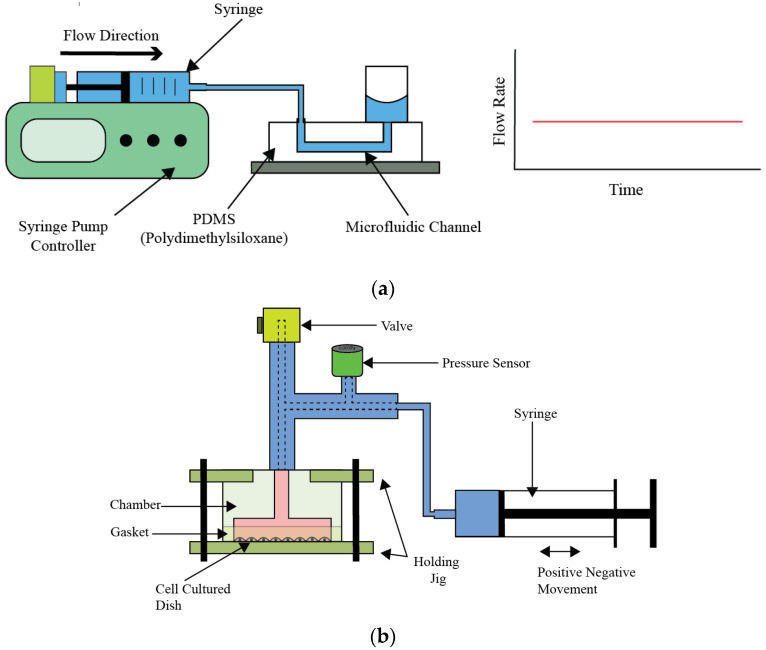
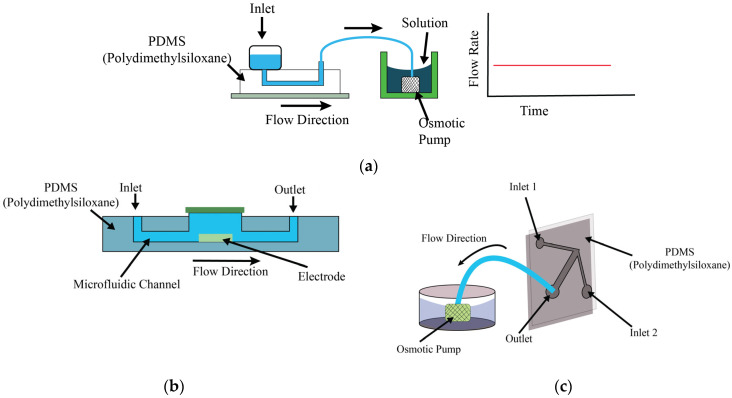
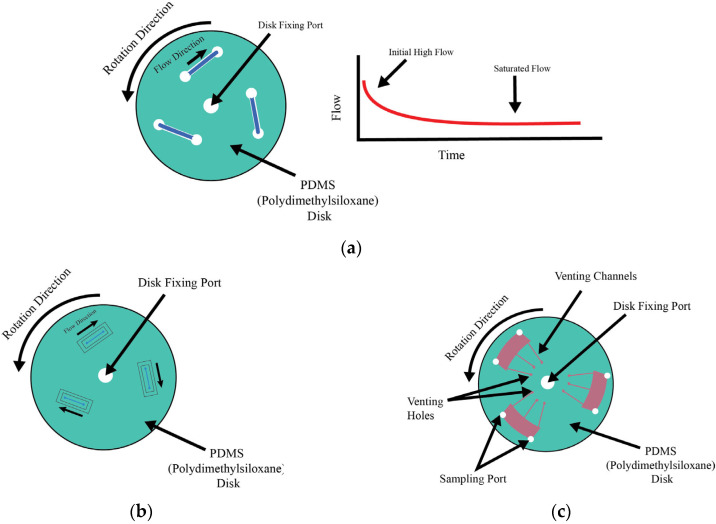
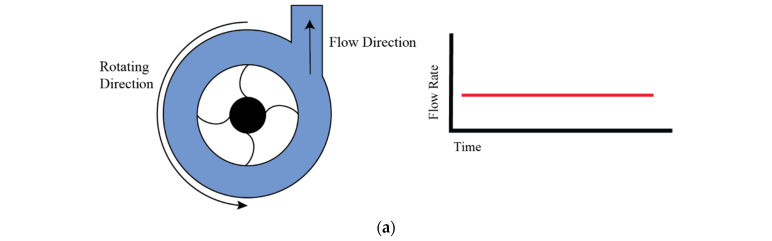
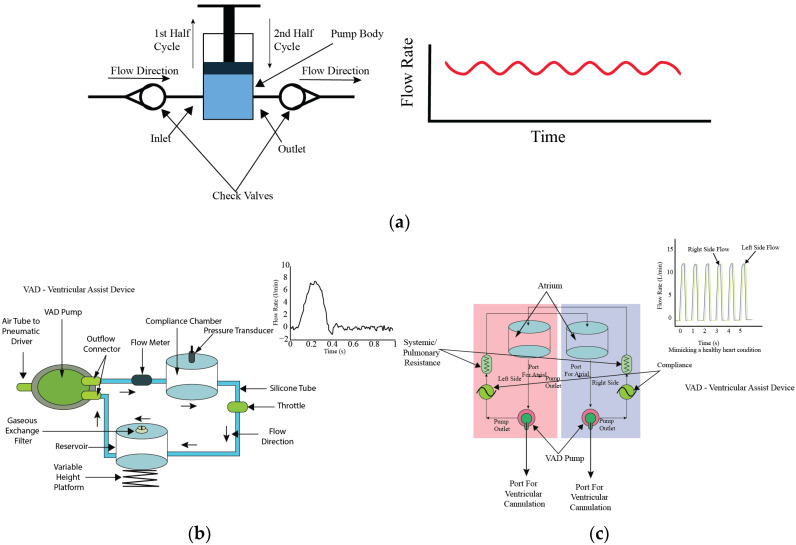
A comprehensive analysis of in vitro pumps used in cardiovascular research is provided in this review, with a focus on the characteristics of generated flows and principles of flow generations. The cardiovascular system, vital for nutrient circulation and waste removal, generates complex hemodynamics critical for endothelial cell function. Cardiovascular diseases (CVDs) could be caused by the disturbances in these flows, including aneurysms, atherosclerosis, and heart defects. In vitro systems simulate hemodynamic conditions on cultured cells in the laboratory to study and evaluate these diseases to advance therapies. Pumps used in these systems can be classified into contact and non-contact types. Contact pumps, such as piston and gear pumps, can generate higher flow rates, but they have a higher risk of contamination due to the direct interaction of pump with the fluid. Non-contact pumps, such as peristaltic and lab-on-disk centrifugal pumps, minimize contamination risks, but they are limited to lower flow rates. Advanced pumps including piezoelectric and I-Cor diagonal pumps are focused on improving the accuracy of flow replication and long-term stability. The operational principles, advantages, and some disadvantages of these pump categories are evaluated in this review, while providing insights for optimizing in vitro cardiovascular models and advancing therapeutic strategies against CVDs. The outcomes of the review elaborate the importance of selecting an appropriate pump system, to accurately replicate cardiovascular flow patterns.
本综述对心血管研究中使用的体外泵进行了全面分析,重点关注所产生流动的特性和流动产生原理。心血管系统对营养物质循环和废物清除至关重要,它产生对内皮细胞功能至关重要的复杂血流动力学。心血管疾病(CVD)可能由这些血流紊乱引起,包括动脉瘤、动脉粥样硬化和心脏缺陷。体外系统在实验室中模拟培养细胞上的血流动力学条件,以研究和评估这些疾病,从而推进治疗方法。这些系统中使用的泵可分为接触式和非接触式。接触式泵,如活塞泵和齿轮泵,可产生较高流速,但由于泵与流体的直接相互作用,它们具有较高的污染风险。非接触式泵,如蠕动泵和盘式离心实验室泵,可将污染风险降至最低,但它们的流速较低。包括压电泵和I-Cor斜流泵在内的先进泵专注于提高流动复制的准确性和长期稳定性。本综述评估了这些泵类别的工作原理、优点和一些缺点,同时为优化体外心血管模型和推进针对心血管疾病的治疗策略提供见解。综述结果阐述了选择合适的泵系统以准确复制心血管流动模式的重要性。